
Hygienic Robots Advance Pharmaceutical Material Handling
YASKAWA Electric introduces cleanroom-compatible robotic automation for chemical and container handling in life sciences and pharmaceutical production environments.
www.yaskawa.eu.com
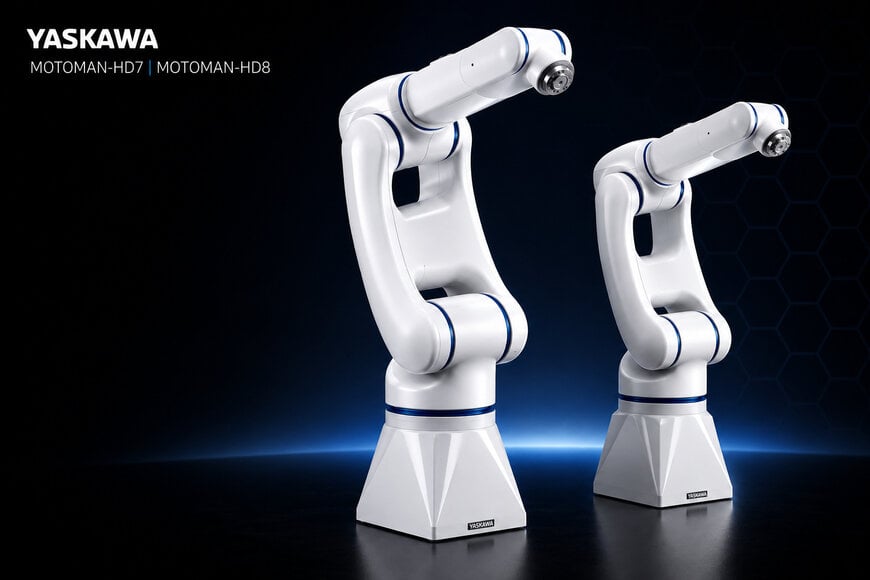
YASKAWA Electric Corporation has launched two industrial robots designed for hygienic automation applications in the life sciences and pharmaceutical sectors. The new robotic systems are intended for handling chemicals and small containers in controlled environments where contamination prevention, operator safety and regulatory compliance are critical. By combining cleanroom compatibility, hygienic design and chemical-resistant construction, the robots support the growing adoption of laboratory automation and pharmaceutical manufacturing automation.
Cleanroom Automation for Regulated Production Environments
Life sciences and pharmaceutical facilities increasingly rely on automated systems to reduce manual intervention in sterile production areas. Personnel working in these environments often handle chemicals while wearing protective clothing and operating under strict contamination-control procedures. Extended exposure to repetitive tasks and potentially hazardous substances has accelerated demand for automated handling technologies.
The newly introduced robotic platforms address these requirements by automating the transport and handling of chemicals, laboratory samples and small containers while maintaining compatibility with stringent hygiene standards. The systems are intended to improve workplace safety, reduce operator workload and increase process efficiency in regulated manufacturing environments.
Hygienic Design Based on International Cleanroom Standards
The two robots have been developed specifically for hygienic environments and comply with internationally recognized cleanroom classifications defined by ISO 14644-1. The model with an 8 kg payload capacity complies with ISO Cleanroom Class 4 requirements, while the 7 kg payload version complies with ISO Cleanroom Class 5 requirements. These classifications define permissible airborne particle concentrations within controlled environments and are widely used throughout pharmaceutical production and laboratory facilities.
The robots feature smooth external surfaces designed to minimize contamination traps and simplify cleaning procedures. Rounded contours and hygienic construction principles reduce the accumulation of particles and residues, supporting frequent sanitation cycles required in pharmaceutical operations. Similar design approaches are commonly applied in aseptic processing and laboratory automation systems.
Chemical Resistance and Washdown Capability
All robot axes are designed to meet protection levels equivalent to IP69, enabling resistance to high-pressure cleaning procedures. The robots are equipped with a specialized surface coating engineered to withstand cleaning agents commonly used in pharmaceutical and life sciences facilities, including hydrogen peroxide (H2O2)-based disinfectants.
The use of FDA-approved food-grade grease further supports deployment in regulated environments where contamination control is essential. In addition, the axle sealing system and associated materials comply with recommendations issued by the European Hygienic Engineering and Design Group (EHEDG), which develops hygiene design guidelines for food, pharmaceutical and related industries.
Payload Capacity and Handling Applications
The two robotic systems target small-item handling applications. One model provides a payload capacity of 7 kg with a maximum reach of 927 mm, while the second supports payloads up to 8 kg with a maximum reach of 727 mm. These specifications make the robots suitable for transferring laboratory vessels, chemical containers, pharmaceutical materials and other lightweight components within cleanroom environments.
Typical use cases include laboratory automation, pharmaceutical packaging support, sample handling, sterile material transfer and automated processing workflows where human contact with sensitive materials must be minimized. The automation of such tasks can improve process consistency while supporting compliance with contamination-control procedures.
Exhibition and Market Introduction
Commercial availability began on June 1, 2026. The robots were scheduled for public exhibition at FOOMA JAPAN 2026, held at Tokyo Big Sight from June 2 to June 5, 2026. The event is one of Japan’s major exhibitions for food processing, manufacturing and automation technologies and provides a platform for demonstrating hygienic automation solutions to industrial users.
Additional Context: This section details technical specifications and competitive benchmarking not included in the original product announcement
The market for hygienic industrial robots has expanded significantly as pharmaceutical manufacturers, biotechnology companies and laboratory operators seek higher levels of automation. Comparable solutions are available from manufacturers including ABB, FANUC, KUKA and Stäubli, all of which offer robotic platforms designed for cleanroom and pharmaceutical environments.
Key benchmarking criteria in this segment include cleanroom certification level, ingress protection rating, chemical resistance, particle emission performance, ease of cleaning and compliance with GMP and EHEDG hygienic design principles. Robots intended for aseptic and pharmaceutical applications are typically evaluated according to ISO 14644 cleanroom classifications and washdown resistance standards.
The new robotic systems combine ISO Class 4 and Class 5 cleanroom compatibility with IP69 protection, FDA-approved lubricants and EHEDG-compliant sealing technologies. These characteristics position the robots within the category of hygienic automation systems designed for regulated manufacturing environments. Comparable cleanroom robots from other suppliers often focus on similar metrics, including low particle generation, corrosion resistance and compatibility with aggressive cleaning protocols.
As pharmaceutical production facilities continue to adopt digital manufacturing and laboratory automation technologies, hygienic robotic systems are increasingly becoming part of broader automated workflows that integrate material handling, quality control and process monitoring within contamination-controlled environments.
Edited by Sucithra Mani, Induportals editor – adapted by AI.
www.yaskawa-global.com
