
www.ptreview.co.uk
05
'26
Written on Modified on
Automated disassembly of high-voltage batteries
Liebherr introduces an industrial-grade system for the non-destructive disassembly of high-voltage batteries to enhance safety and recovery rates in recycling.
www.liebherr.com
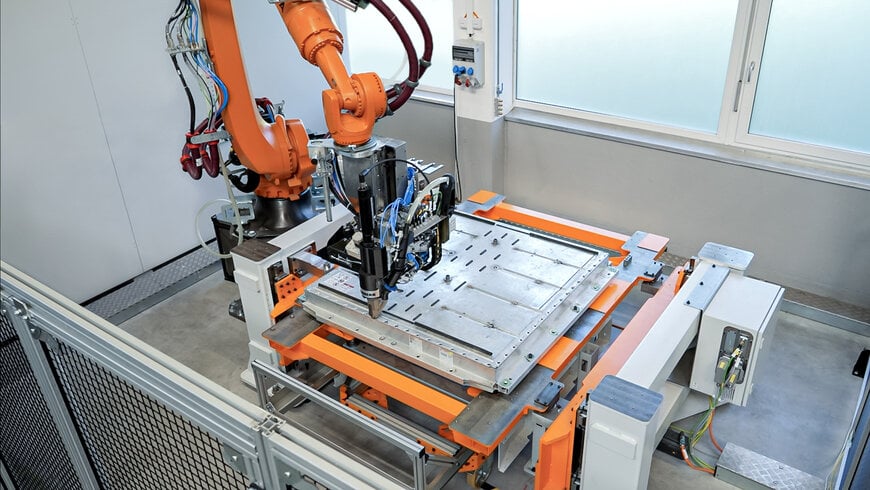
Liebherr-Verzahntechnik GmbH has developed LHDismantle, an automated system designed for the disassembly of high-voltage batteries from electric vehicles. The company will showcase these solutions, ranging from automated unscrewing to modular turnkey systems, at the IFAT trade fair in Munich from May 4 to 7, 2026. This technology addresses the rising volume of battery returns and the shortage of personnel qualified to handle high-voltage components.
Automated Unscrewing and Safety
At the core of LHDismantle is a patented, tactile unscrewing method featuring automatic position correction. This approach ensures process reliability by remaining resistant to dirt, corrosion, or damage that typically hinders camera-based detection systems. The system automates the loosening of bolted joints—a stage that previously involved significant safety risks due to exposed high-voltage contacts before the battery management system (BMS) could be deactivated.
Flexibility through Digital Twin Technology
The system is designed to handle various battery types with varying geometries and screw positions. To manage new battery variants, Liebherr utilizes a digital twin approach:
- Reverse Engineering: For unknown battery packs, a virtual twin is created to derive the necessary tools and disassembly sequences.
- Simulation: Disassembly processes are validated digitally before being deployed to the physical system, shortening ramp-up times.
- User Interface: Operators select programs from an integrated database via an intuitive interface that provides a live status of the unscrewing process.
Turnkey Integration and Scalability
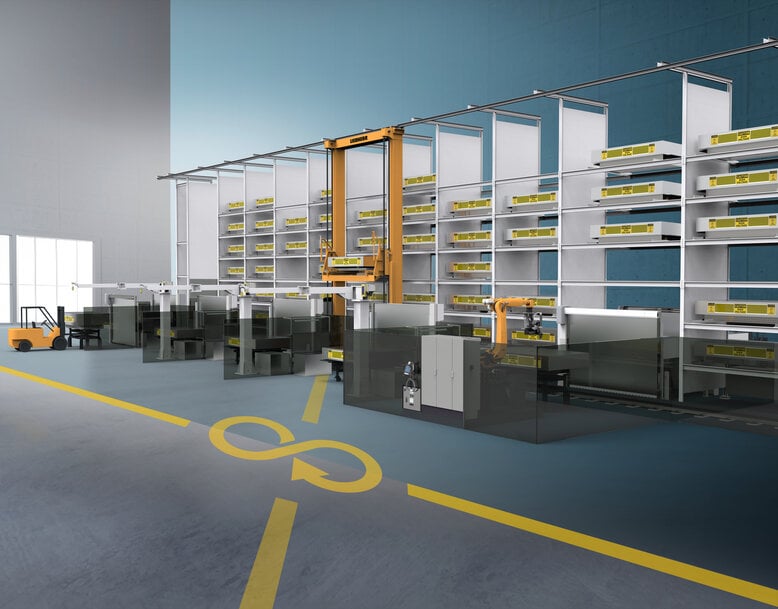
LHDismantle serves as a central component in an end-to-end process chain. The cell integrates with modular automation systems, including pallet handling systems (PHS) that connect various workstations. The solution is scalable and can incorporate third-party equipment for milling or laser cutting, providing a comprehensive path for both reconditioning and recycling.
Additional Context
The transition to automated disassembly is a critical technical requirement for the "circular economy" of electric mobility. Manual dismantling is often the most expensive and dangerous part of the recycling process; the high energy density of these batteries means a single misplaced tool can lead to thermal runaway. By automating the initial opening of the battery casing, Liebherr significantly reduces the "arc flash" risk for human operators.
Technically, the tactile unscrewing method is superior to traditional vision systems in a recycling context because batteries arriving for salvage are rarely in "as-manufactured" condition. They may be deformed from accidents or covered in road grime. A tactile system "feels" the screw head, allowing it to maintain a high success rate even when visual markers are obscured. Furthermore, by disassembling the battery non-destructively, recyclers can recover high-purity fractions of copper and aluminum before the remainder is shredded. This improves the efficiency of subsequent hydrometallurgical processes used to extract valuable materials like lithium, cobalt, and nickel, as the feedstock is less contaminated by mixed scrap.
Edited by Romila DSilva, Induportals Editor, with AI assistance.
LHDismantle serves as a central component in an end-to-end process chain. The cell integrates with modular automation systems, including pallet handling systems (PHS) that connect various workstations. The solution is scalable and can incorporate third-party equipment for milling or laser cutting, providing a comprehensive path for both reconditioning and recycling.
Additional Context
The transition to automated disassembly is a critical technical requirement for the "circular economy" of electric mobility. Manual dismantling is often the most expensive and dangerous part of the recycling process; the high energy density of these batteries means a single misplaced tool can lead to thermal runaway. By automating the initial opening of the battery casing, Liebherr significantly reduces the "arc flash" risk for human operators.
Technically, the tactile unscrewing method is superior to traditional vision systems in a recycling context because batteries arriving for salvage are rarely in "as-manufactured" condition. They may be deformed from accidents or covered in road grime. A tactile system "feels" the screw head, allowing it to maintain a high success rate even when visual markers are obscured. Furthermore, by disassembling the battery non-destructively, recyclers can recover high-purity fractions of copper and aluminum before the remainder is shredded. This improves the efficiency of subsequent hydrometallurgical processes used to extract valuable materials like lithium, cobalt, and nickel, as the feedstock is less contaminated by mixed scrap.
Edited by Romila DSilva, Induportals Editor, with AI assistance.
