
www.ptreview.co.uk
15
'26
Written on Modified on
Fraunhofer Showcases Resilient Industrial Technologies
Fraunhofer-Gesellschaft presents AI, data ecosystems, and sustainable technologies at Hannover Messe 2026 to support adaptable and efficient industrial value creation.
www.fraunhofer.de
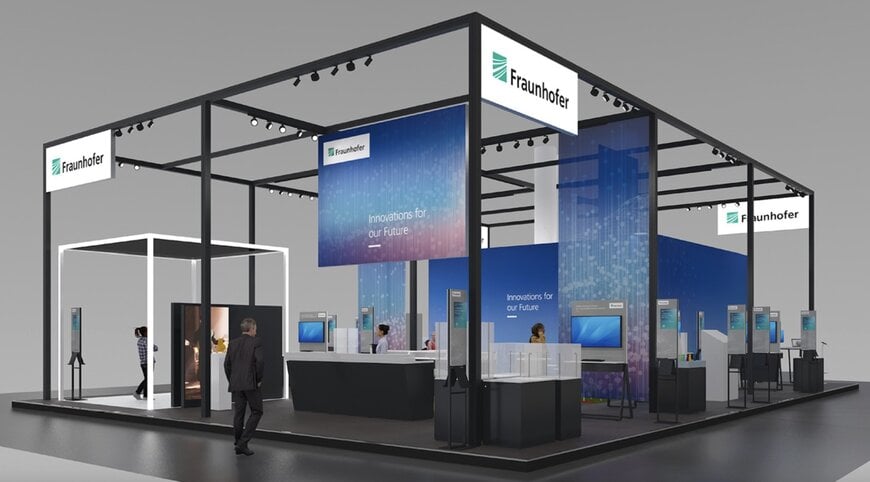
The Fraunhofer-Gesellschaft will present a portfolio of technologies at Hannover Messe 2026 (April 20–24, Hannover, Germany) aimed at improving resilience, efficiency, and sustainability in industrial systems. The exhibition focuses on the interaction between data, artificial intelligence, and advanced materials to enable adaptable industrial value creation under uncertain global conditions.
Data ecosystems and AI for resilient industry
A central theme of the exhibition is how interconnected data systems and AI-driven processes can enhance industrial robustness. Fraunhofer demonstrates how smart data pipelines, automated workflows, and digital twins can work together to improve decision-making and system flexibility.
These technologies form the foundation of a digital supply chain, where data is continuously collected, validated, and used to optimize production and logistics. Secure data handling is also addressed through concepts such as “secure unlearning,” enabling distributed AI systems to remove specific data inputs while maintaining model performance and compliance with regulations.
Digital twins and immersive engineering environments
Fraunhofer will present applications combining digital twins, immersive visualization, and AI avatars to support engineering and service development. These systems enable virtual simulation of industrial processes, improving collaboration and reducing the need for physical prototyping.
Such tools are increasingly relevant in complex production environments, where iterative design and remote collaboration are essential for maintaining flexibility and reducing development time.
Advanced electronics and semiconductor integration
High-performance packaging technologies will be demonstrated through APECS pilot line solutions, focusing on chip integration, thermal management, and reliability. These developments support compact and efficient electronic systems aligned with European semiconductor initiatives.
Improved packaging techniques contribute to higher performance and durability in electronic components, which are critical for industrial automation, mobility, and energy systems.
Circular economy and sustainable materials
Several exhibits focus on resource efficiency and circular economy approaches. A chemical-free electrochemical process enables the recovery of critical raw materials from batteries at ambient conditions, reducing both energy consumption and operational costs.
In parallel, Thermo-Catalytic Reforming (TCR) technology converts biogenic residues into synthesis gas, bio-oil, and bio-coal. This process supports the transition away from fossil resources by generating multiple usable outputs from waste streams.
Fraunhofer will also present Lignew, a recyclable wood-based foam material that eliminates synthetic binders and enables lightweight, sustainable applications in construction, furniture, and packaging.
Industrial applications in agriculture and energy
Innovations extend to agriculture, where bio-based fertilizers are designed to release nutrients in a controlled manner, reducing environmental impact from overfertilization. In the energy sector, Fraunhofer will showcase technologies across the hydrogen value chain, including generation, storage, transport, and industrial use.
These developments highlight the role of integrated systems in addressing sustainability challenges across industries.
Optimization of production and logistics systems
Mathematics-based optimization tools are presented for strategic production planning. These solutions enable manufacturers to manage complex, multi-variable production scenarios, improving throughput, reducing costs, and ensuring delivery reliability.
By applying advanced algorithms to production and logistics, companies can enhance operational performance and adaptability in dynamic environments.
Global collaboration and industrial transformation
Fraunhofer will also highlight international cooperation through projects led by its liaison office in Brazil. These initiatives demonstrate how global innovation networks contribute to industrial transformation and knowledge exchange.
The exhibition reflects Fraunhofer’s applied research approach, where scientific developments are translated into practical industrial solutions. By integrating AI, data ecosystems, and sustainable technologies, the showcased innovations provide a framework for building resilient and adaptable industrial systems in the face of global uncertainty.
Edited by Romila DSilva, Induportals Editor, with AI assistance.
www.fraunhofer.de
