
www.ptreview.co.uk
26
'26
Written on Modified on
Zebra AI Powered 3D Sensors Reduce Waste For EBI Electric
EBI Electric implemented Zebra’s advanced 3D vision sensors and AI technology to optimize wood processing, significantly increasing material yield and operational cost savings.
www.zebra.com
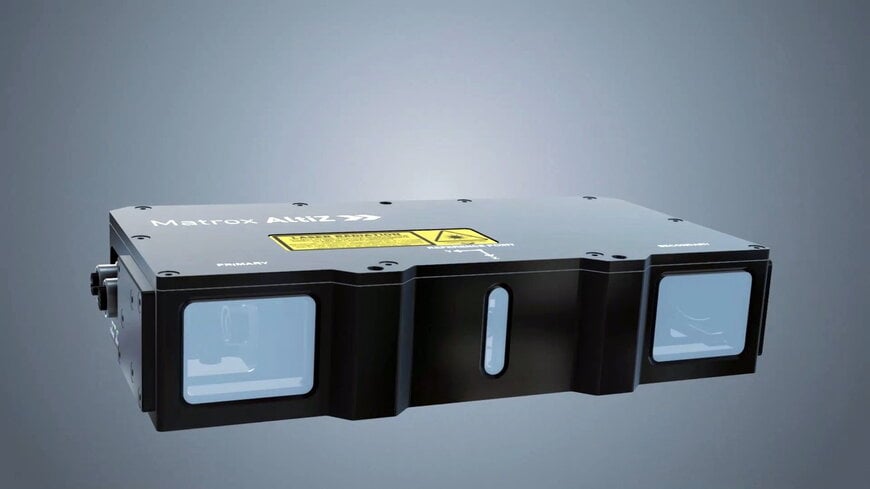
Lumber manufacturers often face significant financial losses due to the limitations of traditional linear scanning technology. Conventional systems frequently miss subtle defects, leading to the rejection of usable wood or the inclusion of flaws in finished products. Zebra Technologies has addressed these industry-wide inefficiencies by integrating AI-powered 3D sensors into the manufacturing workflow, providing a level of precision that standard scanners cannot match.
Surpassing Conventional Scanning Limitations
For decades, the industry relied on linear scanners that provided a limited view of raw materials. In contrast, the implementation of Zebra AltiZ 3D sensors allows for a transversal scanning approach. By using dual sensors to capture a complete cross-section of a plank in a single pass, the technology eliminates the "blind spots" common in older systems. This results in an eightfold improvement in measurement precision compared to traditional methods.
AI-Driven Defect Detection and Precision
The differentiation lies in the integration of high-fidelity 3D profiling with advanced AI models. While standard systems struggle with variable conditions, this technology accurately identifies knots, cracks, color variations, and early signs of wood rot. This granular data enables manufacturers to optimize every cut, reducing waste and ensuring that higher-quality material reaches the final production stage.
Impact on Operational Efficiency and Yield
The transition from basic scanning to AI-enriched 3D vision has a direct impact on the bottom line. Manufacturers utilizing this advanced sensing technology report an increase of up to 5% in usable wood yield. In large-scale operations, this efficiency gain can translate to approximately $750,000 in annual cost savings. Furthermore, the rugged design of these sensors ensures consistent performance in the harsh, dust-filled environments of lumber mills, where less durable equipment often fails.
Optimized Inventory and Resource Management
Beyond the physical cutting process, the high-resolution data provided by these sensors improves overall inventory management. By gaining a precise understanding of the quality and yield of wood from different suppliers, manufacturers can make more informed purchasing and production decisions. The use of the Aurora Imaging Library software further ensures that scan quality remains consistent across the entire operation, streamlining workflows and reducing the need for manual oversight.
www.zebra.com
