
www.ptreview.co.uk
18
'26
Written on Modified on
Digital Twins Advance Safety Validation for Humanoid Robots
Infineon expands work with NVIDIA on robot system architectures combining semiconductors, simulation platforms and cybersecurity to support industrial robotics deployment.
www.infineon.com
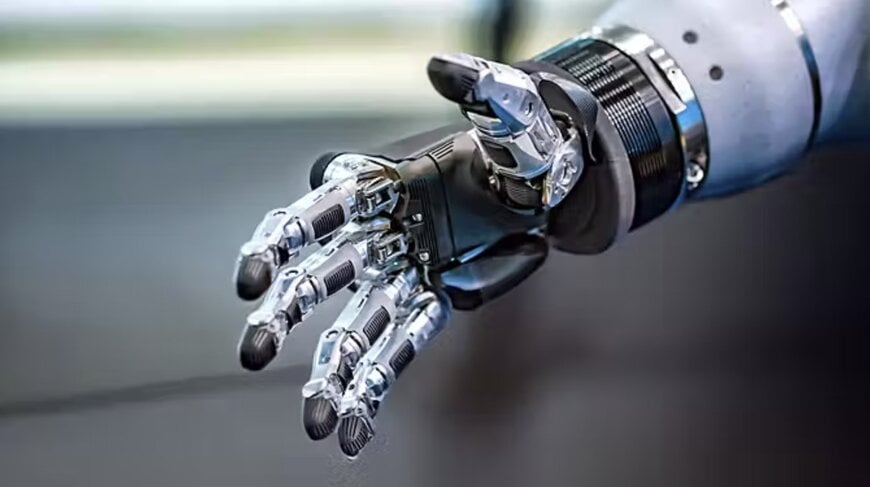
Humanoid robots require tightly integrated sensing, processing, actuation and safety systems to operate in industrial and service environments designed for human workers. In this context, Infineon Technologies AG expanded its collaboration with NVIDIA to develop digital twin-based architectures for humanoid robotics.
Semiconductor integration for physical AI architectures
The collaboration focuses on system architectures supporting so-called Physical AI, where semiconductor components enable robots to sense their surroundings, process data, and execute movements in real time. Target applications include manufacturing, logistics and service robotics, where humanoid platforms are being evaluated for tasks such as material handling and inspection.
Infineon contributes semiconductor technologies including motor control systems, microcontrollers, power electronics and hardware security components, while NVIDIA provides AI computing platforms, robotics software frameworks and simulation environments.
The joint work builds on an earlier cooperation announced in August 2025 and aims to support scalable robot deployment through reference architectures combining Infineon smart actuators with the NVIDIA Jetson Thor platform and validation processes within the NVIDIA Halos AI Systems Inspection Lab.
Simulation-driven development using digital twins
A central technical element is the use of digital twins representing Infineon smart actuators and selected sensors. These models are integrated into NVIDIA Isaac Sim and NVIDIA Isaac Lab, which are robotic simulation and training environments used to test motion control, perception and interaction scenarios.
By validating robot behaviour in virtual environments before hardware integration, developers can identify integration and performance issues earlier in the engineering cycle. This approach is intended to reduce development risks and support shorter engineering cycles for humanoid robots intended for industrial deployment.
The simulation workflows also support testing of robot behaviour under realistic operating conditions relevant to automated production environments and the wider digital supply chain.
Reference designs combining compute, control and security
The collaboration includes the development of a common system architecture targeting low latency operation, compact system layouts and high power density. Planned reference designs combine Infineon motor control technologies with the NVIDIA Holoscan Sensor Bridge and the NVIDIA Jetson Thor developer platform.
Infineon AURIX™ microcontrollers and PSOC™ devices form part of the control architecture, including support for post-quantum cryptography (PQC) mechanisms intended to protect firmware and system communications.
Security architectures are also being developed around hardware Trusted Platform Module (TPM) components and additional protection devices to secure AI models and operational data from the edge device level through to cloud connectivity. The architecture includes mechanisms such as secure boot processes, encrypted communications and protected over-the-air software updates.
Functional safety frameworks and certifiable robotics platforms
The cooperation also includes participation in the NVIDIA Halos safety framework, which focuses on safety architectures applicable to robotics and Level 4 autonomous systems. The work includes integration of hardware and software safety mechanisms intended to support certifiable system designs.
Infineon’s contributions include safety-oriented semiconductor platforms and cybersecurity mechanisms designed to support functional safety requirements across sensing, control and actuation layers.
Semiconductor content and robotics hardware scope
Infineon’s robotics portfolio includes sensors, microcontrollers, actuators, connectivity components, including Ethernet-based networking technologies, memory products and battery management systems. The company also highlighted its semiconductor technologies based on silicon (Si), silicon carbide (SiC) and gallium nitride (GaN).
Based on bill-of-materials assumptions, Infineon estimates the semiconductor content in a humanoid robot at approximately USD 500 per unit, reflecting the number of functional semiconductor building blocks required for sensing, control, movement and connectivity.
Through the collaboration with NVIDIA and humanoid robot OEMs, the work focuses on enabling hardware platforms intended to support the transition of humanoid robotics from prototype development toward industrial deployment.
Edited by industrial journalist, Aishwarya Mambet, with AI-assistance.
www.infineon.com
