
www.ptreview.co.uk
04
'26
Written on Modified on
Smart Infrastructure Integration with AI and Radar Systems
Rutronik Elektronische Bauelemente GmbH and technology partners demonstrate integrated AI-enabled sensing and edge computing systems for industrial automation and urban infrastructure at embedded world 2026.
www.rutronik.com
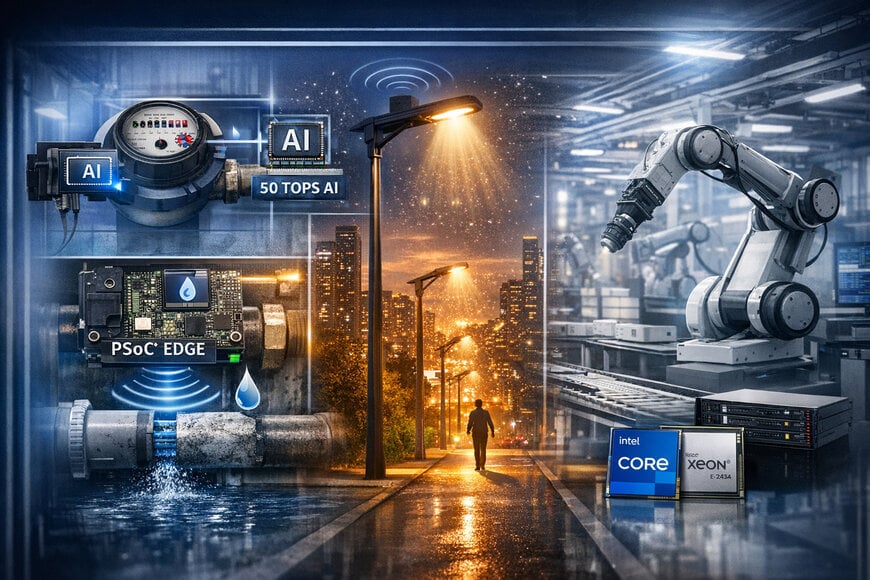
At the embedded world 2026 exhibition from 10 – 12 march 2026 in Nuremberg, Rutronik Elektronische Bauelemente GmbH is presenting cooperative demonstrations of smart infrastructure solutions that integrate artificial intelligence (AI), radar sensing, and edge-optimized computing for industrial automation, building services, and smart city use cases. These implementations combine semiconductor platforms, sensor interfaces, and real-time processing to address operational monitoring and automated control applications.
Context of the Cooperation
Rutronik Elektronische Bauelemente GmbH, an electronics distributor and system integrator active across embedded markets, energy, mobility, and industrial segments, is coordinating a multi-supplier showcase of technologies for smart infrastructure at embedded world 2026. The initiative brings together semiconductor and component manufacturers such as Infineon Technologies AG, Nordic Semiconductor, ams OSRAM, and Intel Corporation to demonstrate interoperable systems addressing challenges in environmental sensing, automation, and energy efficiency. This cooperative engagement responds to the complexity of integrating sensors, AI inference engines, and power-control elements within distributed edge architectures typical of digital infrastructure deployments.
Technical Solution and Responsibilities
The showcased solutions illustrate two integrated use cases:
- Automated Meter Reading and Leak Detection: A system combining AI-based image recognition with radar-based level measurement digitizes analog water meter readings and detects anomalies. The demo uses Infineon’s PSOC™ Edge microcontroller unit (MCU) to execute sensor fusion and inferencing locally, minimizing latency and network dependency.
- Radar-based Lighting Control: Utilizing a Nordic Semiconductor MCU interfaced with EVIYOS™ LED drivers from ams OSRAM, this system performs zone-specific activation of lighting based on presence detection via radar. The radar sensor provides motion and occupancy data to trigger lighting zones, enhancing energy efficiency and safety in public spaces.
Edge computing elements from Intel form a core part of the infrastructure: Intel® Core™ Ultra Series 3 processors with integrated neural processing units deliver up to 50 TOPS of AI performance for real-time vision analytics and control tasks, reducing reliance on cloud resources. Additional Intel-powered demonstrations use embedded Core™ and Xeon® E-2434 processors to illustrate scalable processing for industrial edge AI workloads.
Deployment and Implementation
These demonstrations are deployed at Rutronik’s exhibition booth (Hall 1, Booth 1-631) and exemplify integration of multi-vendor components into cohesive systems. System responsibilities are divided by domain expertise: sensor and MCU platforms handle data acquisition and pre-processing, AI accelerators perform inference and pattern recognition, and edge compute platforms ensure deterministic control and analytics. Standards and protocols for peripheral interfaces and connectivity (e.g., SPI, I²C, Ethernet) underpin interoperability.
Applications and Use Cases
Targeted applications include water utility monitoring with automated leak detection, smart street lighting for urban environments, and industrial control systems with embedded AI analytics. These use cases highlight improvements in process stability, operational transparency, and energy consumption, achieved through localized decision-making and intelligent sensor fusion.
Results or Expected Impact
Although specific quantitative performance metrics were not published, the integration of AI inference at the edge and radar sensing is expected to yield measurable benefits in responsiveness and resource efficiency. Localized AI processing mitigates cloud latency, while radar-assisted control supports energy optimization and safety enhancements in both industrial and municipal infrastructure contexts.
www.rutronik.com
Deployment and Implementation
These demonstrations are deployed at Rutronik’s exhibition booth (Hall 1, Booth 1-631) and exemplify integration of multi-vendor components into cohesive systems. System responsibilities are divided by domain expertise: sensor and MCU platforms handle data acquisition and pre-processing, AI accelerators perform inference and pattern recognition, and edge compute platforms ensure deterministic control and analytics. Standards and protocols for peripheral interfaces and connectivity (e.g., SPI, I²C, Ethernet) underpin interoperability.
Applications and Use Cases
Targeted applications include water utility monitoring with automated leak detection, smart street lighting for urban environments, and industrial control systems with embedded AI analytics. These use cases highlight improvements in process stability, operational transparency, and energy consumption, achieved through localized decision-making and intelligent sensor fusion.
Results or Expected Impact
Although specific quantitative performance metrics were not published, the integration of AI inference at the edge and radar sensing is expected to yield measurable benefits in responsiveness and resource efficiency. Localized AI processing mitigates cloud latency, while radar-assisted control supports energy optimization and safety enhancements in both industrial and municipal infrastructure contexts.
www.rutronik.com
