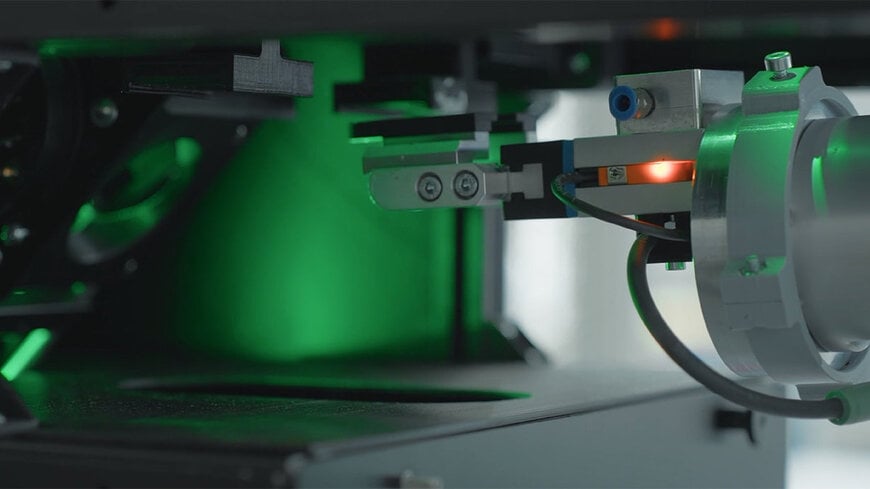
Vision Components will present new MIPI modules and OEM components for time-saving embedded vision developments at the 2022 embedded world exhibition in Nuremberg.
TopWorx DX Partial Stroke Test with HART 7 provides detailed valve assembly data and diagnostics, enabling predictive maintenance and reliable operation.
The Smart Industries in Paris - for Dunkermotoren, MAE and EGS Automation it is a special event. From May 17 - 20, 2022, the three companies will exhibit together in hall 5A at booth 5G45. Dunkermotoren will present its new IIoT brand nexofox for the first time at a trade show in France. A showcase will demonstrate the end-to-end solution from the field level to the cloud.
BCN3D, a leading manufacturer of 3D printing solutions based in Barcelona, and get3D based in Lodz announced today their partnership agreement to provide the best possible local Additive Manufacturing experience in Poland.
Stratasys takes realism to the next level with the introduction of new Agilus30 Colors materials for soft touch prints with hyper-realistic look and feel.
The model MTF-1 pressure sensor module from WIKA is now also available in a version with ATEX and IECEx approval. The new variant of the compact module supports manufacturers in their development of end products for applications in potentially explosive environments. Having ATEX and IECEx component certificates for the MTF-1 simplifies the Ex approval of the entire system.
With the TÜV-SÜD-certified safety solution, which safely monitors the cardboard feed on packaging machines, this step of the process can now be designed to be safe and productive.
Sigmatek Panels are Equipped with high visualization power, the ETT 1064 and 1264 multi-touch panels provide a positive operator experience on any machine – especially with demanding HTML5 visualizations. A powerful EDGE3 technology processor with four precisely synchronized processor cores (4x 1.6 GHz) enables fluid page construction for (web-) visualization. With 2 GB DDR4 RAM and 8 GB eMMC, sufficient memory is available.
Forming presses are widely used as key elements of industrial production processes. From automotive technology to refrigerators, almost every product we encounter contains formed parts. The purchasing costs of these machines can reach double-digit millions, and it takes a great deal of time to set up and adjust precisely as needed. Given such a high level of investment, buyers expect machinery of this kind to keep running efficiently for a long time without any loss in quality.