
www.ptreview.co.uk
09
'26
Written on Modified on
Decentralized Valve Terminal Architectures for Scalable Hydrogen Electrolyzer Automation
Festo showcases modular automation solutions, decentralized valve terminals, and integrated explosion-protection systems for hydrogen production skids at Hydrogen Technology World Expo 2026.
www.festo.com
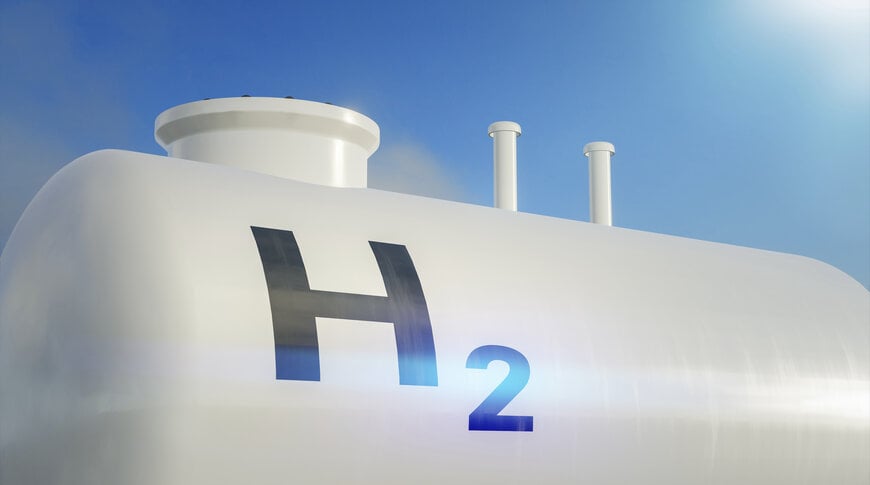
Industrial scale-up of green hydrogen production introduces severe process-control challenges, requiring complex fluid management across fluctuating operating pressures, explosive atmospheres, and multi-megawatt electrolyzer stacks. To address these operational constraints without introducing unwieldy cabling and excessive hardware interfaces, automation manufacturer Festo is deploying decentralized, modular automation architectures designed to streamline control across electrolyzers, purification stages, and gas balance-of-plant skids.
Decentralized I/O Architecture and Fluid Control Skids
Electrolyzer systems rely on coordinated valve switching, precise pressure regulation, and fluid recirculation to maintain electrochemical cell integrity. Conventional centralized control topologies require long, point-to-point multi-core cable runs from a remote central cabinet to every actuator and transmitter, introducing signal interference and substantial engineering overhead during plant expansions.
Festo implements decentralized automation architectures centered on the CPX-AP-I remote input/output system coupled with the VTUG valve terminal series. By locating IP65/IP67-rated remote I/O modules directly on process skids adjacent to the piping, the architecture reduces wiring complexity and allows individual process sections—such as deoxygenation systems, water treatment circuits, and pressure swing adsorption (PSA) gas purifiers—to function as self-contained operational modules. This layout provides high-speed fieldbus connectivity for discrete valves, analog temperature and pressure instrumentation, and automated shut-off systems without demanding centralized junction infrastructure.
Functional Safety and Explosion Protection Integration
Operating with pressurized hydrogen gas demands rigorous compliance with functional safety and explosion-protection directives. The low minimum ignition energy and wide flammability range of hydrogen require that electrical and pneumatic components operate safely within designated hazardous zones.
The automation strategy embeds ATEX and IECEx compliance directly into field components, combining intrinsically safe electrical interfaces with explosion-proof pneumatic actuation. Integrating SIL-rated safety interlocks and certified valve manifolds directly into the modular sub-systems ensures that emergency shutdown procedures, stack isolation sequences, and nitrogen purging routines execute deterministically, keeping system complexity manageable as production capacity expands.
Modular Interface Standardization for Industrial Scale-Up
Scaling hydrogen production from small pilot installations to industrial-scale multi-megawatt facilities requires modular repeatability rather than bespoke engineering. Festo bundles pre-configured, tested automation packages combining field instrumentation, pneumatic actuators, and communication interfaces to reduce integration touchpoints between skid builders, system integrators, and engineering procurement construction contractors.
At the Hydrogen Technology World Expo, held from October 20 to 22, 2026, at Hamburg Messe (Hall B6, Stand 6L40), Festo demonstrates these modular systems, illustrating how standardized fluidic control and modular automation frameworks lower integration overhead for commercial electrolyzer deployments.
Additional Context:
This section details technical specifications and competitive benchmarking not included in the original product announcement.
The transition toward decentralized, skid-based automation in the hydrogen industry aligns closely with the NAMUR Module Type Package (MTP) standard (VDI/VDE/NAMUR 2658). MTP establishes a vendor-neutral software description for process equipment, enabling electrolyzers, gas treatment units, and compression skids to integrate directly into higher-level distributed control systems (DCS) like plug-and-play modules. In physical skid automation, Festo competes directly with industrial fluid control and automation suppliers, notably Bürkert Fluid Control Systems and Emerson Automation Solutions.
Bürkert focuses heavily on fluidic blocks, angle-seat process valves, and decentralized valve manifolds such as the Type 8647 AirLINE SP system (which integrates natively into Siemens SIMATIC ET 200SP backplanes) and Type 8691 control heads. Bürkert’s strength lies in compact stainless-steel fluid control valves designed specifically for high-purity deionized water feed and high-pressure hydrogen service (up to 30 bar or higher on balance-of-plant lines).
Emerson offers high-capacity process automation portfolios utilizing ASCO solenoid valves, Fisher control valves, and DeltaV distributed control architectures, typically deployed on massive, centralized petrochemical-scale facilities. While Emerson provides comprehensive process control with certified functional safety across large-scale continuous processes, its architectures can require significant engineering overhead for modular, containerized electrolyzer skids.
Festo differentiates its platform through the CPX-AP-I and CPX-AP-A communication backbone. The system supports real-time communication speeds up to 200 MBaud, cable runs up to 50 meters between decentralized modules, and up to 80 individual modules or valve terminals per bus interface. This allows electrolyzer manufacturers to distribute compact pneumatic valve terminals (such as the VTUG, delivering nominal flow rates up to 1,000 l/min across 10 mm to 18 mm valve sizes) directly on skid frames. The architecture handles mixed IO-Link, digital, and analog process signals across standard industrial protocols (EtherCAT, PROFINET, Modbus TCP, EtherNet/IP) without requiring secondary communication gateways, offering a high-density, low-footprint automation layer tailored to containerized PEM and alkaline electrolyzer plants.
Edited by Natania Lyngdoh, Induportals editor, with AI assistance.
www.festo.com
