
www.ptreview.co.uk
18
'26
Written on Modified on
Machine Vision Application Development With Encrypted Architecture
MVTec Software has introduced an updated vision framework designed to secure networked communications and streamline industrial process deployment across manufacturing environments.
www.mvtec.com
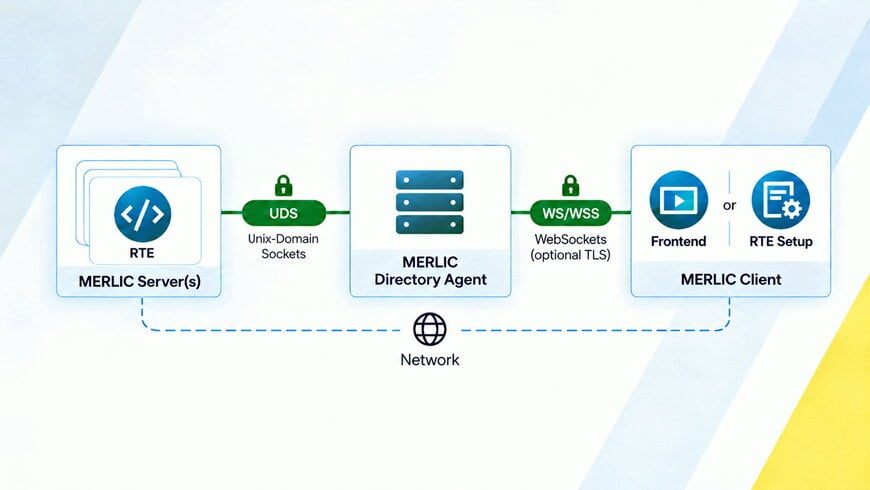
MVTec Software GmbH has scheduled the release of version 26.10 of its vision software framework for October 15, 2026, delivering secure-by-default architecture and enhanced tool modularity to manufacturing lines, automated inspection cells, and system integration projects. The software facilitates the configuration and deployment of industrial image-processing routines without custom code, addressing critical security and maintenance challenges in connected factory infrastructures.
Industrial Cybersecurity and Encrypted Protocol Integration
Automated production networks require strict access governance to limit vulnerability exposure across plant-floor systems. The revised communication infrastructure incorporates a secure-by-default model where remote interfaces are deactivated upon installation. External transmission requires administrative authorization backed by Transport Layer Security (TLS) cryptographic protocols.
The framework transitions remote interfaces to WebSockets, allowing multiple system processes and separate instances to multiplex over an identical TCP port via targeted endpoints. This minimizes operational firewall openings and standardizes target identification. Local internal communications operate over Unix-domain sockets (UDS), which bypass network stack latency and port exhaustion while enforcing access control through native operating system file permissions.
Component Verification and Vulnerability Management
Integration into enterprise security workflows is supported by machine-readable Software Bills of Materials (SBOM) structured in the standardized SPDX format. Covering the majority of delivered software components, these inventories expose dependency trees, origins, revisions, and licensing parameters. Security teams can parse the datasets against Common Vulnerabilities and Exposures (CVE) registers to verify patch status and automate industrial compliance audits.
Multitasking Instance Management and UI Improvements
Manufacturing hardware hosting parallel vision inspections gains improved visibility through a redesigned configuration interface in the Frontend and RTE Setup tools. Administrators can specify targeted software instances on host platforms, view active availability indicators, and evaluate real-time security parameters prior to connection.
Development workflows within the application builder include isolated tab rendering for grouped tool clusters, exposing contained parameters directly. Group-level interface configurations allow parameters and outputs to bind to frontend visualization widgets without dismantling the group architecture. In parallel, recipe management allows direct importation of vision configurations as virtual recipes, cutting deployment overhead. Parameter inspection overlays for designated regions of interest (ROI) present dimensions, Cartesian coordinates, angles, and radial metrics natively on selection.
Additional Context
This section details technical specifications and competitive bench marking not included in the original product announcement.
Industrial no-code and low-code vision platforms routinely balance operator abstraction against enterprise network compliance. MERLIC 26.10 competes directly with frameworks such as Cognex In-Sight Explorer and Zebra Aurora Design Assistant (formerly Matrox Design Assistant). While traditional platforms rely on proprietary application protocols or industrial fieldbus bridges (such as PROFINET or EtherNet/IP) that depend heavily on external network segmentation, the migration of MERLIC to TLS-secured WebSockets on uniform ports aligns vision execution closer to modern industrial Internet of things (IIoT) microservice models. Furthermore, providing SPDX-compliant SBOM files provides measurable parity with IEC 62443-4-1 requirements for secure development lifecycle monitoring, an emerging specification standard where legacy machine vision platforms frequently lack transparency regarding third-party libraries and runtime dependencies.
Edited by Evgeny Churilov, Induportals Media - Adapted by AI.
www.mvtec.com
