
www.ptreview.co.uk
14
'26
Written on Modified on
Schaeffler Introduces Formed Strain Wave Gearboxes for Mass-Market Humanoid Robots
New forming technology cuts manufacturing costs and material use while delivering precision, stiffness and compactness for scalable humanoid robot production.
www.schaeffler.com
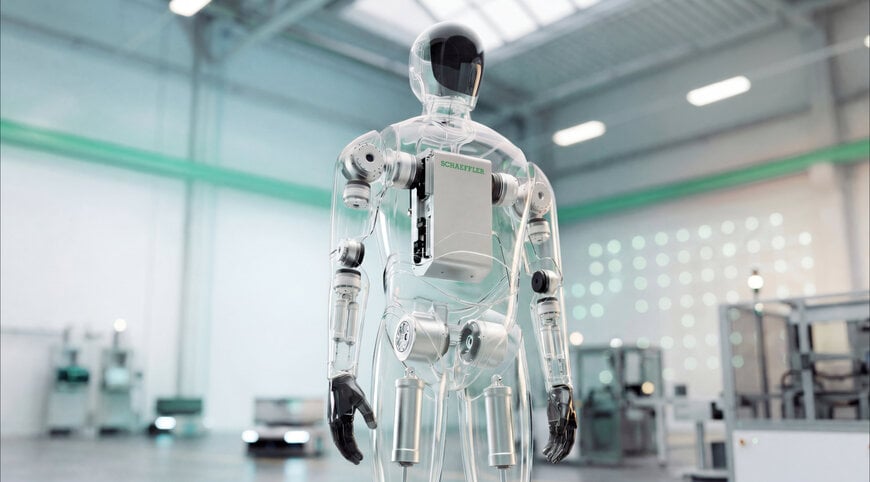
Schaeffler develops and supplies key components for the scaling of humanoid robots. (Image: Schaeffler)
Schaeffler is bringing a new manufacturing approach to the humanoid robotics market by introducing formed strain wave gearboxes for joint actuators. This process utilizes high-pressure forming technology to replace traditional machining, targeting robotics manufacturers seeking mass-market scalability.
Requirement for Strain Wave Gearboxes in Robotics
Strain wave gearboxes represent a key component within actuator assemblies, which currently account for approximately half of the total manufacturing cost of a humanoid robot. These gearboxes are utilized in robotic joints because they transmit movements with precision, high torque capacity, and high gear reduction ratios within highly constrained physical spaces. While the current market standard relies on precision machining to produce these components, that method is capital-intensive and time-consuming, presenting a potential bottleneck for the scaling of humanoid robot production.
Efficiency Improvements Through Forming Technology
To address manufacturing constraints, Schaeffler developed a forming process that shapes high-precision gear geometries using high pressing forces rather than material removal. This technological shift reduces the time required to complete key component manufacturing steps from minutes to seconds. The forming method cuts overall manufacturing costs by more than 25 percent and decreases material consumption by more than 75 percent. Despite the shift away from precision machining, the formed strain wave gearboxes achieve comparable torques, efficiencies, and dimensional accuracy while improving process stability.
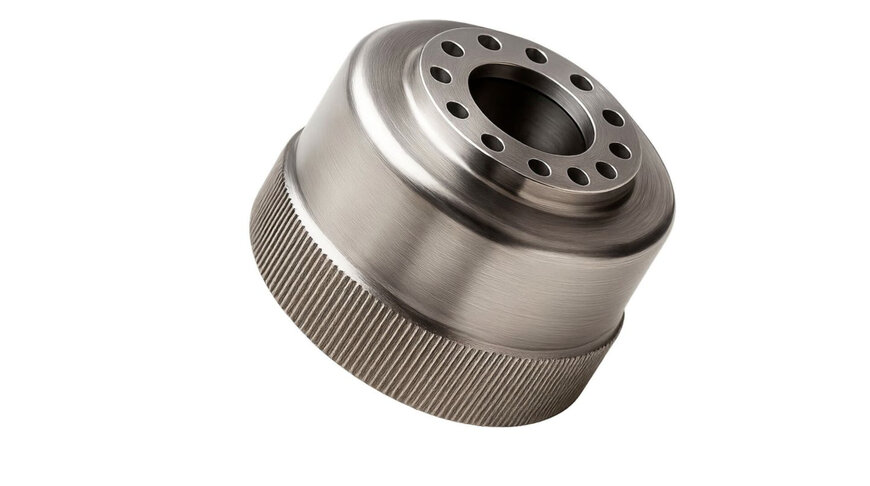
The formed strain wave gearboxes from Schaeffler were developed especially for humanoid robots and transmit movements precisely and with a high torque capacity and a high gear reduction ratio in an extremely compact space. (Image: Schaeffler)
Production Timeline and Industrial Integration
Extensive validation testing of the formed strain wave gearboxes has concluded, establishing the technical foundation for mass manufacturing slated to begin in 2027. Initial production will launch in Germany before successively expanding to other regions. The company leverages an existing production baseline, having manufactured over two million formed strain wave gearboxes for the automotive sector over the past decade. David Kehr, President of Humanoid Robotics at Schaeffler, stated that the company deploys humanoids along its global value chain, allowing for the development of key components based on direct operational data and decades of high-volume manufacturing experience.
Additional Context:
This section details technical specifications and competitive benchmarking not included in the original product announcement
Within the robotic joint actuator market, strain wave gearboxes, often referred to as harmonic drives, are standard for humanoid upper body and collaborative robot arms due to their near-zero backlash, typically under 1 arcminute, and high reduction ratios ranging from 50:1 to 160:1. Established industry suppliers, such as Harmonic Drive and Leaderdrive, traditionally manufacture the flexible and rigid spline components using specialized CNC machining. While machining delivers high positioning accuracy, it involves significant material removal and longer cycle times. By transitioning to a high-pressure forming process, Schaeffler directly targets the material waste and cycle time limitations of conventional machining, establishing a measurable benchmark of 75 percent less material utilized and a cycle time reduction from minutes to seconds per component. This approach positions the technology specifically for high-volume industrial scaling against traditional machined alternatives.
Edited by Natania Lyngdoh, Induportals editor, assisted by AI.
www.schaeffler.com
Schaeffler is bringing a new manufacturing approach to the humanoid robotics market by introducing formed strain wave gearboxes for joint actuators. This process utilizes high-pressure forming technology to replace traditional machining, targeting robotics manufacturers seeking mass-market scalability.
Requirement for Strain Wave Gearboxes in Robotics
Strain wave gearboxes represent a key component within actuator assemblies, which currently account for approximately half of the total manufacturing cost of a humanoid robot. These gearboxes are utilized in robotic joints because they transmit movements with precision, high torque capacity, and high gear reduction ratios within highly constrained physical spaces. While the current market standard relies on precision machining to produce these components, that method is capital-intensive and time-consuming, presenting a potential bottleneck for the scaling of humanoid robot production.
Efficiency Improvements Through Forming Technology
To address manufacturing constraints, Schaeffler developed a forming process that shapes high-precision gear geometries using high pressing forces rather than material removal. This technological shift reduces the time required to complete key component manufacturing steps from minutes to seconds. The forming method cuts overall manufacturing costs by more than 25 percent and decreases material consumption by more than 75 percent. Despite the shift away from precision machining, the formed strain wave gearboxes achieve comparable torques, efficiencies, and dimensional accuracy while improving process stability.
The formed strain wave gearboxes from Schaeffler were developed especially for humanoid robots and transmit movements precisely and with a high torque capacity and a high gear reduction ratio in an extremely compact space. (Image: Schaeffler)
Production Timeline and Industrial Integration
Extensive validation testing of the formed strain wave gearboxes has concluded, establishing the technical foundation for mass manufacturing slated to begin in 2027. Initial production will launch in Germany before successively expanding to other regions. The company leverages an existing production baseline, having manufactured over two million formed strain wave gearboxes for the automotive sector over the past decade. David Kehr, President of Humanoid Robotics at Schaeffler, stated that the company deploys humanoids along its global value chain, allowing for the development of key components based on direct operational data and decades of high-volume manufacturing experience.
Additional Context:
This section details technical specifications and competitive benchmarking not included in the original product announcement
Within the robotic joint actuator market, strain wave gearboxes, often referred to as harmonic drives, are standard for humanoid upper body and collaborative robot arms due to their near-zero backlash, typically under 1 arcminute, and high reduction ratios ranging from 50:1 to 160:1. Established industry suppliers, such as Harmonic Drive and Leaderdrive, traditionally manufacture the flexible and rigid spline components using specialized CNC machining. While machining delivers high positioning accuracy, it involves significant material removal and longer cycle times. By transitioning to a high-pressure forming process, Schaeffler directly targets the material waste and cycle time limitations of conventional machining, establishing a measurable benchmark of 75 percent less material utilized and a cycle time reduction from minutes to seconds per component. This approach positions the technology specifically for high-volume industrial scaling against traditional machined alternatives.
Edited by Natania Lyngdoh, Induportals editor, assisted by AI.
www.schaeffler.com
