
www.ptreview.co.uk
13
'26
Written on Modified on
Digital wax-jetting for precision casting using Nitrox printheads
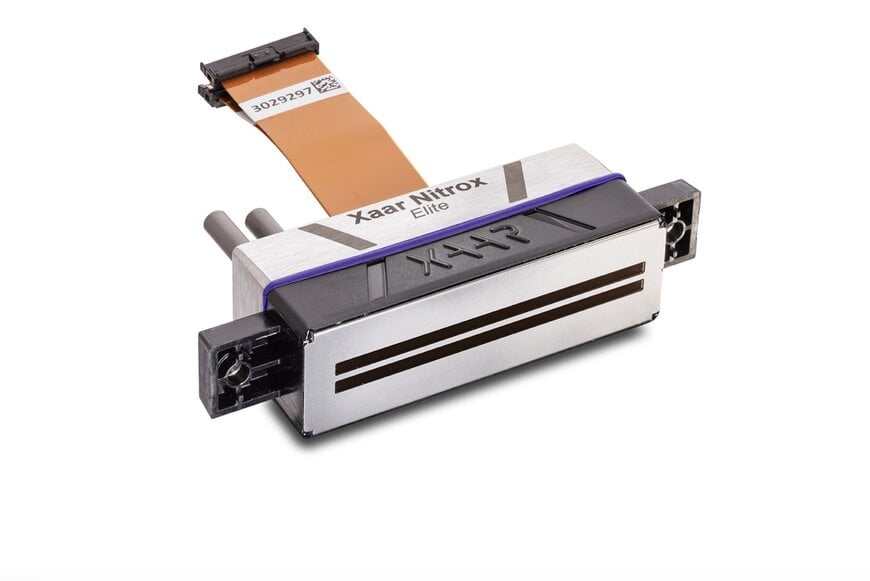
Industrial 3D printing specialist ZCZH has integrated Xaar Nitrox printheads into its wax-jetting additive manufacturing system to establish a fully digital workflow.
www.xaar.com
Application Area: Industrial 3D Printing, Wax-Jetting Systems, Additive Manufacturing for Investment Casting
Industry Sector: Aerospace, Automotive, Medical Devices, Industrial Equipment Manufacturing
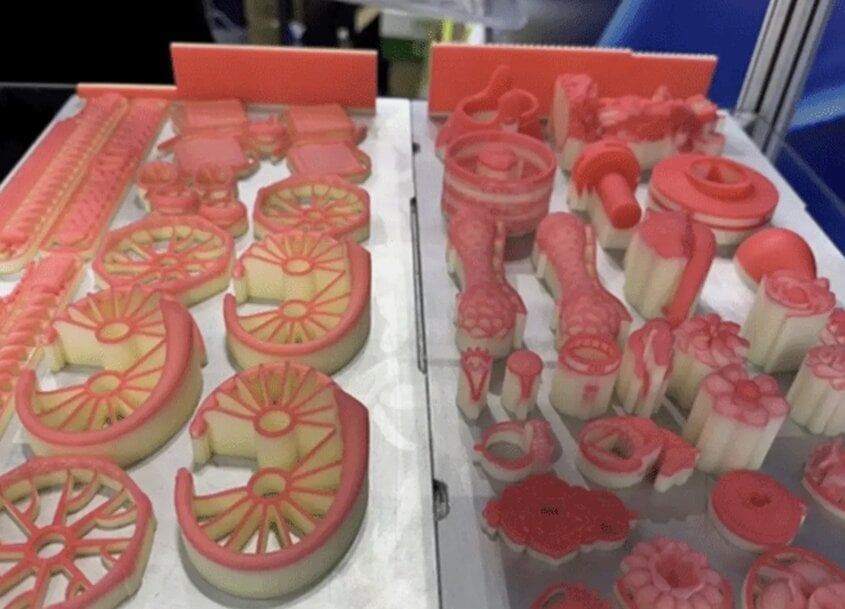
ZCZH, a China-based industrial 3D printing company, needed a more efficient and flexible approach to wax pattern production for investment casting. By integrating Xaar’s Nitrox printheads into its wax-jetting system, the company has enabled a fully digital additive manufacturing process. This approach reduces lead times from days to hours, improves accuracy and supports small-batch, complex production, helping casting manufacturers modernise workflows and increase production agility.
Casting manufacturers operating in high-precision fields depend heavily on the dimensional accuracy and surface quality of their initial wax patterns. In traditional investment casting setups, forming these intricate wax geometries requires dedicated mechanical tooling or laborious manual engraving processes. This legacy approach introduces severe operational bottlenecks: designing and fabricating customized physical tools can expand product development timelines by weeks, while manual carving introduces human error and limits batch-to-batch repeatability. Furthermore, adapting a finalized tool configuration to accommodate rapid design changes or small-batch custom variants remains cost-prohibitive, restricting production agility.
To solve these manufacturing limitations and support high-complexity, low-volume components, ZCZH sought to fully digitize the wax pattern workflow. However, deploying an additive manufacturing model for industrial wax materials requires specialized material handling capabilities. Molten phase-change waxes behave as high-viscosity fluids that present high risks of nozzle clogging, fluid sedimentation, and drop placement deviations during continuous printing runs. To eliminate these jetting failures, secure long-duration process stability, and maintain strict industrial tolerances, the manufacturer implemented a specialized industrial inkjet control architecture.
Deploying Fluid Recirculation Printheads to Optimize Digital Material Deposition
The integration of the wax-jetting hardware transforms the production floor into a scalable, automated digital fabrication thread:
- Continuous Fluid Recirculation: The additive manufacturing platform leverages Xaar’s Nitrox printheads featuring TF Technology and the SureFlow fluid management system. This setup drives continuous fluid recirculation directly behind the nozzle plates, which prevents material sedimentation, eliminates trapped air bubbles, and minimizes nozzle clogging during extended operational runs.
- High-Viscosity Fluid Management: The printhead architecture is specifically optimized for stable drop-on-demand firing of high-viscosity materials. Backed by Ultra High Viscosity Technology and embedded temperature regulation, the system maintains consistent droplet volumes and precise trajectory control across complex geometries.
- Direct Digital Toolpath Pipeline: The wax-jetting system functions as a fully digital workflow that directly translates 3D design data into active inkjet deposition paths. This software-defined strategy eliminates multiple manual preprocessing steps and reduces downstream post-processing workloads.
- Industrial Precision and Scalability: Moving away from mechanical tooling allowed the facility to compress complex production cycles from days to hours, accelerating iteration speeds while securing micron-level repeatability. The simplified, digital workflow ensures straightforward operator onboarding, establishing a repeatable production method suited to demanding industrial casting applications.
Additional Context
The section below examines the technical specifications and operational performance benchmarks not included in the original case study.
Fluid Recirculation and Viscosity Capabilities in Industrial Inkjet Systems
Traditional drop-on-demand piezo inkjet printheads operate under strict fluidic boundaries, typically restricted to thin, low-viscosity inks ranging between 8 and 12 centipoises at jetting temperatures. When handling complex phase-change materials like industrial casting waxes, standard printhead channels experience rapid temperature gradients and fluid stagnation, causing localized cooling that triggers immediate nozzle blockages.
Integrating a dedicated high-flow recirculation loop changes the fluid dynamic environment. The fluid moves at high velocity past the rear of the active nozzle plates during drop ejection, ensuring the array remains uniformly primed and reducing the time required for nozzle self-recovery. Furthermore, this architecture allows the system to jet heavy fluids at viscosities of up to 100 centipoises at operational temperatures. This expanded viscosity capability enables the direct deposition of higher molecular weight materials, which boosts the mechanical robustness and structural density of the printed patterns.
Comparative Analysis of Printhead Architectures
Transitioning from standard low-viscosity, non-recirculating printhead configurations to an integrated high-viscosity fluid twin infrastructure introduces core changes to manufacturing performance:
The section below examines the technical specifications and operational performance benchmarks not included in the original case study.
Fluid Recirculation and Viscosity Capabilities in Industrial Inkjet Systems
Traditional drop-on-demand piezo inkjet printheads operate under strict fluidic boundaries, typically restricted to thin, low-viscosity inks ranging between 8 and 12 centipoises at jetting temperatures. When handling complex phase-change materials like industrial casting waxes, standard printhead channels experience rapid temperature gradients and fluid stagnation, causing localized cooling that triggers immediate nozzle blockages.
Integrating a dedicated high-flow recirculation loop changes the fluid dynamic environment. The fluid moves at high velocity past the rear of the active nozzle plates during drop ejection, ensuring the array remains uniformly primed and reducing the time required for nozzle self-recovery. Furthermore, this architecture allows the system to jet heavy fluids at viscosities of up to 100 centipoises at operational temperatures. This expanded viscosity capability enables the direct deposition of higher molecular weight materials, which boosts the mechanical robustness and structural density of the printed patterns.
Comparative Analysis of Printhead Architectures
Transitioning from standard low-viscosity, non-recirculating printhead configurations to an integrated high-viscosity fluid twin infrastructure introduces core changes to manufacturing performance:
- Data and Path Synchronization: Under a traditional non-recirculating printhead framework, system synchronization is frequently fragmented; manual maintenance routines, purging cycles, and nozzle-wiping breaks must be programmed into the primary control logic to prevent dry-out, disrupting the continuous production path. Conversely, an integrated through-flow recirculation system provides fully unified path synchronization, maintaining constant fluid motion to permit continuous single-pass or scanning operations without requiring frequent maintenance stops.
- Thermal Control and Uniformity: Legacy automated inkjet lines exhibit reduced error control because mechanical heat generation inside the piezo actuators creates temperature variations across the nozzle array, leading to variable drop velocities and print density discrepancies. A through-flow fluid architecture delivers continuous asset optimization, pulling heat directly from within the internal channel structures to regulate ink viscosity uniformly across a wide 70.49-millimeter print swathe.
- Material Versatility and Waste Management: Traditional narrow-channel printheads suffer from low operational flexibility, as loading complex functional polymers or high-particle fluids leads to immediate sedimentation and permanent device failure. An advanced high-viscosity printhead platform features high modularity, utilizing wide pressure windows and customizable firing waveforms to process diverse industrial materials safely while ensuring that tool-free manufacturing minimizes raw material waste.
Edited by Romila DSilva, Induportals Editor, with AI assistance.
