
www.ptreview.co.uk
24
'26
Written on Modified on
Stainless Steel Drive Couplings for Aquaculture Automation
ENEMAC introduces stainless steel metal bellows and elastomer couplings designed for harsh aquaculture environments.
www.enemac.de
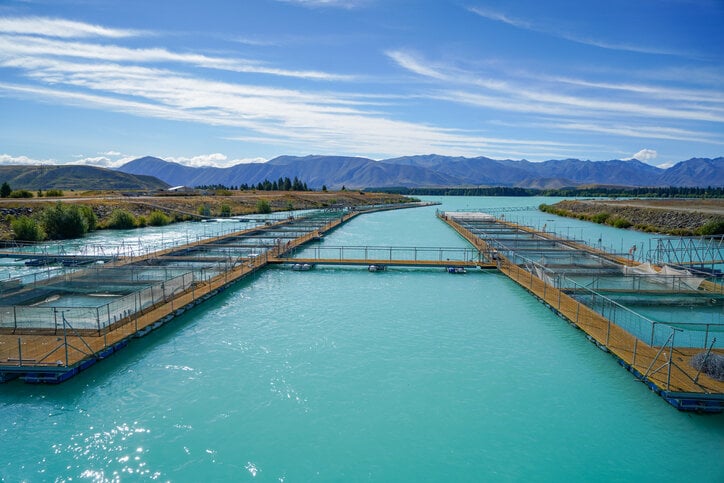
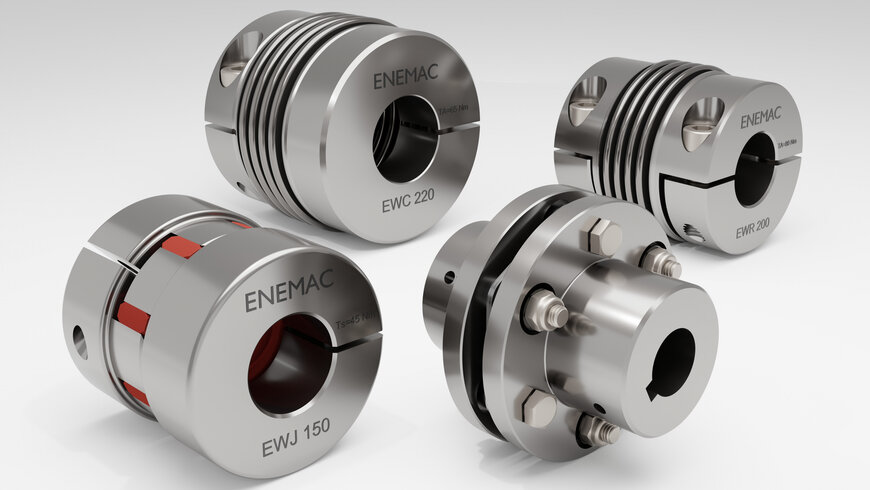
ENEMAC has developed the EWC and EWJ series of stainless steel shaft couplings, engineered specifically for the highly corrosive environmental conditions of modern aquaculture facilities. These metal bellows and elastomer couplings provide precise torque transmission and vibration damping for automated feeding systems, pumps, and processing equipment exposed to saline and high-humidity operating environments.
Metal Bellows Couplings for Servo Precision
For highly dynamic servo applications such as automated dosing and positioning axes, the EWC series utilizes backlash-free metal bellows to ensure angularly synchronous torque transmission and high torsional stiffness. The stainless steel couplings accommodate torque loads from 1.5 to 1,000 Nm and rotational speeds up to 23,000 rpm across shaft diameters ranging from 3 to 90 mm. To meet strict sanitation standards in fish processing areas, the hardware features a hygienic design with smooth, easy-to-clean surfaces that minimize contamination buildup. Furthermore, the inclusion of split clamp hubs permits radial installation, allowing technicians to mount or replace the couplings in confined spaces without displacing adjacent powertrain components.
Elastomer Couplings for Load Damping
In applications subjected to fluctuating forces and shock loads—such as pump drives, aeration systems, and screw conveyors—the EWJ series of stainless steel elastomer couplings provides critical mechanical isolation. An integrated elastomeric spider dampens operational vibrations and absorbs torque peaks, reducing structural stress on adjacent drive components. The design simultaneously compensates for angular, radial, and axial shaft misalignments while electrically isolating the connected machinery. These units transmit torques between 6 and 650 Nm, support operational speeds up to 29,000 rpm, and function continuously within a thermal range of –30 °C to +120 °C.
Additional Context: This section details technical specifications and material science not included in the original announcement
In marine and offshore aquaculture engineering, the specific grade of stainless steel utilized in drivetrain components is critical for mitigating chloride-induced pitting and crevice corrosion. While A2 (AISI 304) stainless steel provides adequate oxidation resistance for freshwater systems or standard washdown zones, A4 (AISI 316) is strictly required for direct saltwater exposure due to the addition of molybdenum, which stabilizes the passive chromium oxide layer against aggressive chloride ions. Furthermore, in elastomer jaw couplings like the EWJ series, the integrated "spider" insert determines the dynamic behavior of the entire drivetrain. These elastomeric inserts are typically molded from polyurethane and classified by Shore hardness (e.g., 98 Shore A or 64 Shore D). A softer spider provides superior vibration damping and electrical insulation (galvanic isolation) to prevent destructive bearing currents generated by Variable Frequency Drives (VFDs), whereas a harder spider yields higher torsional stiffness for precise rotational positioning at the expense of damping capacity.
Edited by Lekshman Ramdas, Induportals editor – adapted by AI.
www.enemac.com
