
www.ptreview.co.uk
11
'26
Written on Modified on
Infinite Field of View Technologies for Laser Micro-Machining
Aerotech introduces synchronized motion control and galvo scanning architectures designed to eliminate stitching errors in large-area precision manufacturing and micro-display assembly.
www.aerotech.com
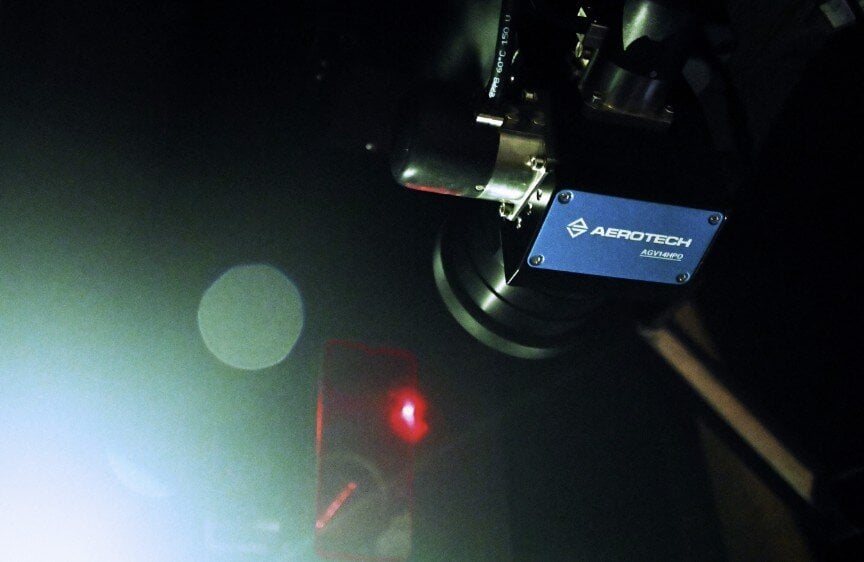
The laser laboratory in Fürth offers industrial testing facilities for precision, positioning and laser processes under real production conditions.
Aerotech is demonstrating advanced laser scanning algorithms and multi-axis motion control platforms engineered for micro-manufacturing sectors. These synchronized positioning systems integrate galvo scanners with servo stages to support high-precision applications, including the fabrication of micro-sensors and organic light-emitting diode displays.
Synchronizing Servo Axes and Optical Scanners
At the Micronora 2026 exhibition in Besancon, France, operating from September 29 to October 2 in Hall C at the CLP joint stand, engineers can evaluate alternative architectures for laser processing. A primary limitation in conventional laser micro-machining is the physical boundary of the scanner's field of view. To process substrates larger than this optical limit, systems traditionally utilize a step-and-scan methodology, which often introduces overlapping seam errors and thermal stress misalignments at the joining edges. The Infinite Field of View mechanism resolves this by continuously synchronizing linear or rotary mechanical servo axes with the optical laser scanners. By coordinating the highly dynamic positioning of a galvo scanner with the extended travel range of a mechanical servo table, the system processes large areas without stopping to reposition, thereby eliminating stitching errors and improving overall throughput.
Eliminating Stitching Errors in Micro-Display Production
The continuous processing capability provided by synchronized motion control ecosystems is specifically applicable to the production of micro-actuators, micro-sensors, and organic light-emitting diode displays. Alongside the field of view expansion, control approaches for flexible 5-axis laser micro-machining are deployed using the AGV5D galvo scanner. This hardware combination allows for precise nanometer-range positioning critical to high-density electronic assemblies. Simon Smith, European Director at Aerotech, notes that multi-scanner systems equipped with infinite field of view controllers facilitate complex, large-area, and highly dynamic laser processing between multiple axes without traditional stitching constraints.
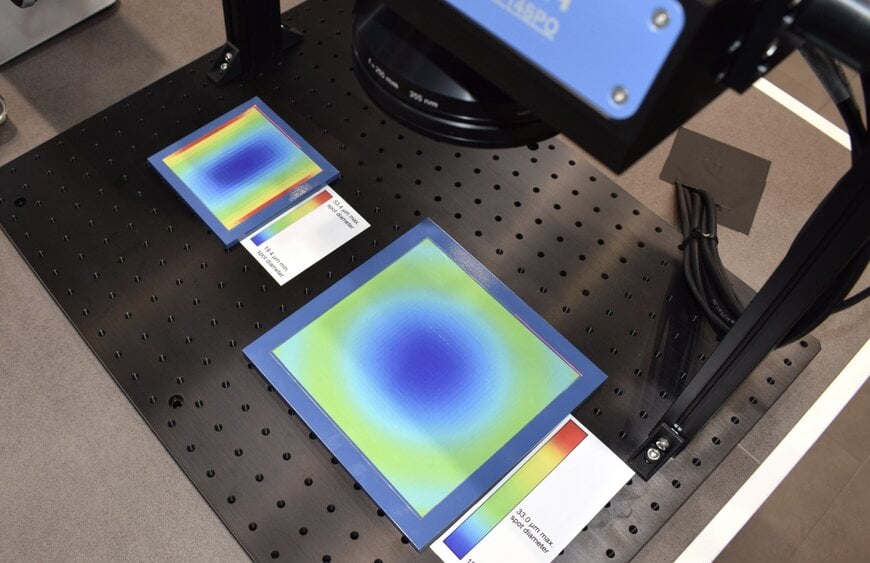
Multi-scanner systems with IFOV controllers (Infinitive Field of View) enable complex, large-scale and highly dynamic laser processing between multiple axes, as required in OLED display production, for example. This eliminates errors and increases throughput rates.
Drive Integration and Process Validation Capabilities
Operating continuous, highly dynamic multi-axis systems requires robust software and hardware integration. The Automation1 motion control platform provides the underlying infrastructure for these synchronized movements. Recent updates to the platform allow for the direct integration of XA4 pulse-width modulation drives. These compact single-axis and multi-axis servo motor drives are designed for dense control cabinet installations, lowering hardware complexity while expanding the platform's programming capabilities. To support the deployment of these advanced laser micro-machining systems, a dedicated laser laboratory in Fuerth, Germany, became operational in early 2026. This facility serves as a centralized European hub for testing and validating laser-based manufacturing processes, as well as executing the assembly of precision drive components.
Additional Context
This section details technical specifications and competitive benchmarking not included in the original news release.
Within the precision motion control and advanced laser micro-machining market, the synchronization of galvo scanners and mechanical stages is a primary benchmark for continuous-path processing. The Infinite Field of View technology competes directly with synchronized architectures such as the XL SCAN system developed jointly by ACS Motion Control and Scanlab. Both technologies aim to eliminate the throughput bottlenecks and stitching inaccuracies inherent to traditional step-and-scan equipment.
When evaluating these continuous-scan platforms, engineers benchmark dynamic following error, tracking latency, and absolute spatial accuracy. Conventional step-and-scan systems require the mechanical stage to decelerate to a complete stop before the laser fires, which induces mechanical resonance and limits production volume. In contrast, synchronized systems maintain constant mechanical stage velocity while the optical galvo mirrors dynamically compensate for the stage's position in real time. High-end motion control platforms managing these operations typically achieve tracking latencies in the sub-microsecond range, maintaining absolute spatial tracking accuracies of less than a micrometer depending on the linear encoder resolution and the closed-loop servo update rates.
Edited by Aishwarya Mambet, Induportals Editor, with AI assistance.
www.aerotech.com
Aerotech is demonstrating advanced laser scanning algorithms and multi-axis motion control platforms engineered for micro-manufacturing sectors. These synchronized positioning systems integrate galvo scanners with servo stages to support high-precision applications, including the fabrication of micro-sensors and organic light-emitting diode displays.
Synchronizing Servo Axes and Optical Scanners
At the Micronora 2026 exhibition in Besancon, France, operating from September 29 to October 2 in Hall C at the CLP joint stand, engineers can evaluate alternative architectures for laser processing. A primary limitation in conventional laser micro-machining is the physical boundary of the scanner's field of view. To process substrates larger than this optical limit, systems traditionally utilize a step-and-scan methodology, which often introduces overlapping seam errors and thermal stress misalignments at the joining edges. The Infinite Field of View mechanism resolves this by continuously synchronizing linear or rotary mechanical servo axes with the optical laser scanners. By coordinating the highly dynamic positioning of a galvo scanner with the extended travel range of a mechanical servo table, the system processes large areas without stopping to reposition, thereby eliminating stitching errors and improving overall throughput.
Eliminating Stitching Errors in Micro-Display Production
The continuous processing capability provided by synchronized motion control ecosystems is specifically applicable to the production of micro-actuators, micro-sensors, and organic light-emitting diode displays. Alongside the field of view expansion, control approaches for flexible 5-axis laser micro-machining are deployed using the AGV5D galvo scanner. This hardware combination allows for precise nanometer-range positioning critical to high-density electronic assemblies. Simon Smith, European Director at Aerotech, notes that multi-scanner systems equipped with infinite field of view controllers facilitate complex, large-area, and highly dynamic laser processing between multiple axes without traditional stitching constraints.
Multi-scanner systems with IFOV controllers (Infinitive Field of View) enable complex, large-scale and highly dynamic laser processing between multiple axes, as required in OLED display production, for example. This eliminates errors and increases throughput rates.
Drive Integration and Process Validation Capabilities
Operating continuous, highly dynamic multi-axis systems requires robust software and hardware integration. The Automation1 motion control platform provides the underlying infrastructure for these synchronized movements. Recent updates to the platform allow for the direct integration of XA4 pulse-width modulation drives. These compact single-axis and multi-axis servo motor drives are designed for dense control cabinet installations, lowering hardware complexity while expanding the platform's programming capabilities. To support the deployment of these advanced laser micro-machining systems, a dedicated laser laboratory in Fuerth, Germany, became operational in early 2026. This facility serves as a centralized European hub for testing and validating laser-based manufacturing processes, as well as executing the assembly of precision drive components.
Additional Context
This section details technical specifications and competitive benchmarking not included in the original news release.
Within the precision motion control and advanced laser micro-machining market, the synchronization of galvo scanners and mechanical stages is a primary benchmark for continuous-path processing. The Infinite Field of View technology competes directly with synchronized architectures such as the XL SCAN system developed jointly by ACS Motion Control and Scanlab. Both technologies aim to eliminate the throughput bottlenecks and stitching inaccuracies inherent to traditional step-and-scan equipment.
When evaluating these continuous-scan platforms, engineers benchmark dynamic following error, tracking latency, and absolute spatial accuracy. Conventional step-and-scan systems require the mechanical stage to decelerate to a complete stop before the laser fires, which induces mechanical resonance and limits production volume. In contrast, synchronized systems maintain constant mechanical stage velocity while the optical galvo mirrors dynamically compensate for the stage's position in real time. High-end motion control platforms managing these operations typically achieve tracking latencies in the sub-microsecond range, maintaining absolute spatial tracking accuracies of less than a micrometer depending on the linear encoder resolution and the closed-loop servo update rates.
Edited by Aishwarya Mambet, Induportals Editor, with AI assistance.
www.aerotech.com
