
www.ptreview.co.uk
01
'26
Written on Modified on
AI-Assisted IoT Development Across the Device Lifecycle
Nordic Semiconductor extends AI-driven workflows from embedded software development to deployed fleet management within a unified chip-to-cloud environment.
www.nordicsemi.com
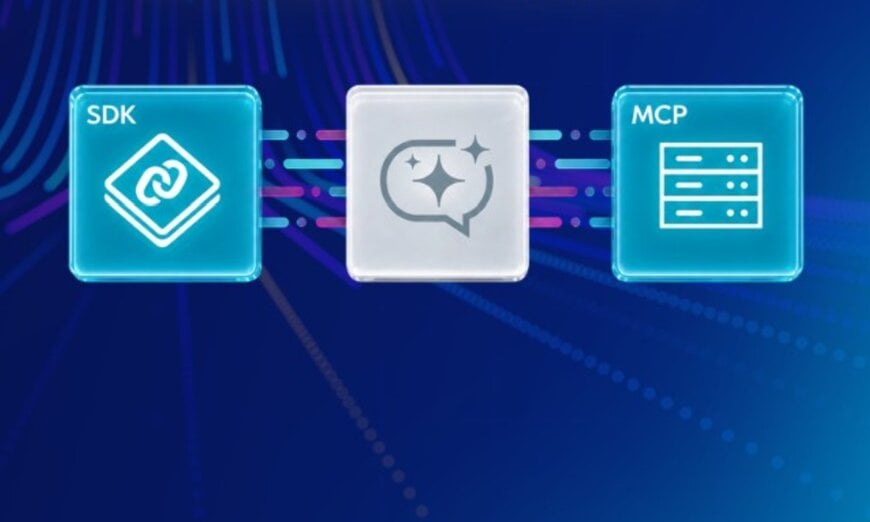
Nordic Semiconductor has expanded AI-assisted development capabilities across the entire lifecycle of Internet of Things (IoT) devices, integrating development, deployment, and operational data into a single workflow. The approach is designed for low-power wireless IoT applications and aims to support firmware development, device deployment, diagnostics, and fleet management through AI-enabled tools connected to Nordic's hardware, software, and cloud ecosystem.
Extending AI Beyond the Code Editor
Artificial intelligence has become increasingly common in software development environments, but most implementations remain limited to code generation and editing functions. In embedded systems development, engineers often work across multiple tools and environments, including software development kits (SDKs), hardware platforms, cloud services, and device management systems.
Nordic Semiconductor's approach connects these elements into a unified workflow. The company has integrated AI-assisted capabilities throughout its chip-to-cloud ecosystem, allowing developers to access design, deployment, and operational information through a single interaction model.
This broader integration is particularly relevant for wireless IoT systems, where device performance depends on the interaction between embedded firmware, hardware resources, connectivity infrastructure, and cloud services.
Accelerating Firmware Prototyping and Validation
One objective of the expanded AI-assisted environment is to reduce the time required to move from concept to functional prototype. Developers can use AI tools to accelerate proof-of-concept development on Nordic development kits while maintaining access to platform-specific implementation guidance.
According to the company, the system is designed to improve the quality of AI-generated responses by providing access to Nordic-specific development context. This approach may reduce the number of prompt iterations required to generate usable code and configuration recommendations.
Reducing iteration cycles can lower computational costs associated with AI-assisted development while helping developers validate embedded software more efficiently during early design stages.
Integrating Field Data with Development Workflows
A distinguishing aspect of the platform is its ability to incorporate operational data from deployed IoT devices into the development process.
Traditionally, debugging field-deployed embedded devices requires engineers to switch between monitoring platforms, cloud dashboards, diagnostic tools, and development environments. Nordic's implementation aims to connect these workflows by allowing AI-assisted analysis of deployed device data within the same development framework used to create firmware.
This integration can support root-cause analysis, issue investigation, and software maintenance activities across deployed fleets. For organizations managing large numbers of connected devices, such capabilities may help streamline troubleshooting and lifecycle management processes.
MCP Infrastructure and AI Assistant Compatibility
The AI-assisted functionality is delivered through Nordic's Model Context Protocol (MCP) server infrastructure. MCP has emerged as a framework for providing external systems and contextual information to AI assistants, allowing models to access structured data sources and development environments.
Rather than requiring developers to adopt a specific AI platform, Nordic has designed the solution to work with different AI assistants. This compatibility allows engineering teams to continue using existing AI tools while accessing Nordic-specific development resources and device context.
By combining platform knowledge with operational data, the company seeks to improve the relevance of AI-generated recommendations throughout the embedded development lifecycle.
Supporting Long-Term IoT Product Management
Managing connected devices over extended operational lifecycles presents challenges that extend beyond initial software development. Activities such as SDK migrations, custom hardware initialization, firmware maintenance, diagnostics, and fleet management can require significant engineering effort.
Nordic's strategy focuses on providing AI-assisted support across these stages rather than limiting assistance to coding tasks. The company positions the technology as a means of augmenting developer expertise by providing contextual information throughout product development and deployment.
As connected device deployments continue to expand across industrial IoT, smart building infrastructure, healthcare, and asset tracking applications, development environments capable of integrating operational and engineering data are becoming increasingly relevant.
Additional Context
This section details technical specifications and competitive benchmarking not included in the original news release.
AI-assisted embedded development has become an area of active investment across the semiconductor industry. Comparable initiatives include STMicroelectronics' integration of AI-enabled development tools within STM32Cube environments, NXP's AI-assisted software development capabilities, Texas Instruments' developer ecosystem enhancements, and cloud-connected development platforms from vendors such as Particle and Arduino.
A key differentiator in Nordic's approach is the integration of AI workflows across the entire device lifecycle rather than focusing solely on source-code generation. Competitive benchmarking in this segment typically evaluates SDK integration, cloud connectivity, fleet management capabilities, access to operational telemetry, debugging support, and compatibility with third-party AI assistants. By linking firmware development with real-world deployment data through a unified chip-to-cloud architecture, Nordic is addressing a growing demand for lifecycle-aware development environments within the IoT ecosystem and the broader digital supply chain.
Edited by Aishwarya Mambet, Induportals Editor, with AI assistance.
www.nordicsemi.com
