
www.ptreview.co.uk
25
'26
Written on Modified on
HEIDENHAIN to showcase motor feedback and encoder innovations at SPS Italia 2026
New products at the HEIDENHAIN exhibit, located at Booth D040 in Hall 3, include the ILC 3019 inductive linear encoder from HEIDENHAIN and the 600 series incremental rotary encoder from LEINE LINDE.
www.heidenhain.com
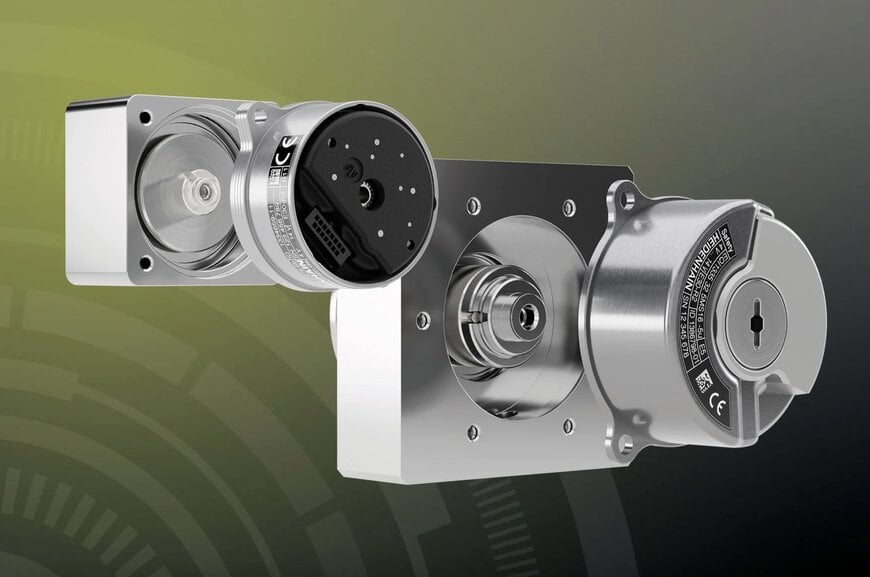
HEIDENHAIN and its corporate group brands will introduce a new portfolio of inductive encoders, functional safety devices, and integrated vibration sensors to optimize position control loops.
The cooperation will involve a joint exhibition by HEIDENHAIN, AMO, ETEL, LEINE LINDE, LTN, NUMERIK JENA, RENCO, and RSF to deploy unified motor feedback solutions across industrial machinery. This technical approach addresses the requirement for structural contamination resistance, predictive condition monitoring, and absolute positioning accuracy within the global digital supply chain.
Sensor Layer Consolidation within the Automotive Data Ecosystem
The relevance of these position feedback technologies stems from the industrial transition toward more complex, multi-axis robotic topologies that demand high uptime and extreme physical resilience. Set to be showcased at the SPS Italia 2026 trade show in Parma, Italy, from May 26–28, 2026, the modular encoder families will serve as an essential data-acquisition gateway on the factory floor. By converting raw mechanical displacements and micro-vibrations into standardized digital telemetry, the system will integrate physical hardware nodes directly into a broader automotive data ecosystem. This automated tracking will ensure real-time operational transparency, linking motion control loops with centralized cloud diagnostics to eliminate unplanned production stoppages.
High-Tolerance Linear Inductive Scanning Mechanics
To address position tracking in harsh industrial processing environments characterized by high magnetism, dust, or humidity, the HEIDENHAIN ILC 3019 will introduce an inductive exposed linear encoder configuration. The device will utilize a compact scanning head engineered with wide mounting tolerances to facilitate rapid mechanical integration into linear motors, robotic axes, and cutting machinery. Utilizing the established EnDat digital communication interface, the linear encoder will transmit high-fidelity absolute position coordinates to the primary automation controller, bypassing the signal degradation typical of traditional analog sensing loops under severe electromagnetic interference.
Multi-Bearer Feedback for Collaborative Robot Safety
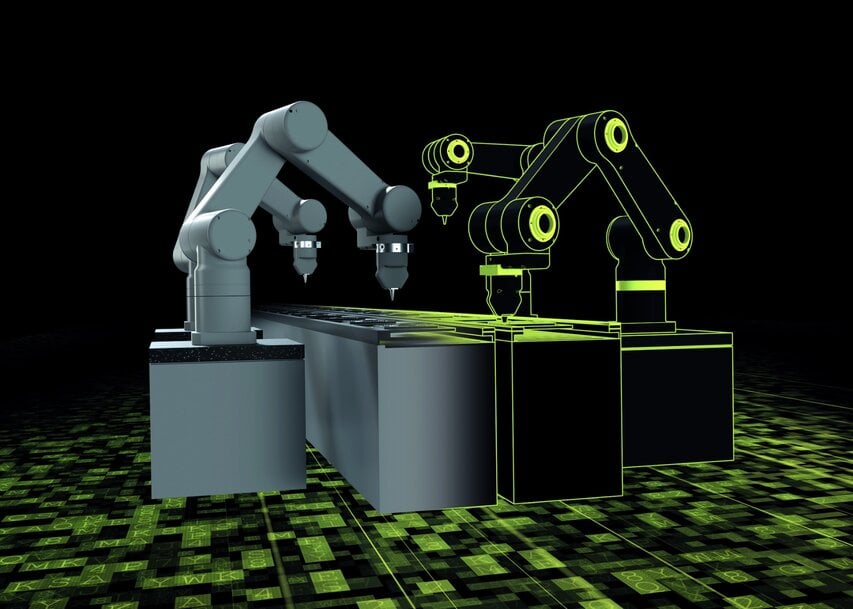
For advanced robotics and collaborative assemblies (cobots), the group will deploy dual and secondary encoder architectures to implement precise collision monitoring without requiring dedicated external torque sensors. By pairing primary motor feedback encoders with secondary angular measurement systems—such as the AMO WMRA inductive ring or the RSF MCR 16 optical angle encoder—the configuration will track position metrics both upstream and downstream of the axis gearbox. This dual position feedback will allow the control system to calculate microscopic angular discrepancies caused by external structural forces or physical obstructions, providing an immediate fallback loop that initiates automated emergency stops to protect personnel and machinery.
Core Architecture and Scalable Functional Safety
The physical drivetrain portfolio will incorporate the modular LEINE LINDE 600 series, which expands its inductive absolute lineup with new incremental rotary variants featuring oversized internal bearings to sustain structural integrity in steel mills and offshore environments. For safety-critical transit and material handling installations, the Functional Safety Integrated (FSI) range will deliver safe speed, position, and acceleration data. For instance, the absolute FSI 608 encoder will achieve structural certifications up to SIL 3 and PL e, Category 4, utilizing redundant internal signal paths and PROFIsafe protocols over a high 31-bit resolution layer.
Concurrently, the HEIDENHAIN ECI 1323 Splus and EQI 1335 Splus rotary units will integrate a high-performance internal accelerometer and a temperature sensor probe interface. By executing on-chip vibration analysis and streaming the processed metrics via the EnDat 3 single-cable interface, these intelligent nodes will enable real-time online condition monitoring. This advanced telemetry will allow operators to schedule preventive servicing cycles based on genuine component strain metrics rather than static, time-based intervals, reducing auxiliary wiring overhead and minimizing potential supply chain points of failure by approximately 15% across large-scale automated automation setups.
Additional Context
This section details technical specifications and competitive benchmarking not included in the original news announcement.
In comparison to standard optical encoders from competitors like Renishaw (e.g., the RESOLUTE series) or Sick (such as the HIPERFACE DSL families), the primary technical differentiator of the HEIDENHAIN inductive scanning platform is its complete immunity to liquid contamination and electrostatic dust accumulation. While high-resolution optical systems offer superior sub-micron pitch accuracy under pristine cleanroom parameters, their signal amplitude degrades rapidly when exposed to cutting fluids or particulate matter, often forcing mechanical line shut-downs for manual cleaning.
Technical benchmarks indicate that the EnDat 3 communication protocol will lower diagnostic latency to under 10 milliseconds, matching the performance required for high-efficiency, continuous-cycle automation lines. Furthermore, by consolidating position feedback and multi-axis acceleration profiling into a single device enclosure, the system will achieve a compact footprint that reduces total panel wiring complexity by up to 40% compared to discrete external sensor integrations, setting a highly scalable benchmark for flexible factory floor modernization.
Edited by Romila DSilva, Induportals Editor, with AI assistance.
www.heidenhain.com
