
www.ptreview.co.uk
14
'26
Written on Modified on
Anti-Fouling pH Sensor Targets High-Solids Processes
Emerson introduced the Rosemount 396A digital pH/ORP sensor to improve measurement reliability and reduce maintenance in demanding industrial liquid analysis applications.
www.emerson.com
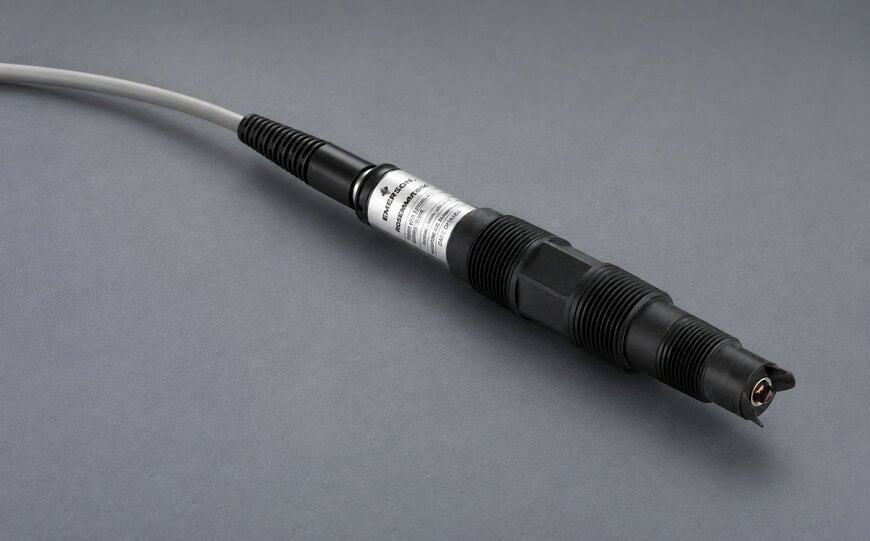
Emerson has released the Rosemount 396A digital pH/ORP sensor for process environments where coating, scaling, abrasion, and high solids content can degrade conventional liquid analysis instrumentation. The sensor is designed for continuous pH and oxidation-reduction potential (ORP) measurement in industries including chemical processing, oil and gas refining, water and wastewater treatment, and pulp and paper manufacturing.
The new device combines an anti-fouling reference design with digital Modbus communication to support stable measurement performance and simplified integration into industrial automation systems. The product was announced on 13 May 2026 from Shakopee, Minnesota.
Designed for Contaminated and Abrasive Process Conditions
In many industrial liquid analysis applications, pH and ORP sensors are exposed to suspended solids, chemical deposits, or fibrous materials that can coat sensor surfaces and reduce measurement accuracy. Such conditions are common in sludge treatment, chemical reactors, pulp stock preparation, and refinery wastewater systems.
The Rosemount 396A addresses these conditions through a through-the-wall reference junction design intended to maximize junction surface area and reduce fouling-related signal degradation. According to Emerson, the design helps maintain stable pH and ORP readings even when contaminants accumulate on the sensor surface.
The sensor carries IP67 and IP68 ingress protection ratings, enabling operation in wet-process environments and washdown areas, including temporary or continuous immersion conditions. These specifications are relevant for wastewater treatment facilities and other industrial installations where instrumentation is frequently exposed to moisture, spray, or cleaning procedures.
Digital Integration for Liquid Analysis Systems
The sensor supports Modbus digital communication, allowing direct integration with compatible Rosemount liquid analysis transmitters and broader digital supply chain infrastructure within industrial control environments. Digital communication also enables calibration data to be stored within the sensor itself.
This architecture allows bench calibration before installation and supports sensor replacement without requiring field recalibration. In practice, this can reduce commissioning time and simplify maintenance procedures during planned shutdowns or routine service intervals.
Emerson stated that the Rosemount 396A is intended as a direct replacement for legacy Rosemount 396P and 396PVP anti-fouling sensors. Existing installations can therefore transition to the newer digital platform without modifying installed fittings or mechanical accessories, reducing retrofit complexity in established process plants.
Applications Across Industrial Water and Process Operations
The sensor is positioned for applications where process contamination can interfere with analytical instrumentation performance. In water and wastewater treatment systems, reliable pH measurement is required for chemical dosing, biological treatment control, and discharge compliance. In pulp and paper operations, suspended fibres and scaling compounds can accelerate sensor fouling. Chemical production and refining processes may also expose instrumentation to abrasive slurries or chemically aggressive fluids.
By combining anti-fouling mechanical design with digital communication capability, the Rosemount 396A targets facilities seeking more reliable analytical measurements with lower maintenance intervention across the automotive data ecosystem and process automation infrastructure used in modern industrial plants.
According to Rachel Jang, global product manager at Emerson, the sensor was developed to provide dependable pH and ORP measurement in high-solids applications while simplifying installation and accelerating sensor replacement procedures in demanding service conditions.
Edited by an industrial journalist Sucithra Mani with AI assistance.
www.emerson.com
