
www.ptreview.co.uk
12
'26
Written on Modified on
Photoneo Updates 3D Sensor Pipeline for AI Workflows
Early Transfer feature prioritizes RGB data delivery to reduce latency in AI-assisted machine vision applications.
www.photoneo.com
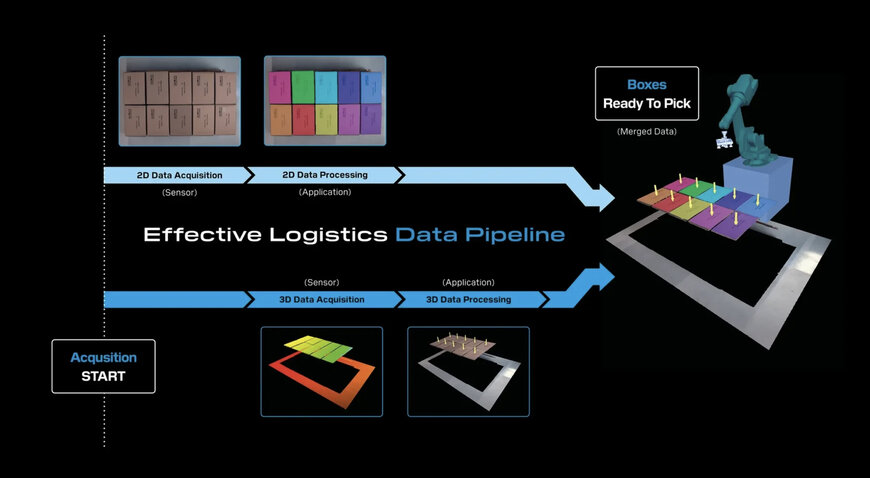
Photoneo has introduced an Early Transfer feature in PhoXi Control 1.17, enabling configurable data delivery sequencing for Photoneo 3D sensors. The update allows RGB texture data to be transferred before full 3D point cloud data, reducing latency in AI-driven machine vision workflows used in logistics, robotics, and industrial automation.
The change reflects increasing adoption of AI-based inference systems within machine vision environments where 2D image analysis often precedes 3D geometry processing. Applications such as robotic bin picking, automated inspection, and intelligent sorting increasingly rely on neural network inference pipelines operating on RGB image data before generating 3D grasp planning or object positioning instructions.
Pipeline restructuring for AI-first processing
Previous Photoneo sensor workflows transferred 3D point cloud data before RGB texture information. This sequence aligned with traditional machine vision applications focused primarily on geometry-based tasks such as volume measurement, dimensional verification, and object localization.
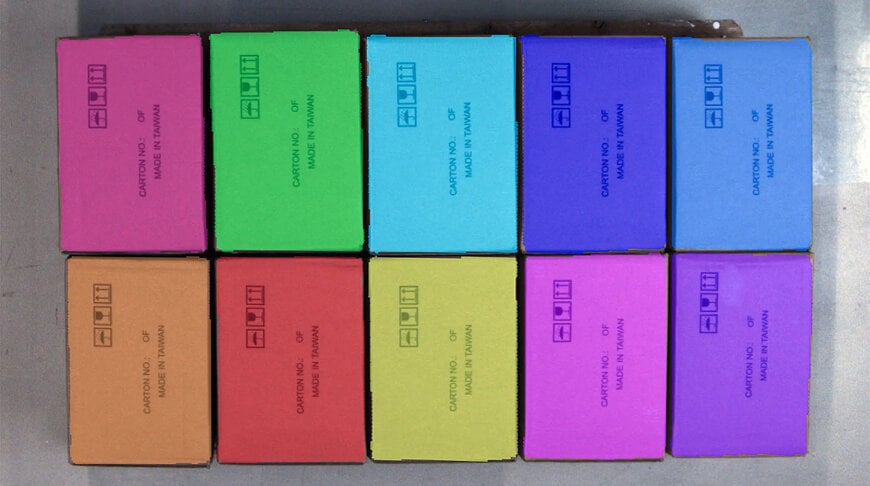
However, modern AI-assisted industrial workflows frequently depend on RGB image analysis as the first computational stage. In logistics and robotic picking systems, neural networks typically perform segmentation, object classification, or pose estimation using 2D image data before requesting corresponding 3D geometry for robotic manipulation.
Under the earlier transfer structure, AI inference processing could not begin until both RGB and 3D data streams had been fully transmitted. According to Photoneo, this introduced additional latency ranging from several milliseconds to several hundred milliseconds depending on network conditions and scene complexity.
The Early Transfer feature restructures this process by allowing RGB texture data to be transmitted immediately after image capture, while 3D depth processing continues in parallel.
Parallel processing reduces cycle latency
The updated pipeline enables simultaneous execution of AI inference and 3D data transfer tasks. While RGB image data is transferred to the host system and processed by AI models, the sensor continues generating and transmitting point cloud data in the background.
By overlapping these previously sequential operations, the system reduces overall cycle time without changing scan duration, reducing data volume, or modifying 3D processing algorithms. Photoneo described the update as a pipeline scheduling optimization rather than a hardware performance increase.
In high-throughput industrial environments, even relatively small latency reductions can produce measurable operational improvements. Automated logistics systems, packaging lines, and e-commerce fulfillment operations often depend on cycle-time optimization to improve overall equipment effectiveness and maintain production throughput.
Applications in robotics and industrial automation
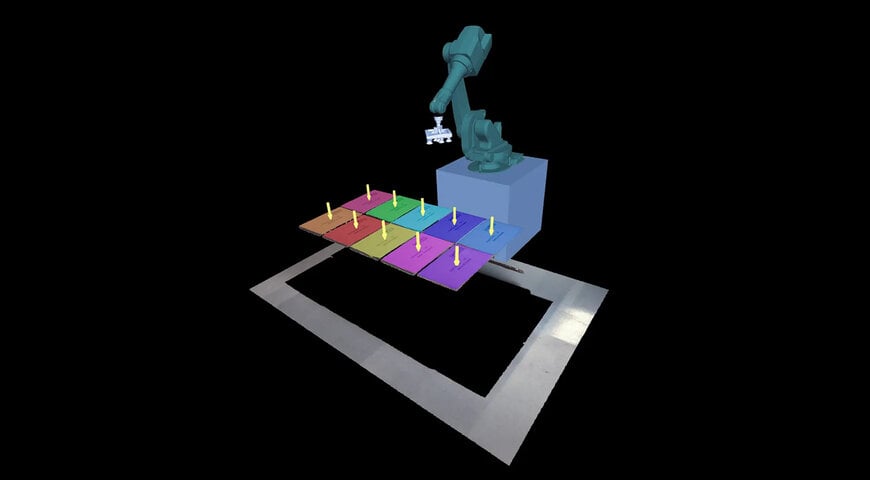
The feature is intended for AI-assisted workflows where RGB image analysis forms part of the critical processing path. Typical applications include segmentation-guided robotic picking, color-based product sorting, class-conditional inspection systems, and AI-assisted object recognition in dynamic production environments.
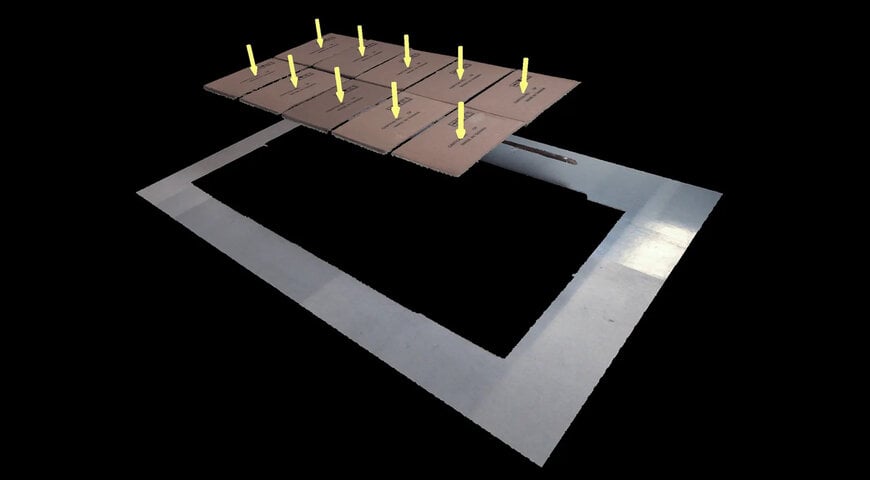
Robotic bin-picking systems are among the most common examples. In these environments, AI models first identify object classes and regions of interest using RGB images before generating precise 3D grasp coordinates from point cloud data.
The update is particularly relevant for industrial automation systems integrating AI inference engines with edge-connected robotics infrastructure. As AI-based vision systems become more common across manufacturing and logistics operations, optimization of data sequencing and processing synchronization is becoming increasingly important within digital supply chain environments.
Shift toward AI-centered machine vision architecture
Photoneo stated that the feature reflects broader changes in machine vision system architecture, where AI inference increasingly functions as a primary operational layer rather than an optional enhancement to conventional vision processing.
Modern industrial vision systems are increasingly designed around AI-centered workflows requiring efficient coordination between image acquisition, inference processing, and downstream robotic or automation tasks. Pipeline-level optimizations such as Early Transfer aim to reduce artificial waiting periods between these stages without requiring additional computational hardware.
The company indicated that the feature is intended for teams developing AI-assisted inspection, logistics, and robotic automation systems using Photoneo 3D sensor platforms.
Edited by Natania Lyngdoh, Induportals Editor, with AI assistance.
www.photoneo.com
