
www.ptreview.co.uk
16
'26
Written on Modified on
Optical Sensor Portfolio Consolidated Under DTECT Platform
SensoPart introduces the DTECT product family to standardize optical sensor selection and simplify deployment across industrial automation applications.
www.sensopart.com
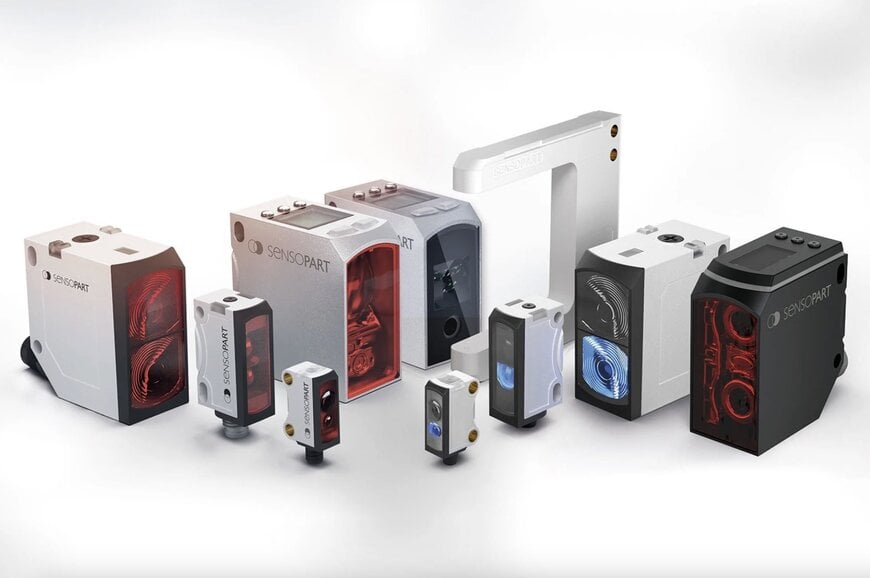
SensoPart has introduced the DTECT product family, consolidating its optical sensor portfolio under a unified structure. The initiative aims to improve usability and streamline product selection for industrial automation applications without altering the underlying sensor technologies.
Standardizing sensor selection across applications
Optical sensors are widely used in industrial automation for object detection, positioning, and quality control. However, navigating diverse product portfolios can complicate system design and integration.
The DTECT family addresses this by grouping all optical sensor solutions into clearly defined categories. This structured approach enables engineers and system integrators to identify suitable sensors more efficiently, reducing configuration time and simplifying deployment.
Consolidation without changes to core functionality
The introduction of DTECT represents a reorganization rather than a redesign of existing products. Sensor performance, features, and technical capabilities remain unchanged, ensuring continuity for current users.
The naming framework is derived from “detection,” reflecting the primary function of optical sensors in monitoring and controlling industrial processes. By standardizing product naming and classification, SensoPart aims to improve clarity across its portfolio.
Defined categories for specific use cases
The DTECT product family is organized into four application-specific groups:
- Presence detection for identifying object existence in a defined area
- Color detection for distinguishing objects based on color characteristics
- Distance measurement for precise positioning and spacing control
- 3D object detection for volume-based analysis and complex object recognition
This segmentation aligns sensor capabilities with typical industrial use cases, supporting faster system design and integration.
Improving efficiency in automation environments
A structured sensor portfolio contributes to more efficient engineering workflows by reducing the time required to evaluate and select components. This is particularly relevant in environments where multiple sensing technologies are deployed across production lines.
By simplifying product navigation and maintaining consistent design principles, the DTECT family supports a more efficient digital supply chain, where component selection and system integration are closely linked to overall production performance.
Supporting scalable automation systems
As industrial automation systems become more complex, the ability to standardize components and streamline integration processes becomes increasingly important. The DTECT platform provides a consistent framework for deploying optical sensors across a range of applications, from basic detection tasks to advanced 3D sensing.
Edited by Romila DSilva, Induportals Editor, with AI assistance.
Improving efficiency in automation environments
A structured sensor portfolio contributes to more efficient engineering workflows by reducing the time required to evaluate and select components. This is particularly relevant in environments where multiple sensing technologies are deployed across production lines.
By simplifying product navigation and maintaining consistent design principles, the DTECT family supports a more efficient digital supply chain, where component selection and system integration are closely linked to overall production performance.
Supporting scalable automation systems
As industrial automation systems become more complex, the ability to standardize components and streamline integration processes becomes increasingly important. The DTECT platform provides a consistent framework for deploying optical sensors across a range of applications, from basic detection tasks to advanced 3D sensing.
Edited by Romila DSilva, Induportals Editor, with AI assistance.
