
www.ptreview.co.uk
24
'26
Written on Modified on
Virtual Development Environments for Connected Industries
Dassault Systèmes will present 3D UNIV+RSES at Mobile World Congress 2026 in Barcelona to support the development and scaling of connectivity and AI-driven infrastructures.
www.3ds.com
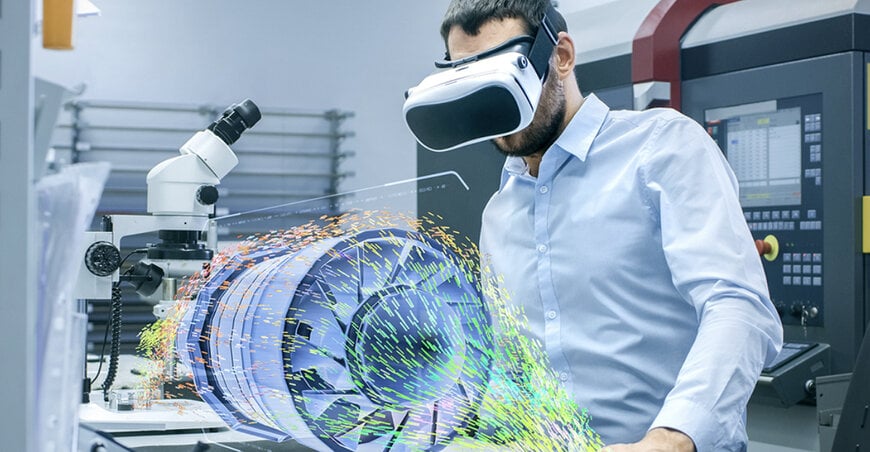
At Mobile World Congress, held from 2 to 5 March 2026 in Barcelona, Dassault Systèmes will showcase its 3D UNIV+RSES as virtual development and operational environments for data-intensive infrastructures. The solution targets industries such as telecommunications, semiconductor manufacturing, data center engineering, and autonomous systems, enabling lifecycle-wide management of complex assets.
Virtual Environments for Digital Value Creation
3D UNIV+RSES integrate digital twins, simulation technologies, and collaborative engineering processes within unified data models. The objective is to connect product, infrastructure, and environmental data into consistent digital workflows that support planning, validation, and operations.
In increasingly connected industrial ecosystems, these environments provide a scalable framework for digital transformation. Complex systems can be modeled, tested, and optimized before physical implementation, reducing the likelihood of costly modifications in later project phases. The approach supports the development of a resilient digital supply chain across distributed infrastructure networks.
Immersive Demonstrations at Mobile World Congress
In Hall 4, Stand 4B25, the company will demonstrate immersive virtual reality environments, avatars, autonomous robots, spatial computing applications, and connected objects. These demonstrations illustrate how industrial artificial intelligence and digital twins can be combined to transition from pilot projects to scalable industrial deployment.
Experts from research and development, engineering, manufacturing, and business transformation will gain insights into methods for managing system complexity. Virtual development, simulation, and validation form the technical foundation for shortening development cycles and supporting data-driven investment decisions.
AI-Generated Urban Models for Network Optimization
One showcased application features optimized communication networks within an AI-generated urban environment. Digital twins link product, infrastructure, and environmental datasets in real time, enabling inspection, diagnostics, and maintenance processes to be simulated and validated virtually.
This approach allows network operators to assess failure risks, plan maintenance intervals based on data models, and improve the resilience of critical connectivity infrastructure. The integration of operational data into virtual models supports long-term performance optimization.
Planning and Operation of High-Performance Data Centers
Another focus area is the planning and optimization of high-performance data centers. Digital twins enable simulation of facility layouts, airflow dynamics, and equipment positioning. Thermal loads, energy flows, and spatial dependencies can be analyzed within the virtual model.
Simulation-based validation allows key performance indicators to be assessed before construction begins. Operational data can be continuously integrated throughout the lifecycle to enhance energy efficiency, reliability, and overall performance.
Virtual Validation of Autonomous Robotic Systems
A practical demonstration highlights the integration of the 3DEXPERIENCE platform with the THEMIS robot from Westwood Robotics. Complex motion sequences and control logics are designed, developed, and validated virtually before physical deployment.
This model-based systems engineering approach reduces integration risks and enables reproducible validation of safety and performance parameters. The coupling of physical systems with digital twins supports continuous optimization during operation.
With 3D UNIV+RSES, Dassault Systèmes positions virtual development environments as a core tool for managing growing system complexity in connectivity and industrial AI infrastructures. The integration of simulation, digital twins, and immersive technologies addresses technical requirements related to scalability, resilience, and sustainable operation of connected systems.
www.3ds.com
