
www.ptreview.co.uk
17
'26
Written on Modified on
Yokogawa Integrates Quadruped Robots with Plant Control Systems
Partnership with ANYbotics links robot fleet management to industrial automation platforms for autonomous inspection in hazardous and non-hazardous sites.
www.yokogawa.com
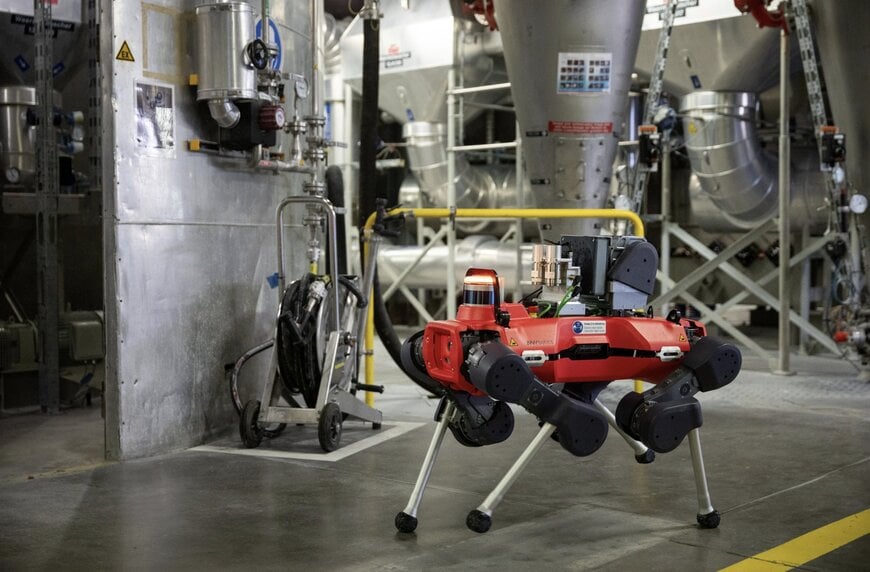
ANYmal robot undertaking gas leak detection in the field.
Industrial operators are increasing the use of mobile robots to automate routine inspection tasks in energy, power, and metals facilities where manual rounds are time-consuming and sometimes hazardous. In this context, Yokogawa Electric Corporation and ANYbotics AG have formed a partnership to integrate Yokogawa’s OpreX™ Robot Management Core with ANYbotics’ ANYmal inspection robot platform.
Linking robot fleets with control system data
OpreX™ Robot Management Core is part of Yokogawa’s robotics portfolio and is designed to centrally manage multiple types of robots used in plant maintenance. The platform connects with plant control systems and uses operational data to assign inspection tasks and routes, supporting early-stage autonomous plant operation. The latest version supports integration with ANYmal robots through interoperability with ANYbotics’ proprietary software stack.
This architecture allows inspection data gathered by mobile robots to feed into existing automation and asset management systems, aligning robotic operations with broader plant monitoring strategies. Such integration is a step toward a more connected industrial automation environment, where mobile sensing platforms operate alongside fixed instrumentation.
Quadruped robots built for industrial terrain
ANYmal is a four-legged inspection robot developed for use in harsh industrial environments. It operates autonomously or via remote control and is equipped with high-sensitivity sensors for visual, thermal, acoustic, and gas detection tasks. The platform meets IP67 protection standards, allowing operation in environments exposed to water spray and dust.
ANYbotics provides two main models. ANYmal D is intended for general indoor and outdoor inspection with high mobility across stairs, uneven floors, and obstacles. ANYmal X is certified for use in ATEX and IECEx Zone 1 hazardous areas and is described as the first explosion-proof legged inspection robot of its type. Prototype units of ANYmal X have already been deployed at multiple industrial sites in preparation for its formal market introduction.
From manual rounds to autonomous inspection
In oil and gas, power generation, and metals processing plants, inspection routines typically involve checking gauges, valves, thermal conditions, and potential gas leaks. By integrating robot fleet management with control system data, operators can automate route planning, data capture, and reporting within a unified robot fleet management framework.
The combined solution is intended to support the transition from manual inspection rounds to data-driven, semi-autonomous workflows. Robots can be dispatched based on process conditions or maintenance schedules, while collected data can be analyzed alongside process variables to detect anomalies earlier.
Extending inspection data into digital workflows
Yokogawa also plans to combine the integrated robot management platform with its AI-based OpreX Plant Image Analyzer. This software analyzes visual data from plant environments, supporting automated identification of equipment conditions and anomalies. When linked with mobile inspection robots, such tools can help convert visual and sensor data into structured maintenance information.
By bringing together mobile robotics, plant control integration, and AI-based image analysis, the partnership reflects how inspection tasks are becoming part of broader plant digitalization efforts, particularly in facilities where safety constraints and asset scale make manual inspection difficult to scale consistently.
www.yokogawa.com
Industrial operators are increasing the use of mobile robots to automate routine inspection tasks in energy, power, and metals facilities where manual rounds are time-consuming and sometimes hazardous. In this context, Yokogawa Electric Corporation and ANYbotics AG have formed a partnership to integrate Yokogawa’s OpreX™ Robot Management Core with ANYbotics’ ANYmal inspection robot platform.
Linking robot fleets with control system data
OpreX™ Robot Management Core is part of Yokogawa’s robotics portfolio and is designed to centrally manage multiple types of robots used in plant maintenance. The platform connects with plant control systems and uses operational data to assign inspection tasks and routes, supporting early-stage autonomous plant operation. The latest version supports integration with ANYmal robots through interoperability with ANYbotics’ proprietary software stack.
This architecture allows inspection data gathered by mobile robots to feed into existing automation and asset management systems, aligning robotic operations with broader plant monitoring strategies. Such integration is a step toward a more connected industrial automation environment, where mobile sensing platforms operate alongside fixed instrumentation.
Quadruped robots built for industrial terrain
ANYmal is a four-legged inspection robot developed for use in harsh industrial environments. It operates autonomously or via remote control and is equipped with high-sensitivity sensors for visual, thermal, acoustic, and gas detection tasks. The platform meets IP67 protection standards, allowing operation in environments exposed to water spray and dust.
ANYbotics provides two main models. ANYmal D is intended for general indoor and outdoor inspection with high mobility across stairs, uneven floors, and obstacles. ANYmal X is certified for use in ATEX and IECEx Zone 1 hazardous areas and is described as the first explosion-proof legged inspection robot of its type. Prototype units of ANYmal X have already been deployed at multiple industrial sites in preparation for its formal market introduction.
From manual rounds to autonomous inspection
In oil and gas, power generation, and metals processing plants, inspection routines typically involve checking gauges, valves, thermal conditions, and potential gas leaks. By integrating robot fleet management with control system data, operators can automate route planning, data capture, and reporting within a unified robot fleet management framework.
The combined solution is intended to support the transition from manual inspection rounds to data-driven, semi-autonomous workflows. Robots can be dispatched based on process conditions or maintenance schedules, while collected data can be analyzed alongside process variables to detect anomalies earlier.
Extending inspection data into digital workflows
Yokogawa also plans to combine the integrated robot management platform with its AI-based OpreX Plant Image Analyzer. This software analyzes visual data from plant environments, supporting automated identification of equipment conditions and anomalies. When linked with mobile inspection robots, such tools can help convert visual and sensor data into structured maintenance information.
By bringing together mobile robotics, plant control integration, and AI-based image analysis, the partnership reflects how inspection tasks are becoming part of broader plant digitalization efforts, particularly in facilities where safety constraints and asset scale make manual inspection difficult to scale consistently.
www.yokogawa.com
