
www.ptreview.co.uk
09
'26
Written on Modified on
On-device AI chip enables autonomous robot control
Hyundai Motor Group outlines a physical AI deployment strategy through its Robotics LAB, detailing how an on-device edge AI processor developed with DEEPX supports scalable, low-power autonomous robots.
www.hyundaimotorgroup.com
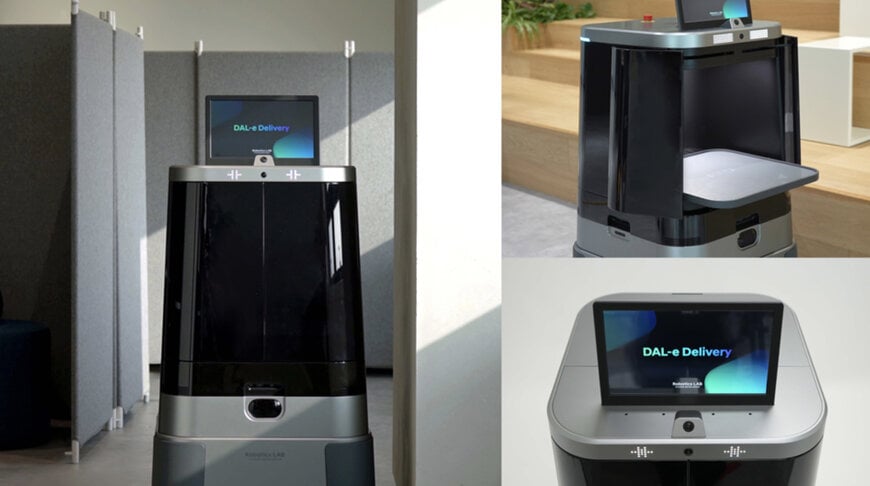
Hyundai Motor Group has presented a production-ready approach to physical artificial intelligence based on an on-device AI processor designed to run robotic perception and control locally, without cloud connectivity, targeting industrial, logistics, and building-scale automation.
Physical AI and the role of on-device processing
At CES Foundry 2026 in Las Vegas on January 8, Hyundai Motor Group disclosed the results of a three-year collaboration between its Robotics LAB and DEEPX. The companies announced the start of mass production of an “edge brain” AI chip intended to serve as the core compute unit for autonomous robots operating in real-world environments.
Physical AI systems differ from cloud-dependent robotics by executing perception, decision-making, and motion control directly on the robot. This architecture reduces latency, eliminates network dependency, and improves operational reliability in environments such as factories, hospitals, logistics hubs, and public buildings. The newly announced chip is designed specifically for this local execution model, aligning with emerging requirements for resilient digital supply chain operations and distributed automation.
Technical characteristics of the edge AI chip
The on-device processor integrates Robotics LAB’s proprietary robot control software with DEEPX’s AI semiconductor architecture. According to the disclosed specifications, the chip operates at under 5 watts of power, enabling continuous real-time perception and control within tight thermal and energy constraints typical of mobile robots.
By processing sensor data locally, the chip allows robots to perform environmental recognition, decision-making, and actuation without reliance on cloud inference or external networks. This design supports deterministic response times and reduces failure points associated with connectivity loss, a key requirement for safety-critical and industrial robotics applications.
Early applications and deployment roadmap
The edge AI chip has already been integrated into several Robotics LAB platforms. These include Facey, a facial recognition system under development, and DAL-e Delivery, a mobile delivery robot currently in demonstration and validation phases. Hyundai Motor Group indicated that the same architecture will be extended to AI-based security systems and next-generation mobile robots as part of a phased rollout.
Application areas highlighted include manufacturing facilities, logistics operations, commercial buildings, and mobility-related infrastructure. These environments benefit from local autonomy, where robots must operate continuously and safely alongside humans without network dependency.
Robotics total solution strategy
The chip development supports the Robotics LAB’s broader “Robotics Total Solution” strategy, which integrates hardware, software, and system-level optimization. By co-developing silicon and control software, Hyundai Motor Group aims to standardize core robotic compute platforms ahead of large-scale production, improving system stability and supply chain predictability.
This approach mirrors established practices in the automotive data ecosystem, where vertical integration and early supplier alignment are used to manage complexity and ensure long-term scalability. The company also noted that this strategy enhances flexibility in sourcing and manufacturing for future robot platforms.
Ecosystem partnerships and production readiness
Hyundai Motor Group positioned the collaboration with DEEPX as part of a wider effort to build a domestic and industrial robotics ecosystem. Leveraging its automotive manufacturing experience, the Group aims to translate high-volume production practices to robotics while expanding pilot deployments in environments such as airports and hospitals.
In December 2025, the Group also introduced its MobED autonomous mobile robot platform at iREX, later receiving a Best of Innovation Award in Robotics at CES 2026. Together, these developments illustrate a shift from experimental robotics toward production-oriented, infrastructure-ready systems.
Positioning within emerging AI infrastructure
The announcement took place within the inaugural CES Foundry 2026, a CES exhibition focused on applied AI, blockchain, and quantum technologies. Hyundai Motor Group’s presentation emphasized practical deployment over experimental research, highlighting how low-power on-device AI can form the foundation for scalable physical AI systems.
By focusing on local processing, power efficiency, and software–hardware co-design, the Robotics LAB’s edge AI chip represents a concrete implementation path for autonomous robots operating across industrial and public spaces.
www.hyundaimotorgroup.com
