
www.ptreview.co.uk
20
'26
Written on Modified on
Tube Forming & Machining Services for On-Demand Component Supply
Integrion Automation provides its Finished Parts Supplier service to eliminate dedicated capital equipment expenditures for formed and machined components.
integrionautomation.com
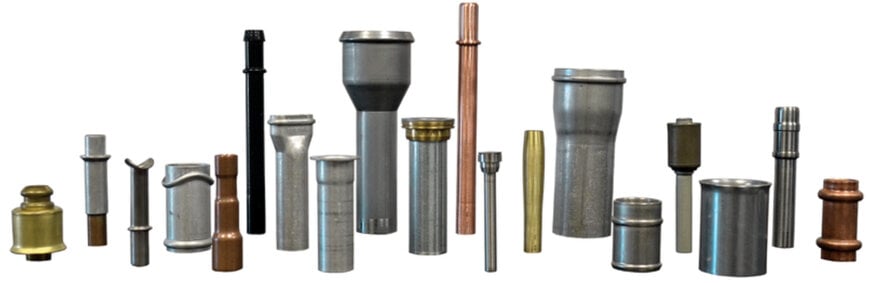
High capital expenditure for dedicated machinery often creates severe asset underutilization risks when production volumes fluctuate or remain unproven across industrial manufacturing programs. To mitigate equipment overhead and operational bottlenecks, integrated contract manufacturing models combine specialized metal forming with precision secondary machining to deliver ready-to-install components across industrial machinery, automotive, and equipment manufacturing sectors.
Integrion Automation, a Wauseon Company, provides its Finished Parts Supplier service to furnish manufacturers with fully finished, ready-to-run formed and machined metal parts. The company plans and executes these production workflows as an outsourced alternative to purchasing, operating, and maintaining dedicated forming and machining assets, offering scalable part manufacturing across short runs, surge volumes, and long-term contracts.
Operational Structure of Integrated Forming and Machining
The Finished Parts Supplier framework is engineered to streamline component production by consolidating mechanical tube forming and secondary machining operations under a single chain of custody. Integrion Automation oversees the complete tube forming workflow and coordinates closely with sister company Steelcrest Precision, which executes all required machining tasks. Because Steelcrest Precision operates a facility located less than a mile from Integrion's primary forming floor, logistical transit times and handling delays between forming and machining stages are kept to a minimum.
This geographic and operational alignment ensures continuous quality control throughout the production cycle. Parts undergo initial forming, transfer immediately to machining cells for precision feature cutting, and arrive at customer assembly facilities completely ready to run. By receiving parts that require no downstream deburring, secondary turning, or preparation, manufacturers can integrate them directly into ongoing assembly operations without allocating internal labor or floor space to secondary operations.
Mitigating Capital Risk Across Variable Production Lifecycles
Investing in dedicated production cells for unproven part geometries or low-volume product introductions can strain capital reserves and depress overall equipment effectiveness (OEE). Integrion Automation structures its service to support short-run production runs where anticipated demand does not warrant the expense of a dedicated machine tool. Engineering teams can evaluate newly designed assemblies or execute pilot series without amortizing capital costs across limited production runs.
The service also addresses manufacturing volatility through overage and emergency production capacities. When customer demand exceeds baseline internal throughput, supplemental overage runs provide the necessary volume to prevent supply interruptions. In instances of unplanned machine downtime, tooling failure, or internal process bottlenecks, emergency production capacity acts as a contingency buffer, maintaining steady part flow to critical production lines. For ongoing requirements, structured long-term supply agreements establish fixed component procurement paths without the liability of machinery maintenance, tooling depreciation, or dedicated operator staffing.
Additional Context:
This section details technical specifications and competitive benchmarking not included in the original product announcement.
In industrial manufacturing, tube forming and secondary precision machining represent distinct operational disciplines that are typically fragmented across separate tier-two vendors or handled in-house on capital-intensive equipment. Dedicated CNC rotary draw benders, hydroforming presses, and end-forming machinery require sustained machine utilization rates—often exceeding 65 to 70 percent—to justify initial capital outlays and facility footprint requirements.
When parts require close-tolerance mating surfaces, threaded ports, or precision bores, formed components must interface with multi-axis CNC milling or turning centers. Sourcing these processes from disconnected sub-contractors frequently introduces dimensional stack-up issues, extended lead times, and quality disputes regarding whether non-conformances stem from forming variation or machining datum shifts. Co-located or tightly coordinated forming and machining models mitigate these risks by harmonizing tooling datums between the forming press and the machining fixture, helping adhere to standard industrial tolerance guidelines such as ISO 2768 for general tolerances or ASTM standards for mechanical tubing fabrication.
Edited by Natania Lyngdoh, Induportals editor, with AI assistance.
www.integrionautomation.com
