
www.ptreview.co.uk
02
'26
Written on Modified on
Suction Roll Sealing Strip Wear Monitoring System
Voith introduced SealView NG to calculate remaining suction roll seal strip life and prevent unplanned paper machine downtime through pneumatic condition monitoring.
voith.com
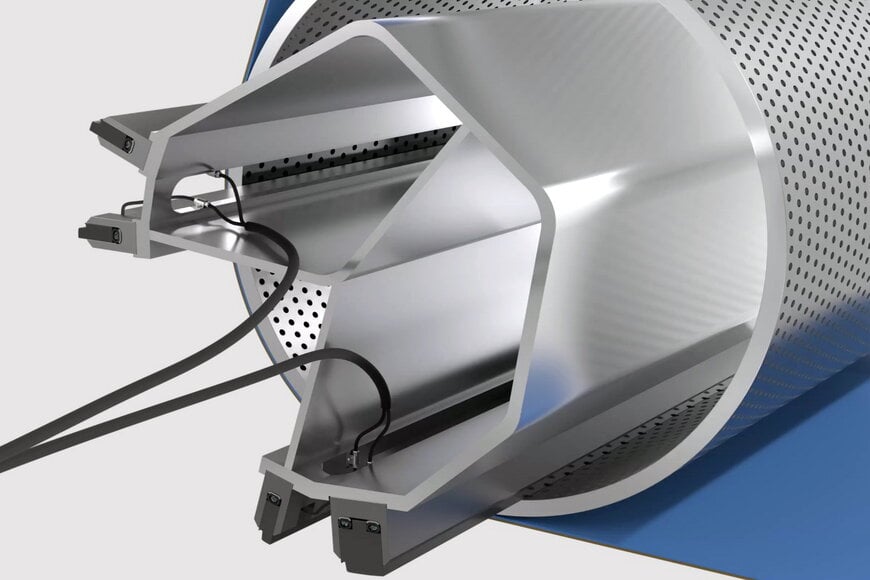
Maintaining consistent vacuum levels in paper machine forming and press sections requires reliable internal sealing, yet continuous exposure to saturated moisture, pulp slurry, and fiber debris accelerates mechanical wear on internal sealing strips. Because these components remain enclosed within rotating shells during operation, maintenance teams traditionally resort to fixed-interval replacement schedules or subjective estimates, leading either to premature strip disposal or abrupt vacuum degradation that halts continuous production lines.
Operational Challenges of Enclosed Vacuum Sealing
Suction rolls in industrial papermaking operate continuously under extreme humidity and mechanical friction. The sealing strips form the critical mechanical boundary containing the applied vacuum, but direct visual inspection during operation is impossible.
When friction degrades a sealing strip past its operational threshold, vacuum pressure drops sharply. This pressure loss destabilizes web transfer, degrades dewatering performance, and forces emergency machine shutdowns. Conversely, replacing strips prematurely on arbitrary schedules wastes usable component life and inflates consumables expenditure. Addressing this requires continuous, automated tracking of seal thickness and degradation across active production cycles.
Pneumatic Sensing Architecture and Continuous Tracking
SealView NG addresses this monitoring challenge through a fail-safe pneumatic measurement system designed specifically for harsh, wet paper mill environments. Electrical sensors situated inside wet suction rolls often face premature failure, corrosion, or short circuits due to fluid ingress. By deploying a pneumatic-based operating principle, the system avoids sensitive electrical sensing points inside the damp shell while continuously calculating mechanical wear.
Rather than relying on localized spot measurements, the pneumatic circuit tracks wear across the entire operational width of the sealing strip. This uniform monitoring detects uneven profile degradation and edge wear before localized air leakage compromises overall machine vacuum. The system converts real-time wear progression into an exact calculation of remaining service life, enabling predictive spare parts procurement and structured scheduling for upcoming roll changes.
Local Edge Display and Standalone Mill Integration
To minimize IT integration hurdles and eliminate external cybersecurity exposure, SealView NG functions as a standalone edge system. A local LED display delivers instant visual feedback on strip wear status directly at the machine frame without requiring specialized IT infrastructure or analytical training.
The system is engineered for broad operational compatibility across variable industrial mill voltages. Configuration and detailed diagnostic readouts are accessed via a local, offline web-based application, operating entirely on-premise without requiring an external cloud or internet connection. Mechanical integration can occur during planned maintenance cycles across all major suction roll brands through Voith Mechanical Roll Service Centers.
Additional Context
This section details technical specifications and competitive benchmarking not included in the original product announcement.
Traditional non-destructive suction roll evaluation in paper manufacturing relies largely on external diagnostic indicators, such as vibration analysis of roll bearings, drive motor load monitoring, or periodic vacuum line pressure differentials. However, these methods only detect sealing failure after vacuum loss has already started, rather than measuring physical strip degradation beforehand.
Previous-generation mechanical roll strip tracking systems often relied on mechanical micro-switches, embedded resistance wires, or periodic manual caliper checks conducted exclusively during roll extraction. Embedded electrical sensors within high-moisture press environments encounter accelerated dielectric breakdown and contamination issues governed by standard industrial ingress constraints. Pneumatic monitoring methods benchmark favorably against electrical alternatives in damp environments because air-displacement and differential backpressure circuits present no risk of electrical short-circuiting and remain unaffected by water spray, fiber buildup, or conductive process chemicals.
Edited by Evgeny Churilov, Induportals Media - Adapted by AI.
www.voith.com
