
www.ptreview.co.uk
29
'26
Written on Modified on
Secure Execution Architecture for Enterprise Autonomous Agent Fleets
Trend Micro integrates threat intelligence with NVIDIA digital infrastructure to enforce operational security across agent models, runtimes, and hardware interfaces.
www.trendmicro.com
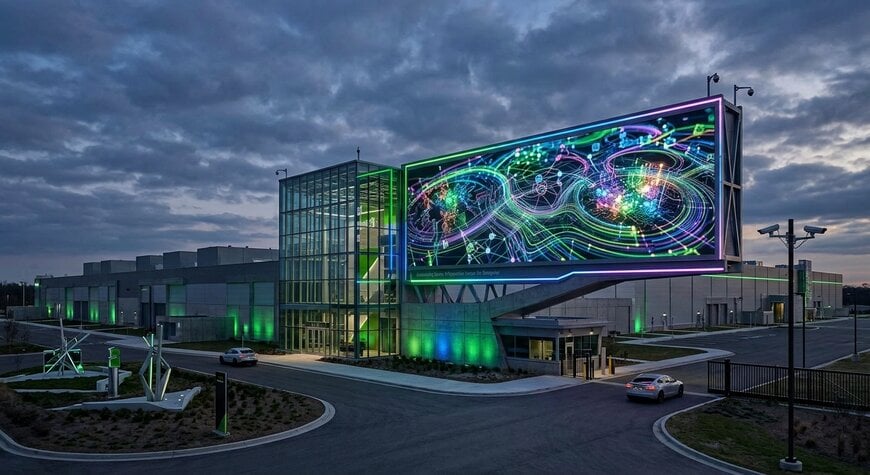
Trend Micro Incorporated and NVIDIA have partnered to implement a multi-layered security architecture designed for deploying autonomous AI agents across enterprise digital infrastructure. Autonomous agents integrate reasoning models, orchestration harnesses, and direct interfaces to operational tools and corporate datasets. Because these systems can retain credentials and execute actions without manual human intervention, unauthorized privilege escalation, prompt injection, and lateral movement present significant technical risks to production stability.
Separation of Infrastructure Policy and Security Intelligence
The collaboration addresses systemic vulnerabilities by decoupling the operational policy enforcement layer from the runtime execution environment of the software agent. NVIDIA provides the hardware-isolated foundation through its Agent Safety Platform. Policy enforcement is managed via OpenShell outside the execution environment, preventing internal software bypasses. At the hardware layer, NVIDIA BlueField DPUs and the NVIDIA DOCA framework establish a host-independent verification and monitoring environment directly in silicon.
Trend Micro integrates its TrendAI security software with this architecture to manage policy definitions, threat telemetry, and runtime oversight. While the hardware infrastructure sets deterministic execution boundaries, Trend Micro provides dynamic threat detection, runtime behavior analysis, and centralized administrative visibility across enterprise networks, containers, and data repositories.
Technical Implementation Across Operational Layers
The combined solution operates across four distinct technical tiers:
- Model-Level Protection: Inline inspection of prompt inputs and generated outputs mitigates prompt injection, prevents model jailbreaks, and sanitizes sensitive data prior to transmission.
- Runtime Harness and Tool Governance: Security administrators regulate connections to external tool endpoints and Model Context Protocol servers. The platform logs runtime tool executions and analyzes the behavior of programmatic skills during execution.
- Identity and Data Access Control: Automated classification tools identify sensitive data streams feeding the models. Access policies restrict unauthorized read and write operations, applying data loss prevention protocols and revoking unneeded system privileges assigned to non-human identities.
- Hardware-Isolated Threat Telemetry: By processing telemetry via BlueField DPUs and DOCA, threat detection remains operational even if the underlying host operating system is compromised. Correlation of AI event signals with network and identity logs restricts unauthorized lateral movement across data centers.
Operational Reliability in Automated Workflows
Targeted at automated enterprise environments and mission-critical digital systems, this combined framework eliminates single points of failure in autonomous workflows. By anchoring runtime boundaries in dedicated silicon and applying continuous algorithmic threat monitoring, the architecture maintains deterministic access control, process integrity, and verifiable system logging as agent deployments scale.
Edited by Evgeny Churilov, Induportals Media - Adapted by AI.
www.trendmicro.com
Targeted at automated enterprise environments and mission-critical digital systems, this combined framework eliminates single points of failure in autonomous workflows. By anchoring runtime boundaries in dedicated silicon and applying continuous algorithmic threat monitoring, the architecture maintains deterministic access control, process integrity, and verifiable system logging as agent deployments scale.
Edited by Evgeny Churilov, Induportals Media - Adapted by AI.
www.trendmicro.com
