
www.ptreview.co.uk
29
'26
Written on Modified on
Dew Point Measurement in Hydrogen Waste Heat Recovery Systems
JTEC Energy integrates Vaisala dew point and humidity sensors to protect metal hydride reactors within its hydrogen-based power generation architecture.
www.vaisala.com
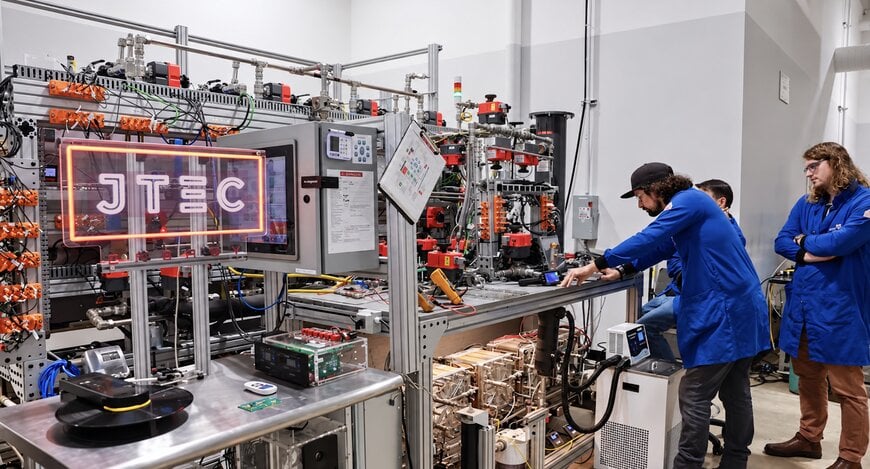
JTEC Energy and Vaisala collaborated to integrate precision moisture measurement sensors into a novel waste-heat-to-power conversion system. The implementation of accurate humidity and dew point tracking enables the reliable operation of a closed-loop hydrogen energy architecture in industrial automation environments.
Industrial Challenge and System Architecture
JTEC Energy develops technology that converts industrial waste heat into electrical power using hydrogen as a working fluid. The system relies on a heat-driven compression process paired with electrochemical stacks. Within this architecture, waste heat is applied to a metal hydride reactor, causing it to release pressurized hydrogen. This hydrogen expands across an electrochemical stack to generate electrical power before being reabsorbed by a separate, cooled reactor.
This closed-loop system presents a fundamental moisture management conflict. The electrochemical stacks require humidified hydrogen to maintain optimal membrane performance. Conversely, the metal hydride reactors must remain highly dry; excess moisture creates oxide layers that inhibit hydrogen absorption and degrade reactor performance. Consequently, the system must remove and recirculate more than 99.99 percent of the moisture introduced during the power generation cycle.
Goals for Process Reliability
Precise moisture control is critical for system viability and continuous operation. During initial research and development, the standard relative humidity and dew point sensors utilized by JTEC frequently saturated when exposed to condensation. This lack of robustness forced engineers to abort experiments, dry down equipment, and restart systems—in one instance, extending a standard six-hour test to three days of troubleshooting.
For field deployment, inaccurate moisture measurement poses a severe operational risk. The waste-heat conversion subsystem accounts for more than a third of the total system cost. Unplanned moisture exposure necessitates offline maintenance to recover reactor performance, creating unacceptable downtime for power production infrastructure.
Technical Solution and Deployment
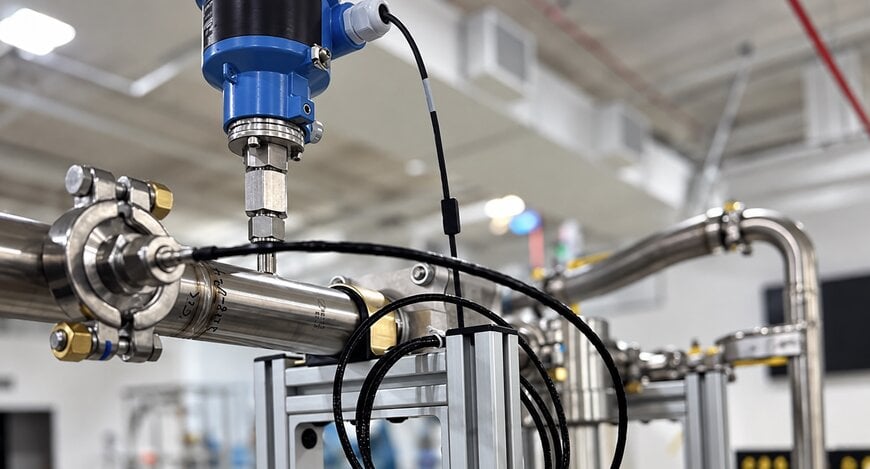
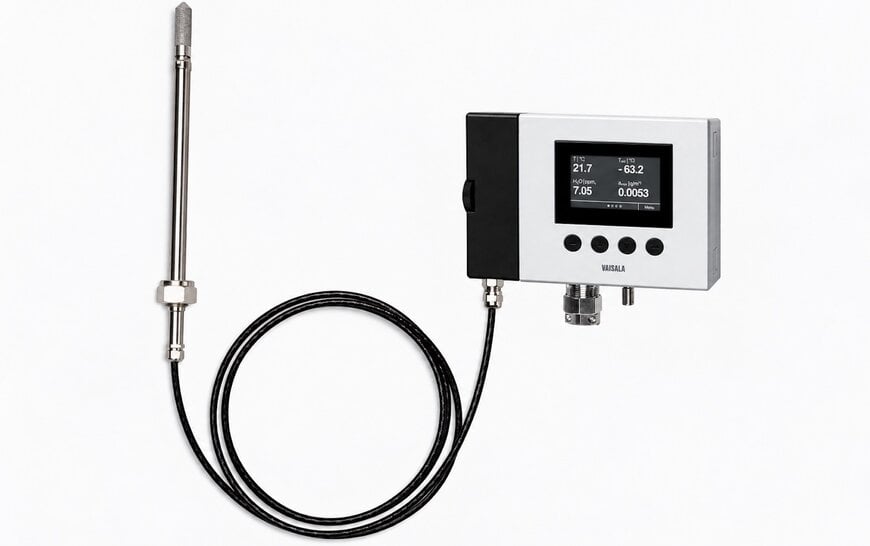
To resolve the measurement reliability issue, JTEC standardized its moisture tracking on Vaisala sensor technology. The implementation utilizes three specific instruments to monitor the hydrogen loop across dynamic pressure and flow conditions. A Vaisala HMP7 relative humidity and temperature probe is positioned immediately after the initial dehumidification stage to verify gross moisture removal and prevent line condensation. Following the final moisture management stages, a Vaisala DMP370 Ex-rated sensor measures low dew points before the hydrogen returns to the metal hydride reactors, ensuring the gas is dried to strict specifications. Finally, a Vaisala DMT143 dew point transmitter monitors the maintenance manifold, preventing moisture migration from wet to dry sections during startup, shutdown, or maintenance operations.
The sensors were integrated directly into the system's control architecture. The specific Ex-rating of the DMP370 allows the system to meet strict hazardous area requirements necessary for future industrial installations.
Engineering Support and Operational Results
Moisture measurement in pressurized hydrogen deviates significantly from standard atmospheric conditions. Vaisala provided direct metrology support, helping JTEC develop accurate pressure compensation routines for their dew point measurements under fluctuating conditions.
"Vaisala's auto-calibration is a key feature that improves confidence in the number coming back to us," stated Julian Bell, Vice President of Engineering at JTEC Energy. "At the same time, we have been able to integrate pressure compensation routines into our dew point measurements with support from Vaisala engineers."
The integration of these sensors provides continuous, stable measurement without the calibration interruptions associated with alternative architectures. This uninterrupted visibility allows the control system to switch precisely between dehumidification columns, eliminating saturation-induced downtime, safeguarding the high-value metal hydride reactors, and providing the measurement certainty required to transition the technology from the laboratory to field deployment.
Edited by Aishwarya Mambet, Induportals Editor, with AI assistance.
www.vaisala.com
