
www.ptreview.co.uk
17
'26
Written on Modified on
High-Voltage Motion Systems Scale Across Industrial Axes
Kollmorgen has expanded its Essentials motion system with 240–480 VAC three-phase drive capability, targeting positioning, handling and other motion axes in manufacturing, automotive, logistics and packaging applications.
www.kollmorgen.com
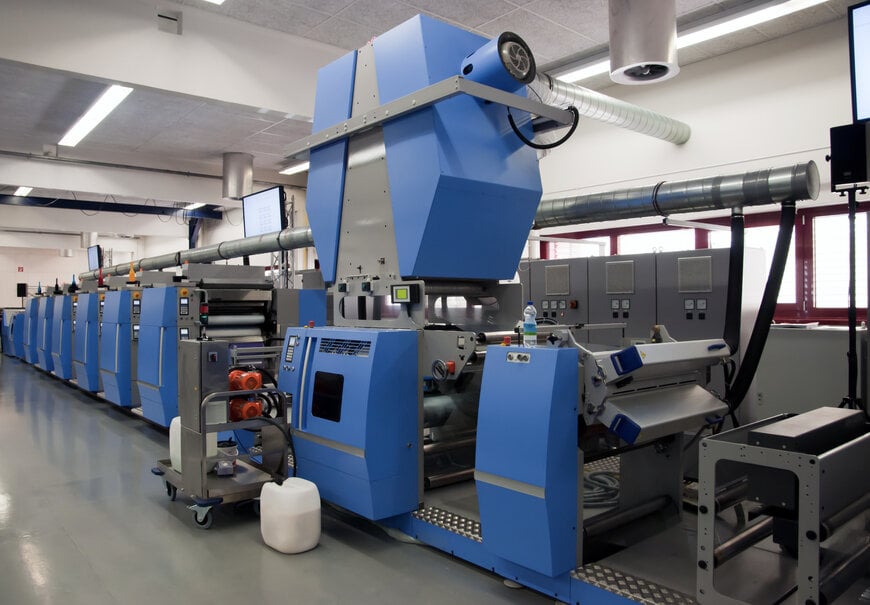
Industrial facilities commonly distribute three-phase power at 400–480 V, but individual machine axes can have substantially different power and performance requirements. The expansion of the Essentials system addresses this mismatch by allowing machine builders to use a high-voltage servo architecture for lower-power axes without automatically moving to a more complex motion platform.
Matching Servo Systems to Industrial Power Infrastructure
Large manufacturing plants, automotive production lines, logistics facilities and high-throughput packaging equipment frequently operate from 400–480 V infrastructure. Using motion equipment designed for the same supply range can reduce the need for additional voltage-conversion equipment.
The distinction is important because machine power requirements are rarely uniform. A single machine may include axes responsible for cutting, forming or high-load transfer alongside axes used primarily for positioning, guiding or material handling. These functions can require different combinations of torque, speed and continuous power.
Right-sizing the motion system therefore involves selecting a drive and motor combination according to the actual requirements of each axis rather than applying the highest available performance level throughout the machine.
High-Voltage Servo Drives for Distributed Machine Functions
Kollmorgen's expanded Essentials portfolio includes servo drives rated for 240–480 VAC three-phase input. The high-voltage drive variants are available in 3, 6 and 12 Arms continuous-current versions, with peak current ratings of 9, 18 and 30 Arms respectively. The drive family supports applications with typical shaft power up to 5 kW, depending on the drive configuration and operating conditions.
The corresponding Essentials servo motors are available for 400/480 VAC operation from 400 W to 4 kW. The 400/480 VAC motor range operates at a rated speed of 3,000 rpm, with maximum mechanical speeds reaching 6,000 rpm on several models. Continuous stall torque ranges from 1.37 Nm on the 400 W model to 17.4 Nm on the 4 kW model.
This combination allows lower-power axes within a larger machine to be connected to the plant's three-phase high-voltage supply without requiring the axis to be designed around a substantially larger servo platform.
Simplified Servo Configuration and Commissioning
The Essentials system combines servo motors, servo drives and cables with configuration through Kollmorgen's WorkBench software. The system is intended to provide a guided setup path while retaining access to more advanced configuration and tuning functions.
The drive family includes industrial Ethernet connectivity for EtherCAT, EtherNet/IP and PROFINET, while synchronization functions are available through EtherCAT, CIP Sync and PROFINET IRT. Integrated safe torque off is specified at SIL2 and Category 3, Performance Level d.
For machine builders, these functions can reduce the number of separate motion architectures required across a machine platform. A common drive family can cover different axis requirements while maintaining the same general configuration environment.
Scaling Motion Performance by Axis
The technical significance of the high-voltage expansion is less about increasing the maximum performance of a machine than about extending the range of axes that can use a common motion architecture.
For example, a packaging machine may contain high-load axes alongside smaller positioning axes. A conveyor transfer, indexing mechanism or guide axis may require considerably less continuous torque than the primary process axis. Selecting a servo system closer to those requirements can reduce unnecessary capacity without changing the machine's overall 400–480 V electrical architecture.
The same principle applies to automotive manufacturing, material processing, logistics equipment and machine tools, where multiple axes can have substantially different mechanical loads.
Kollmorgen announced the high-voltage capability in May 2026 together with the PCMM2G Essentials controller. The expanded system supports 240–480 VAC three-phase input and increases system capability from 3 kW to 4 kW, according to the company.
Electrical Integration Within 400–480 V Systems
The move from lower-voltage to high-voltage servo operation changes the electrical interface between the machine's distribution system and its motion equipment. Kollmorgen's documentation specifies the high-voltage Essentials drive variants for 240/400/480 VAC three-phase operation, while the motor range includes models optimized for 400/480 VAC.
This differs from earlier 100–240 VAC configurations, for which Kollmorgen documentation specifies the use of an isolating transformer when connecting the servo drive to a 400–480 V network. The high-voltage drive variants remove that voltage-conversion requirement for their specified 240–480 VAC three-phase input range.
The resulting architecture can be particularly relevant where many independent motion axes are distributed across a machine. Avoiding unnecessary voltage-conversion stages can simplify the electrical design, although protection, wiring, grounding and other requirements still have to be engineered according to the applicable installation standards.
Technical Relevance for Machine Builders
The expansion illustrates a broader design principle in industrial motion control: the electrical infrastructure, mechanical load and required motion performance should be considered together.
A 400–480 V plant supply does not mean every servo axis requires a high-power drive. Conversely, using a lower-voltage motion architecture inside a high-voltage facility can introduce additional electrical components. A scalable servo family can provide an intermediate approach in which the supply voltage is standardized while motor and drive capacity is selected according to individual axis requirements.
For applications such as material handling, packaging, positioning and auxiliary machine functions, this can make the motion architecture more consistent without requiring every axis to use the same performance class.
Additional Context:
This section details technical specifications and competitive benchmarking not included in the original product announcement
Comparable high-voltage servo platforms are already established across industrial automation, so the relevant benchmark is not simply whether a drive accepts 400–480 V input. Current servo systems can span substantially different power and current ranges.
For example, Yaskawa's 400 V Sigma-7 servo range includes models from 0.5 kW to 15 kW, with continuous output current from 1.9 to 37.2 Arms. Its specified main-circuit supply is three-phase 380–480 VAC.
Rockwell Automation's Kinetix 5700 platform also supports 480 VAC three-phase systems, with individual drive configurations extending into much higher power ranges than the Essentials family. One Kinetix 5700 single-axis configuration is specified at 43 Arms continuous output and 29.7 kW continuous power at 324–528 VAC three-phase.
Against these established platforms, the distinguishing technical position of Essentials is its narrower power envelope combined with a 240–480 VAC three-phase input range. The high-voltage motor family covers 400 W to 4 kW, while the drive family uses 3, 6 and 12 Arms continuous-current classes. This makes the system more directly aligned with lower-power machine axes than high-capacity servo platforms intended for substantially larger loads.
The comparison also shows why power rating alone is not a sufficient selection criterion. Machine builders must match continuous torque, peak torque, speed, current, feedback, safety functions, network requirements and mechanical mounting to the actual axis duty cycle.
Edited by Sucithra Mani, Induportals editor – adapted by AI.
www.kollmorgen.com
