
www.ptreview.co.uk
10
'26
Written on Modified on
Inductive Sensors Expand Architectural Flexibility in High-Volume Automation
Balluff expanded its BES Entry Line portfolio with NPN switching outputs and direct-wire cable connections to support standardized global machinery concepts.
www.balluff.com
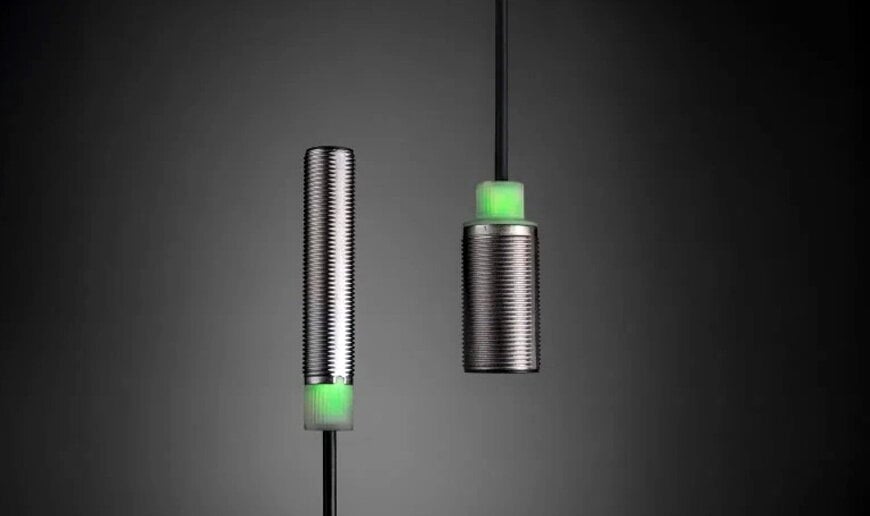
The expansion of the inductive sensor series addresses cost-sensitive factory automation by integrating direct cable connections and NPN transistor switching outputs alongside existing PNP and connector options. These additions allow machine builders and original equipment manufacturers to meet regional control logic standards across Asia and North America while reducing component hardware requirements in high-volume production lines. Target applications span automated assembly lines, packaging machinery, conveyor systems, and metal-forming equipment.
Technical Enhancements and Switching Output Logic
Regional automation architectures traditionally divide along output configuration preferences, with PNP sinking inputs predominant in Europe and NPN sourcing inputs widely deployed across Asian markets. Integrating NPN options directly into M8, M12, and M18 cylindrical housings allows OEMs to standardise mechanical mountings globally while matching local programmable logic controller input cards. Direct open-wire cable connections eliminate M12 or M8 field-wireable connectors and intermediate patch cords, lowering material costs and reducing potential points of ingress in high-vibration environments.
Operating flexibility is further expanded through double switching distance capabilities integrated into both short and long housing variants. Standard inductive proximity sensors typically operate at lower nominal sensing ranges, requiring tight mechanical alignment tolerances. Double sensing range technology doubles the operating distance between the sensor face and metallic targets, reducing target-impact damage risk and compensating for mechanical play in moving machinery components. High switching frequency performance ensures real-time position verification on fast-moving production lines without signal degradation.
Industrial Application Scenarios and Integration Mechanics
In high-volume automated packaging systems, the direct-wire cable variants streamline routing through tight machine frames where connector head clearance is restricted. Eliminating plug connections reduces total installation depth and cuts wiring assembly times during machine fabrication.
For material handling and conveyor transfer stations, the extended sensing range maintains reliable target detection across varying load weights that induce structural deflection. The combination of PNP and NPN choices across short and long cylindrical profiles enables engineering teams to utilize a single sensor product family across multi-site manufacturing facilities, simplifying inventory management and maintenance protocols.
Additional Context: Technical Specifications and Competitive Benchmarking
Inductive proximity sensors in standard cylindrical form factors represent a core component class in industrial automation, governed by the IEC 60947-5-2 standard for low-voltage switchgear and controlgear. Within this category, baseline performance is evaluated on sensing distance, switching frequency, housing material, and protection rating.
The expanded series covers standard industrial form factors including M8, M12, and M18 thread sizes in both short and long housing profiles, matching general IEC 60947-5-2 market benchmarks. Electrical output options encompass both PNP and NPN configurations in normally open and normally closed operations, whereas typical base-tier products often restrict output types by region. Connectivity choices include hardwired cables, direct connectors, and pigtails with M12 connectors, providing broader integration flexibility than standard direct-connector or hardwired options.
In terms of operating distance, the series incorporates double switching distance technology — such as achieving a 4 mm operating distance in an M12 flush mount — doubling the standard market benchmark of 2 mm for equivalent housing dimensions. Both the expanded series and standard market benchmarks maintain an IP67 ingress protection rating suitable for standard factory environments.
Compared to basic entry-tier inductive sensors, double-distance sensing technology utilizes optimized coil geometry and internal signal evaluation to extend nominal detection ranges without enlarging the external housing footprint. While premium heavy-duty sensors often incorporate IP69K stainless steel housings or Factor 1 equal-sensing technology for non-ferrous metals, standard brass nickel-plated units with IP67 protection remain the benchmark for cost-optimized factory floor deployment. The addition of integrated cable and NPN options brings the portfolio into direct structural parity with established global OEM platform requirements.
Edited by Evgeny Churilov, Induportals Media - Adapted by AI
www.balluff.com
