
www.ptreview.co.uk
18
'26
Written on Modified on
Schunk Partners With Bosch To Develop Industrial Humanoid Robot Hands
The joint development cooperation combines automation and AI expertise to create a flexible, anthropomorphic hand platform that automates complex tasks in manufacturing and logistics.
schunk.com
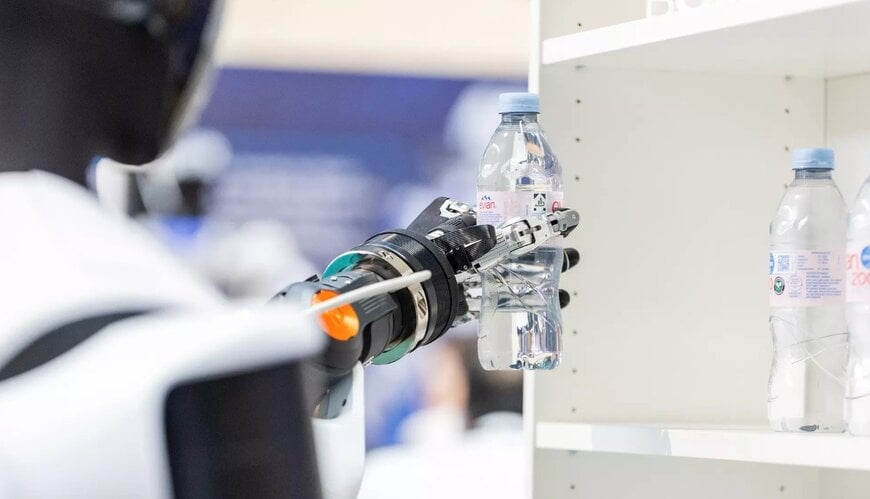
Bosch Robotics and SCHUNK are developing a flexible, anthropomorphic hand platform designed to integrate with diverse humanoid robot systems. This technical cooperation aims to establish a robust end effector capable of managing highly variable object geometries and materials within industrial automation environments.
Operational Context and Technical Challenges
Traditional robotic grippers are generally optimized for specific object shapes or predefined tasks. However, modern digital infrastructure in manufacturing and logistics demands rapid adaptation to shorter product lifecycles and shifting workflows. Humanoid robotics offers an adaptable alternative for environments configured for human operators, but executing complex tasks requires advanced dexterous end effectors. The high mechanical complexity, precision engineering, and real-time processing demands of a multi-fingered robot hand necessitate a combination of specialized engineering competencies.
Allocation of Engineering Responsibilities
The cooperation leverages complementary technical portfolios to solve integration and scalability challenges:
- Bosch Robotics provides the core architectural framework, utilizing its expertise in precision mechanics, electronics, and software development. The company integrates artificial intelligence (AI) algorithms for environmental perception and trajectory planning.
- SCHUNK applies approximately 20 years of research and development in anthropomorphic gripping technology to optimize the mechanical kinematics, force transmission, and material composition of the hand.
The resulting industrial hand platform is designed to function independently of the host humanoid robotic system, utilizing standard communication interfaces and flexible software architectures to facilitate cross-platform deployment.
System Integration and Use Cases
The primary target domains for the technology include assembly lines, logistics centers, internal service processes, and high-variance production environments. By mimicking human hand kinematics, the system executes complete end-to-end processes that involve perceiving an unstructured environment, adjusting gripping forces based on material properties, and handling fragile or complex components.
A functional system demonstrator validated the interoperability of the hardware and software layers. By combining the physical hand with advanced perception software, the partners confirmed that high-performance robotic components can be synthesized into a stable industrial application without extensive custom engineering for individual tasks. The focus remains on transitioning the prototype phase into a scalable, high-volume production standard that complies with industrial reliability criteria.
Strategic and Technical Rationale
The technical leadership of both organizations emphasized the operational requirements driving the project. Timo Gessmann, CTO of SCHUNK, noted that the partnership combines broad development capabilities with a deep portfolio specifically tailored for advanced robot hand implementation. Mathias Pillin, CTO of Robert Bosch GmbH, stated that precise robot hands are critical for executing high-accuracy handling tasks that exceed the capabilities of conventional gripping systems, positioning the platform for a wide range of production and logistics applications.
Edited by Evgeny Churilov, Induportals Media - Adapted by AI.
www.schunk.com
System Integration and Use Cases
The primary target domains for the technology include assembly lines, logistics centers, internal service processes, and high-variance production environments. By mimicking human hand kinematics, the system executes complete end-to-end processes that involve perceiving an unstructured environment, adjusting gripping forces based on material properties, and handling fragile or complex components.
A functional system demonstrator validated the interoperability of the hardware and software layers. By combining the physical hand with advanced perception software, the partners confirmed that high-performance robotic components can be synthesized into a stable industrial application without extensive custom engineering for individual tasks. The focus remains on transitioning the prototype phase into a scalable, high-volume production standard that complies with industrial reliability criteria.
Strategic and Technical Rationale
The technical leadership of both organizations emphasized the operational requirements driving the project. Timo Gessmann, CTO of SCHUNK, noted that the partnership combines broad development capabilities with a deep portfolio specifically tailored for advanced robot hand implementation. Mathias Pillin, CTO of Robert Bosch GmbH, stated that precise robot hands are critical for executing high-accuracy handling tasks that exceed the capabilities of conventional gripping systems, positioning the platform for a wide range of production and logistics applications.
Edited by Evgeny Churilov, Induportals Media - Adapted by AI.
www.schunk.com
