
www.ptreview.co.uk
03
'26
Written on Modified on
Wireless Asset Monitoring for Industrial Maintenance
Emerson introduces an IIoT platform that enables wireless condition monitoring and inspection digitization across process industries using existing plant networks.
www.emerson.com
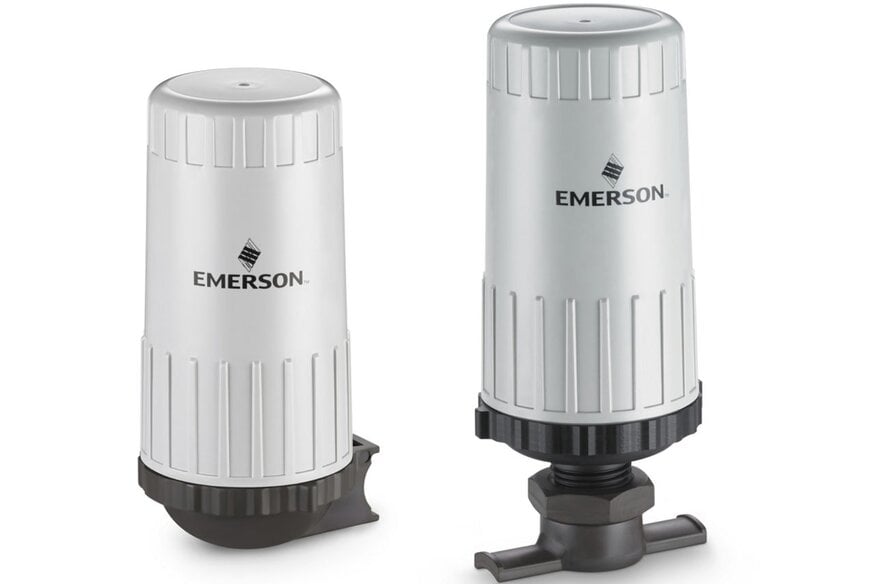
Industrial operators continue to rely on manual inspection rounds for many critical assets, particularly where the cost of installing wired monitoring systems is difficult to justify. Emerson's new wireless monitoring platform is designed to address this challenge by providing continuous asset visibility through a scalable Industrial Internet of Things (IIoT) architecture that can be deployed within existing facilities.
Wireless Monitoring Architecture for Process Industries
Emerson has launched the Synchros Industrial Internet of Things platform, a wireless asset monitoring system intended to support maintenance optimization and asset health visibility in process industries. The platform is designed for applications in chemicals, oil and gas, power generation, life sciences, and water and wastewater treatment facilities.
The system enables maintenance teams to digitize inspection points that traditionally require manual data collection. By converting periodic inspections into continuous monitoring processes, facilities can identify developing equipment issues earlier and improve maintenance planning.
The platform uses WirelessHART technology, an industrial wireless communication standard widely deployed for process automation applications. The wireless architecture allows facilities to expand monitoring coverage without extensive modifications to existing infrastructure, reducing installation complexity compared with conventional wired instrumentation projects.
Digitizing Inspection Programs Through Continuous Data Collection
Many industrial assets remain unmonitored because the cost of installing permanent instrumentation can exceed the perceived value of the data collected. As a result, maintenance personnel often rely on scheduled inspections, creating intervals during which equipment degradation may remain undetected.
According to Emerson, the Synchros platform is intended to bridge this gap by enabling organizations to begin with targeted monitoring of critical assets and expand coverage over time using a common digital supply chain infrastructure. This phased deployment model allows facilities to scale monitoring programs without replacing existing automation systems.
Initial Devices Support Temperature Monitoring and Network Expansion
The first release of the platform includes two devices: a wireless temperature monitoring instrument and a wireless network repeater.
The temperature monitoring device captures both surface and ambient temperature measurements. These data points can be used to detect abnormal operating conditions in equipment such as pumps, heat exchangers, rotary valves, steam systems, and heat-tracing installations. Temperature deviations often serve as early indicators of mechanical wear, insulation failures, process inefficiencies, or thermal performance degradation.
The wireless repeater extends communication coverage throughout industrial facilities, allowing operators to deploy monitoring devices in locations that may otherwise fall outside network range. This approach supports broader monitoring coverage without requiring additional wired communications infrastructure.
Expansion Strategy for Additional Process Measurements
Emerson indicated that the platform is intended to evolve beyond temperature monitoring. Future devices are expected to support additional process measurements, including pressure and other operational parameters.
The company also plans to introduce expanded connectivity options for geographically distributed infrastructure. Such applications include water and wastewater networks and electrical power transmission and distribution systems, where assets may be dispersed across large service territories.
This broader connectivity strategy aligns with ongoing efforts across the industrial sector to strengthen the industrial data ecosystem and improve visibility into remote and distributed assets.
Deployment in Hazardous and Industrial Environments
The platform has been designed for installation in industrial operating environments, including hazardous locations commonly found in process manufacturing facilities.
Emerson states that simplified installation methods and a ruggedized design are intended to reduce deployment complexity while supporting system expansion as monitoring requirements increase. The company also highlights the potential for lower training requirements and reduced maintenance overhead compared with more complex monitoring architectures.
Additional Context
This section details technical specifications and competitive benchmarking not included in the original news release.
WirelessHART, standardized under IEC 62591, is one of the most widely adopted industrial wireless protocols for instrumentation and condition monitoring applications. Competing industrial wireless monitoring ecosystems include Honeywell's OneWireless platform, Siemens' industrial wireless monitoring solutions, and Yokogawa's wireless field instrumentation portfolio. A key differentiator in this market segment is the ability to deploy monitoring points without installing new cabling infrastructure.
Temperature monitoring represents a common entry point for wireless condition monitoring because thermal anomalies can provide early indications of equipment failure. Industry studies have shown that continuous condition monitoring can improve maintenance planning accuracy and reduce unplanned downtime compared with inspection-based maintenance programs, particularly for rotating equipment and thermal process systems.
Edited by Aishwarya Mambet, Induportals Editor, with AI assistance.
www.emerson.com
