
www.ptreview.co.uk
31
'26
Written on Modified on
Modular robotics platform targets AI-driven factory automation
Niryo introduces a configurable robotics infrastructure designed to support Physical AI integration and faster deployment of automation cells in industrial production environments.
niryo.com
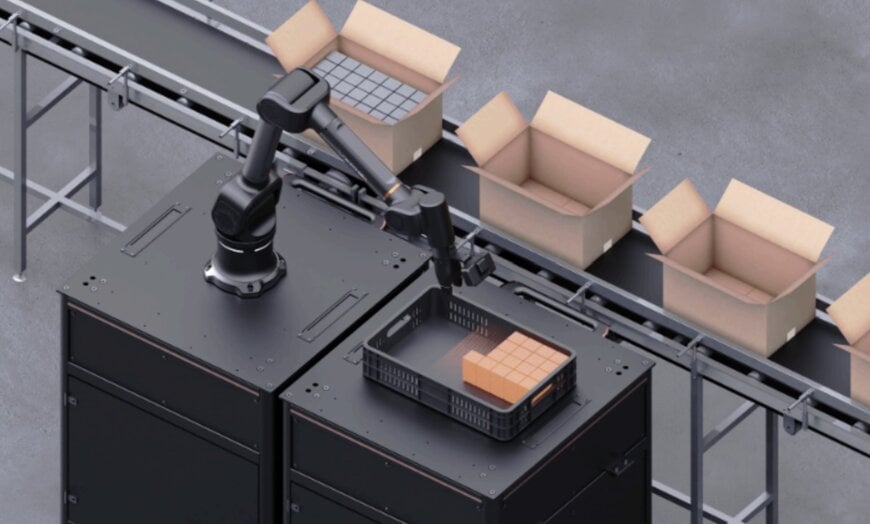
Manufacturers are seeking automation systems that can adapt to variable production volumes and shorter product cycles without complex integration work. In this context, Niryo introduced Nate, a modular robotics platform designed to support Physical AI applications and flexible automation deployment, previewed at the Global Industrie 2026 trade show, held from March 30th to April 2nd in Paris Villepinte, France.
Modular robotics architecture for flexible automation
Industrial sectors such as discrete manufacturing, machine tooling, and packaging are increasingly adopting automation systems that can be reconfigured as production requirements change. Traditional automation systems can present integration challenges due to closed architectures and limited scalability.
Nate was developed as a modular robotics infrastructure combining robotic arms, actuators, grippers, software, and embedded intelligence modules. These components can be combined into configurable automation systems intended to simplify deployment and allow incremental upgrades as requirements evolve.
The platform is designed to support integration of AI-driven control functions and adaptive robotics applications within industrial automation and digital supply chain environments.
Configurable automation cells for routine production tasks
As an initial implementation of the Nate platform, Niryo introduced a new generation of Smart Machines—automated workcells intended for repetitive industrial processes such as end-of-line packaging and machine tool loading.
These cells combine robotic manipulators, gripping systems, protected workstations, and application software. Additional embedded intelligence modules allow adaptation to production variability, including handling of different part geometries, automated inspection tasks, sorting processes, and motion adjustments based on production conditions.
The systems are offered as standardized configurations intended to reduce engineering and integration effort compared with fully custom automation projects.
Platform approach supports AI and robotics ecosystem integration
In addition to its industrial applications, Nate is positioned as an open robotics platform that allows developers of robotics systems and AI applications to integrate their technologies using its hardware and software building blocks.
Access to actuators, software interfaces, and control architecture enables integration of advanced AI models designed to improve environmental perception and interaction capabilities in robotic systems.
Niryo is also working with a consulting partner to integrate advanced machine vision and AI models on Nate-based robots for industrial customer applications.
Hardware roadmap expands robot capabilities
The modular design also supports rapid hardware development cycles. Niryo indicates that new robotic systems can be designed and prototyped within approximately three months using the platform architecture.
At Global Industrie, the company also presented the first six-axis robot in the NR series, a new industrial robot range developed on the Nate platform. Prototype actuators were also shown, targeting future robots capable of handling payloads of up to 20 kg for applications including palletizing and heavy component handling.
European robotics development and cost positioning
Niryo positions the platform as part of efforts to strengthen European robotics development capabilities through in-house design of key technology components.
The development also reflects broader efforts within the European industrial automation sector to strengthen regional robotics capabilities and support the adoption of intelligent automation technologies.
Edited by industrial journalist Aishwarya Mambet, with AI-assistance.
www.niryo.com
