
www.ptreview.co.uk
17
'26
Written on Modified on
Schneider Electric Teams With NVIDIA To Develop Gigawatt Scale Blueprints
Schneider Electric and NVIDIA are co-developing validated reference designs and digital twin architectures to optimize the design, simulation, and operation of large-scale AI factories.
www.se.com
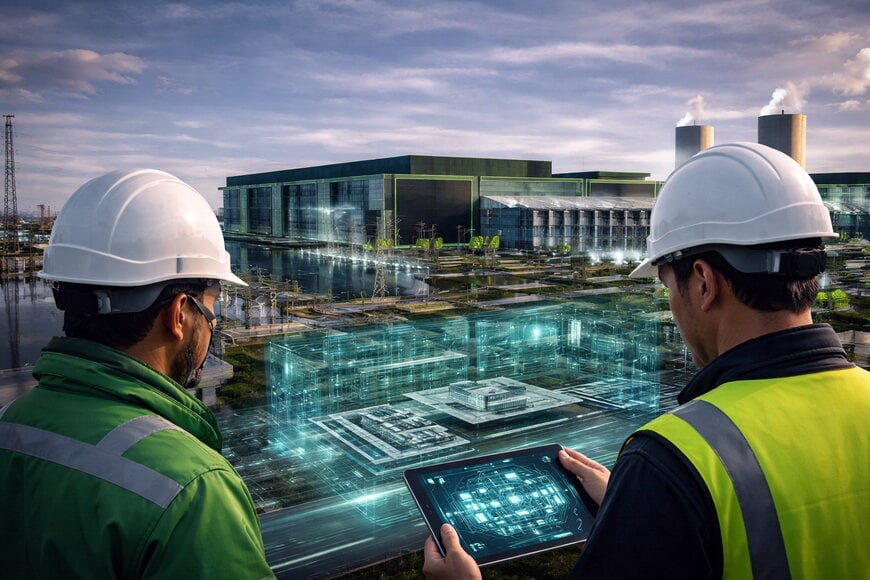
As the demand for generative AI shifts from pilot programs to gigawatt-scale "AI Factories," traditional data center designs are reaching their physical and efficiency limits. At NVIDIA GTC in San Jose, Schneider Electric, in partnership with NVIDIA and AVEVA, unveiled a suite of advancements that differentiate their approach through deep physical-to-digital integration. By synchronizing high-density power architectures with real-time digital twin simulations, this collaboration provides a validated blueprint that solves the power, cooling, and operational bottlenecks that currently hinder large-scale AI deployment.
Validated Reference Designs for Next-Generation GPU Clusters
A primary differentiator in this announcement is the introduction of a specialized reference design for the NVIDIA Vera Rubin NVL72 architecture. Unlike generic data center layouts, this design is specifically engineered to handle the intense thermal and electrical demands of modern rack-scale systems. It introduces a high-voltage distribution of 480 VAC and supports increased cooling loop temperatures of 45°C to maximize energy efficiency.
The architecture is unique in its ability to cluster AI racks while maintaining physical proximity for networking, yet allowing for separate, higher-voltage power delivery to GPU-heavy sections. This modularity allows operators to optimize for "MaxQ" operating points, which prioritize tokens per watt over raw power draw, effectively bypassing traditional power constraints and ensuring higher performance redundancy compared to standard cooling methods.
Accelerating Time-to-Token with Lifecycle Digital Twins
The integration of AVEVA’s industrial software into the NVIDIA Omniverse DSX Blueprint represents a shift toward "SimReady" infrastructure. This lifecycle digital twin architecture allows for the complete simulation of an AI factory before any physical construction begins. By embedding engineering and operations software directly into the design environment, Schneider Electric and AVEVA enable multi-domain simulations that validate power distribution, thermal dynamics, and airflow under realistic load conditions.
This predictive capability significantly reduces the margin for error and shortens engineering cycles. While competitors may offer separate design or monitoring tools, this ecosystem provides a unified environment where every component — from the electrical grid modeled via ETAP to the airflow performance — is verified for peak efficiency. This ensures that the final physical deployment achieves the highest possible "time-to-token" speed.
Autonomous Alarm Management through Agentic AI
Beyond physical infrastructure, Schneider Electric is redefining asset management by testing NVIDIA Nemotron open models to power agentic AI for data center services. This technology addresses the critical industry challenge of "alarm fatigue" by autonomously interpreting complex system alerts to identify root causes.
Unlike traditional rule-based monitoring, this agentic AI analyzes real-time IoT data streams across multiple systems to diagnose issues and recommend specific corrective actions. This level of autonomy, supported by expert technicians, ensures consistent resolution and enhances the overall resilience of the data center. It builds on a long-standing partnership that includes previous milestones such as the transition to 800 VDC architectures and the integration of OpenUSD standards for interoperable 3D assets.
Edited by an industrial journalist, Evgeny Churilov.
www.se.com
