
CVE Installs Poland’s First Laser-in-Vacuum Welding Machine
Government-funded project brings advanced welding technology to Kielce University of Technology.
www.camvaceng.com
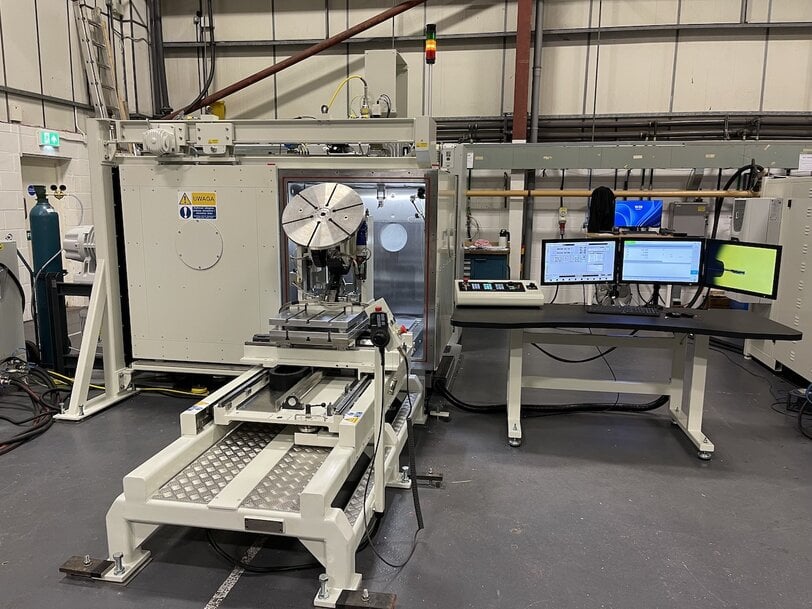
Cambridge Vacuum Engineering (CVE) has successfully installed a laser-in-vacuum welding machine at the Laser Research Center of Kielce University of Technology, marking a first for Polish engineering.
The investment, co-funded by the Polish Ministry of Science and Higher Education, represents a significant step forward in advanced engineering education and research at the university. The new capability is expected to support the development of smart manufacturing technologies and industrial infrastructure projects across Central Europe.
Advanced welding capabilities for complex materials
Manufactured at CVE’s headquarters in the UK, the laser-in-vacuum system is one of the company’s most advanced welding platforms. The technology is capable of producing exceptionally clean, high-integrity welds up to 35 mm deep, enabling the joining of difficult or unconventional metal combinations.
The system can weld high-performance and gas-sensitive alloys including:
- Titanium
- Magnesium
- Aluminium
A five-axis CNC motion system allows the welding of complex geometries and large components, while an integrated wire-feed system enables additional processes such as additive manufacturing and cladding.
Strengthening research and industry collaboration
The installation at the Faculty of Engineering was facilitated through CVE’s Polish partner Technika Spawalnicza. The addition of the new system supports the university’s strategy of expanding its experimental research infrastructure and laboratory capabilities.
The equipment will enable researchers to conduct advanced studies in demanding joining applications while also supporting industries that rely on specialised welding techniques, including aerospace and advanced manufacturing.
Dr. Hubert Danielewski, Assistant Professor at Kielce University of Technology, commented:
“We are excited to integrate a laser-in-vacuum welding system into our curriculum and research programmes. The installation of CVE’s technology will significantly elevate our ability to conduct high-impact studies that can contribute to Poland’s growing engineering and manufacturing sectors. We are grateful to the team at CVE, who worked to an extremely tight deadline to get this machine built and installed.”
Supporting the next generation of engineers
Paul Haselgrove, Sales & Marketing Director at Cambridge Vacuum Engineering, emphasized the importance of the collaboration.
“We are pleased to have partnered with the team at Kielce University of Technology as they continue to expand their technical leadership in engineering. By equipping students and researchers with a cutting-edge laser-in-vacuum system, we are helping to shape the next generation of skilled engineers and advancing the development of breakthrough solutions that will support manufacturing in Poland and across Central Europe for decades to come.”
He also acknowledged the role of Technika Spawalnicza in supporting the project and facilitating the installation.
Vacuum-laser welding for high-integrity joints
Cambridge Vacuum Engineering specializes in vacuum-laser welding systems designed for ultra-clean and high-precision joining. By combining a controlled vacuum environment that eliminates atmospheric contamination with advanced laser processing technology, CVE’s machines produce strong, defect-free welds, even in materials traditionally difficult to join.
This capability makes the systems particularly suited to industries where weld integrity, reliability, and cleanliness are critical.
Edited by an industrial journalist, Lekshman Ramdas, with AI assistance.
www.camvaceng.com
