
www.ptreview.co.uk
20
'26
Written on Modified on
Modular automation increases packaging line flexibility
Beckhoff PC-based control enables manufacturers to reconfigure packaging lines for multiple SKUs and sustainable materials while extending equipment life and reducing changeover downtime.
www.beckhoff.com
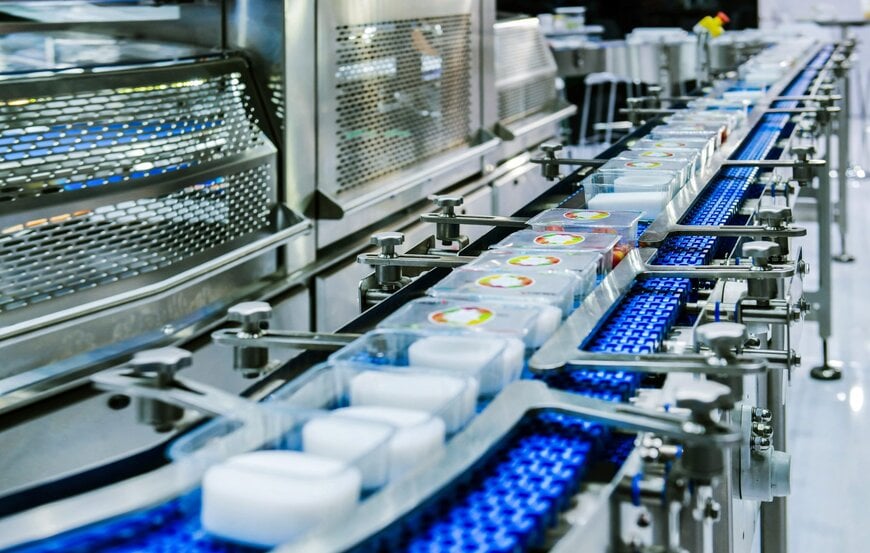
Manufacturers in the pharmaceutical, medical technology and food and beverage sectors are facing a rapid increase in stock-keeping units, shorter product lifecycles and more frequent packaging updates. Traditional packaging lines, typically engineered for a fixed format and throughput, struggle to accommodate these changes. Even minor adjustments such as a new pack size or alternative film can require mechanical modifications, control system reprogramming and prolonged stoppages.
The objective for many operators is to increase line availability while maintaining product quality and adapting to new packaging formats, including recyclable and biodegradable materials. At the same time, capital expenditure must be controlled by extending the usable life of existing assets rather than replacing entire lines.
To address these constraints, manufacturers are adopting modular packaging automation based on a plug-and-produce architecture.
Modular line concept: Independent units with fast integration
In a modular configuration, processing functions such as sealing, labelling and carton erecting are designed as self-contained units. These modules can be connected, removed or replaced according to production requirements.
Automatic recognition by the control system allows new modules to be commissioned with minimal engineering effort. This reduces changeover time and enables phased capacity expansion instead of full line replacement.
This approach is particularly relevant for facilities running seasonal campaigns or frequent format changes, where conventional re-engineering would otherwise interrupt production.
Control architecture enabling plug-and-produce
The technical basis for this flexibility is a PC-based control platform combined with a real-time industrial communication network. This architecture allows each module to operate as an autonomous machine while exchanging synchronised data with a central controller.
Standardised communication protocols and open control systems ensure interoperability between equipment from different suppliers. This removes the need to redesign the control infrastructure when upgrading individual sections of the line and avoids vendor lock-in.
The same automation layer also supports predictive maintenance, remote diagnostics and centralised performance monitoring, contributing to higher overall equipment effectiveness in high-throughput packaging environments.
Supporting the transition to sustainable packaging
Material changes associated with recyclable or biodegradable packaging often require new sealing parameters, modified cutting tolerances and different product handling characteristics. On fixed lines, these adjustments can lead to lengthy commissioning phases and significant material waste.
With a modular layout, only the process step affected for example the sealing module is replaced or upgraded. This targeted intervention enables manufacturers to introduce new materials progressively while keeping the rest of the line in operation.
In addition to reducing downtime, this strategy avoids scrapping serviceable equipment and lowers the total lifecycle cost of the installation.
Operational impact and asset lifecycle extension
Although no production figures are disclosed, the technical effects are clear. Faster format changeovers reduce idle time, while incremental upgrades defer large capital investments. Open automation improves maintainability and allows performance optimisation at module level without disrupting the entire system.
By enabling scalable expansion and rapid reconfiguration, modular automation aligns packaging capacity with fluctuating demand and evolving regulatory requirements.
A shift from fixed lines to adaptable systems
Packaging lines have traditionally been among the most rigid elements of production. The adoption of plug-and-produce modularity transforms them into adaptable systems that can respond to product variation, material innovation and sustainability targets without full redesign.
For manufacturers operating in high-mix, high-change environments, this architecture provides a technically and economically viable path to maintain competitiveness while improving uptime and resource efficiency.
www.beckhoff.com
