
www.ptreview.co.uk
12
'25
Written on Modified on
Digital Supply Chain Standards for the Automotive Industry
How BMW Group Uses Catena-X to Increase Transparency and Resilience in International Supply Chains.
www.bmw.com
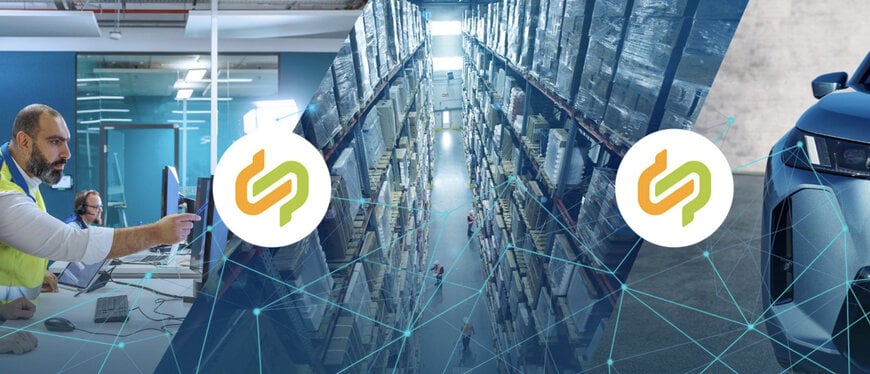
Automotive manufacturers face the challenge of managing supply chains that are becoming more complex, more global, and more tightly regulated. To address this, the BMW Group increasingly relies on Catena-X—an open, cross-industry data ecosystem launched in 2021 that enables standardized and secure information exchange among partners worldwide. This creates the foundation for digital supply chains that are more stable, traceable, and compliant with regulatory requirements.
Why Catena-X Plays a New Role in Global Supply Chains
Many companies are looking for ways to exchange material data, quality information, and regulatory documentation consistently and securely. Catena-X addresses exactly this need: the network defines shared data formats, contracts, and security mechanisms through which manufacturers, suppliers, and logistics partners can exchange information in a standardized and sovereign manner.
As one of the co-initiators, the BMW Group integrates Catena-X into procurement, quality, and production processes. Along the entire supply chain, previously disconnected data sources are merged into a unified digital exchange model.
Global Scaling: Standards for North America, Europe, and Asia
To enable cross-border digital data exchange, Catena-X was designed as an international system from the start. In North America, a Catena-X hub was created in cooperation with the Automotive Industry Action Group (AIAG). In China, the network collaborates with the China Association of Automobile Manufacturers (CAAM) and the German Association of the Automotive Industry (VDA).
By anchoring Catena-X in key regions, an interoperable system emerges that introduces harmonized data rules worldwide and connects supply chains through standardized exchange formats.
Use Case 1: Digital Battery Passport for Regulatory Traceability
Electromobility requires transparent information about material origins, component structures, and lifecycle data—core requirements of the EU Battery Regulation and similar rules worldwide.
Catena-X provides:
- Clearly defined data contracts
- Interoperable exchange formats
- Secure and standardized transmission of information such as CO₂ footprint, material composition, and origin
For automotive manufacturers such as the BMW Group, this creates a reliable foundation for documenting recycling quotas, CO₂ data, and material sources in a uniform and verifiable way.
Use Case 2: Digital Blocking Notification in Quality Processes
In automotive production, every minute counts. Manufacturers must detect faulty components early to avoid production stops, rework, and warranty costs. With the digital blocking notification feature in Catena-X, suppliers can centrally report critical parts.
Benefits in production environments include:
Use Case 2: Digital Blocking Notification in Quality Processes
In automotive production, every minute counts. Manufacturers must detect faulty components early to avoid production stops, rework, and warranty costs. With the digital blocking notification feature in Catena-X, suppliers can centrally report critical parts.
Benefits in production environments include:
- Faster information flow across all partners
- Reduced rework and warranty-related expenses
- Early detection of defective material batches
- More stable production processes and increased operational security
The BMW Group has already integrated this use case into internal systems, demonstrating how digital reporting can reduce real production risks.
Use Case 3: Simplified Supplier Integration and Compliance Management
Since April 2025, Catena-X registration has been a mandatory step in the BMW Group’s supplier qualification process. Catena-X-ready suppliers can:
Use Case 3: Simplified Supplier Integration and Compliance Management
Since April 2025, Catena-X registration has been a mandatory step in the BMW Group’s supplier qualification process. Catena-X-ready suppliers can:
- Provide certificates and compliance documentation centrally
- Share information such as AEO/CTPAT, IATF 16949, or ISO 9001 across all network partners via a single upload
- Reduce maintenance work across multiple customer portals
The Readiness Booster program additionally supports suppliers with training, onboarding, and certification—particularly beneficial for small and medium-sized companies. It simplifies integration, reduces costs, and accelerates the path to Catena-X readiness.
How Catena-X Differs From Existing Digital Solutions
Many automotive companies already use portals for quality reporting and certificate management. Catena-X goes a step further by placing all partners on a shared technical foundation:
How Catena-X Differs From Existing Digital Solutions
Many automotive companies already use portals for quality reporting and certificate management. Catena-X goes a step further by placing all partners on a shared technical foundation:
- Standardized data models across the network
- Contractual protection of data sovereignty
- Interoperable and open exchange formats
- Decentralized data storage rather than a central data repository
There is currently no fully comparable competitor solution offering the same combination of interoperable standards, sovereign data exchange, and industry-wide scalability. Individual functionalities exist in specialized quality or compliance systems, but Catena-X integrates them into a single cross-manufacturer network.
Benefits for Technical and Industrial Users
For companies across the automotive value chain, Catena-X provides measurable advantages:
Benefits for Technical and Industrial Users
For companies across the automotive value chain, Catena-X provides measurable advantages:
- Greater transparency regarding material flows and component data
- More efficient quality processes through timely notifications
- Consistent data structures for regulatory compliance
- Reduced administrative workload via centralized certificate management
- Scalable integration through open standards and interoperable interfaces
Catena-X is therefore becoming a digital backbone of the global automotive supply chain.
Conclusion
Catena-X helps the BMW Group and its partners operate supply chains that are more consistent, resilient, and transparent. The ecosystem combines interoperable standards, contractual data sovereignty, and secure exchange mechanisms. As a result, it supports more efficient collaboration and creates a technical foundation for future demands in sustainability, traceability, and production reliability.
www.bmwgroup.com
Conclusion
Catena-X helps the BMW Group and its partners operate supply chains that are more consistent, resilient, and transparent. The ecosystem combines interoperable standards, contractual data sovereignty, and secure exchange mechanisms. As a result, it supports more efficient collaboration and creates a technical foundation for future demands in sustainability, traceability, and production reliability.
www.bmwgroup.com
