
www.ptreview.co.uk
19
'26
Written on Modified on
Precision Components for Renewable Energy Reliability
SMB Bearings examines how miniature assemblies support long-term performance in demanding power generation environments.
www.smbbearings.com

The continuous operation of renewable energy infrastructure relies heavily on the mechanical reliability of compact physical systems operating in constrained environments. Addressing this technical challenge, Chris Johnson, managing director of miniature bearing specialist SMB Bearings, explains how precision miniature bearings and compact assemblies mitigate friction, maintain precise alignment, and withstand severe environmental stress within solar trackers, wind turbine actuators, and distributed energy storage networks.
Managing Mechanical Stress and Grid Expansion
Global renewable power capacity is accelerating, introducing physical hardware challenges that parallel electrical grid integration complexities. According to the International Energy Agency’s 2025 renewables report, global capacity is projected to increase by approximately 4,600 gigawatts by 2030, a volume equivalent to the combined power capacity of China, the European Union, and Japan. This physical expansion places thousands of localized systems under continuous environmental pressure. Structural and mechanical failures highlight these operational risks; in November 2025, a blade detached from a 300-foot wind turbine in Plymouth. Such incidents frequently result from a combination of sustained extreme weather and cumulative mechanical stress on drive units, actuator linkages, and sensor mechanisms.
Engineering Tolerances in Solar Tracking Hardware
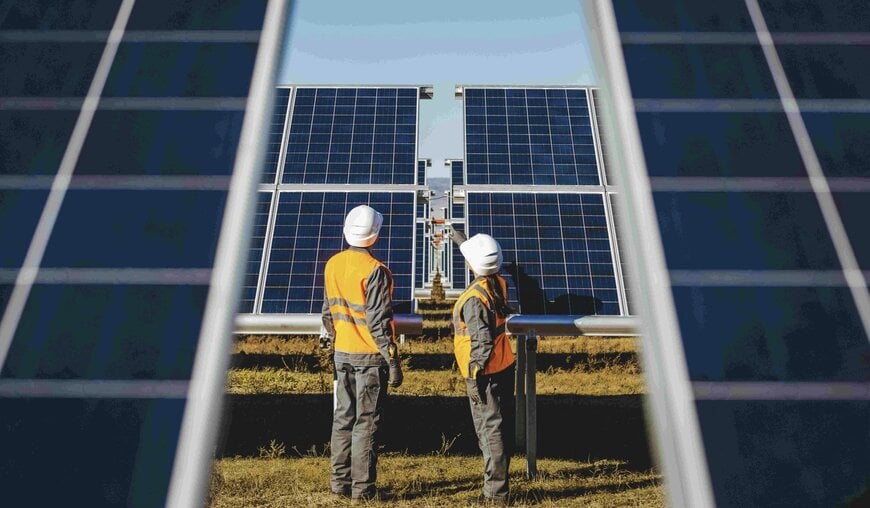
Renewable technologies rely heavily on compact subsystems to maximize energy capture efficiency. According to Earth.org, the volume of solar energy reaching the Earth over a 90-minute period equals global annual energy consumption. Capturing this energy efficiently requires accurate positioning hardware. Solar tracking structures utilize compact internal assemblies, including motors, gears, and control systems, to adjust panel orientation continuously.
These tracking systems depend on miniature deep groove ball bearings to support rotating components. In confined hardware housings, minor variations in bearing friction directly increase motor strain, elevate energy consumption, and accelerate component degradation. Furthermore, slight mechanical misalignments disrupt accurate panel positioning, reducing the overall energy yield of the installation.
Material Specifications for Environmental Extremes
Selecting appropriate materials for miniature bearings is dictated by environmental resistance and mechanical load requirements. For outdoor solar applications, 440C or 316 grade stainless steel bearings provide the necessary corrosion resistance against moisture and atmospheric exposure. In systems requiring extended service intervals and minimal friction, hybrid or full ceramic bearings are specified. Ceramic materials exhibit high hardness and low thermal expansion, enabling smooth operation and reducing wear across variable temperature ranges.
Thermal fluctuations in these confined spaces cause material expansion and contraction, which can alter load distribution across the bearing architecture. Consequently, specialized sealing and lubrication mechanisms must be engineered to prevent particulate contamination while maintaining stable hydrodynamic films across extended operating cycles without manual maintenance access.
Actuation Systems in Wind and Energy Storage
The requirement for miniature precision components extends across the wider renewable energy ecosystem. Within wind turbines, compact control systems adjust blade pitch and orientation in response to changing atmospheric conditions, relying on rotating components operating under continuous load. Similarly, energy storage facilities utilize compact cooling and circulation systems that must function reliably within strict spatial constraints. Hydrogen production and grid-support technologies also incorporate highly engineered pumps and compressors where precision bearings ensure stable operation. As these subsystems become increasingly compact, mitigating internal friction and maintaining precise load alignment become fundamental to the overall resilience of the generation network.
Edited by Aishwarya Mambet, Induportals Editor, with AI assistance.
www.smbbearings.com
