
Humanoid Robots Enter Automotive Manufacturing Plants
Humanoid robots are beginning to be deployed at the production sites of car manufacturers such as Mercedes, BMW and Renault to assess their ability to handle material handling and assembly tasks.
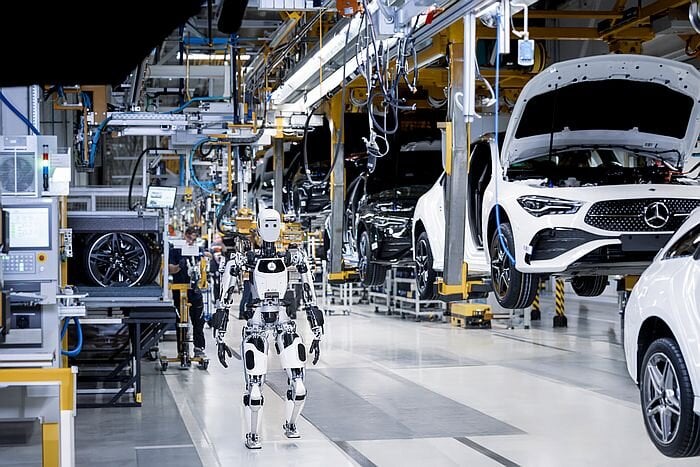
The humanoid robot market is expanding rapidly, with estimates reaching approximately USD 29.5 billion by 2036 according to IDTechEx, and USD 38 billion by 2035 according to Goldman Sachs. These robots, once viewed as futuristic prototypes, are increasingly regarded as deployable solutions in industrial environments, particularly in automotive manufacturing. This integration is being enabled by advances in artificial intelligence, embedded electronic systems, and the development of suitable electromechanical components, as well as by the growing demand for flexible automation solutions in sectors facing labour shortages.
Component-related challenges and technological advances
Despite market growth, humanoid robots still face significant engineering and manufacturing constraints. Key challenges include battery energy density and thermal management limitations, which restrict operating time and increase downtime. In addition, large-scale production of suitable components such as screws, bearings, sensors, motors and actuators remains a major hurdle, as current supply chains are not yet optimised for mass production of humanoid robots. Manual dexterity and tactile perception also represent significant barriers to expanding humanoid robot capabilities beyond basic industrial operations such as material handling and certain assembly tasks.
Use of humanoid robots by Mercedes
Mercedes-Benz is investing several tens of millions of euros in the integration of humanoid robots. The first Apollo units are already being tested at the Kecskemét plant in Hungary. The objective is to gain experience and optimise the system for large-scale deployment. Mercedes-Benz is currently testing humanoid robots developed by the American company Apptronik for tasks such as moving components along the production line and performing quality inspections. Apptronik’s “Apollo” robots have been trained for specific tasks within the Mercedes-Benz production process through teleoperation, allowing the robot to be remotely controlled by operators and to learn the tasks it performs so it can later reproduce them autonomously.
Use of humanoid robots by BMW
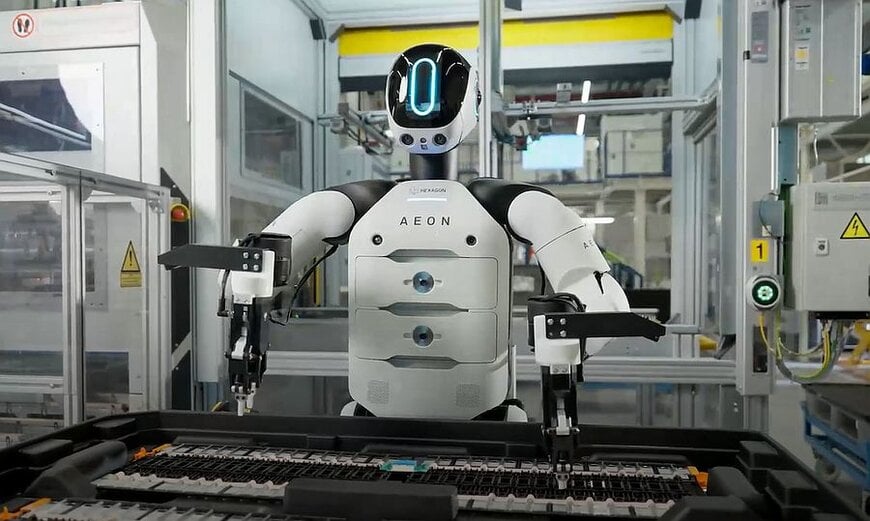
The BMW Group is running a pilot project involving humanoid robots from Hexagon Robotics at its Leipzig plant. The project aims to evaluate the integration of humanoid robots into series vehicle production, as well as battery manufacturing and other component processes. The Aeon robot, designed with an anthropomorphic morphology enabling the use of various tools, grippers and scanning devices, is mounted on wheels to navigate industrial environments. Trials are focusing in particular on high-voltage battery assembly and component manufacturing. The integration of these systems is based on a unified data platform deployed across the group’s industrial operations, centralising and standardising production data to enable the use of AI agents capable of making autonomous decisions in complex environments.
Use of humanoid robots by Renault
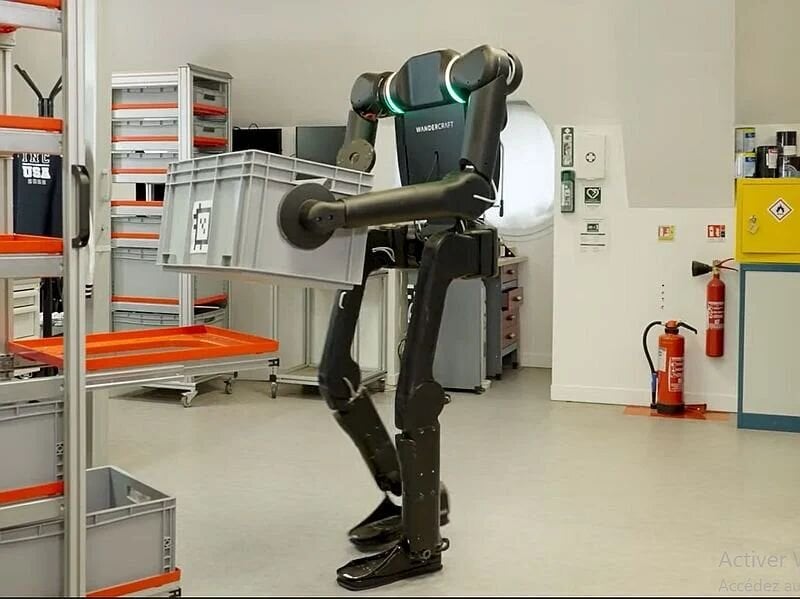
Renault is experimenting with the integration of humanoid robots from the French manufacturer Wandercraft at its Douai automotive production site, which specialises in electric vehicle manufacturing. The deployed humanoid robot, named Calvin-40 and standing approximately 1.70 metres tall, features a headless bipedal architecture and autonomous mobility in industrial environments. Currently in the testing phase, the Calvin-40 robot is primarily assigned to material handling operations, particularly transporting tyres to assembly lines. With a maximum payload capacity of 40 kilograms, it is designed to take over repetitive and physically demanding tasks. The deployment of these humanoid robots is part of an industrial roadmap aimed at reducing production time per vehicle by 30% and manufacturing costs by 20% over a five-year horizon.
Published by Youssef Belgnaoui, Editor for Induportals
