
www.ptreview.co.uk
10
'26
Written on Modified on
Open automation platform optimizes steel processing
MEP integrates flexible KEBA drives to handle larger diameters and optimize energy efficiency in reinforcing steel processing.
www.keba.com
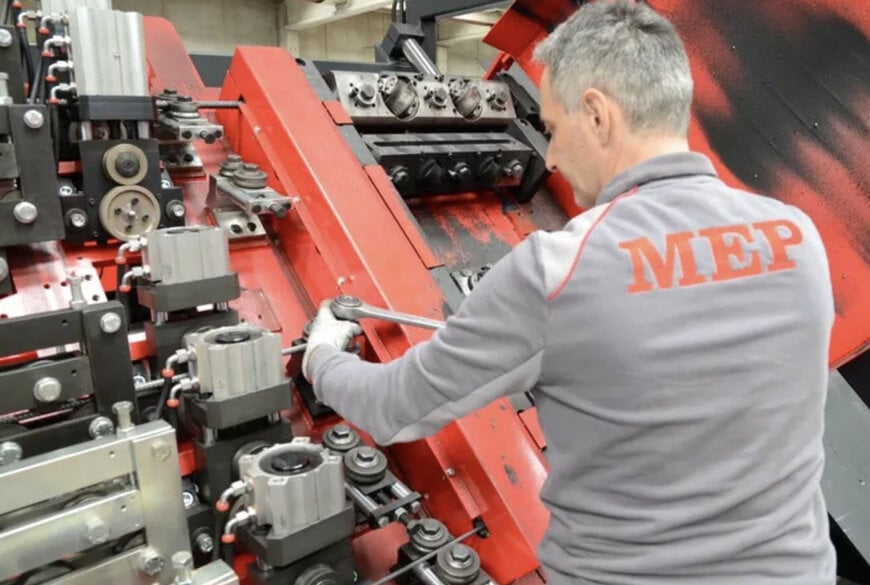
Construction machinery manufacturers face increasingly complex technical demands related to coil materials. Industrial requirements dictate processing structural diameters of up to 26 millimeters, exceeding the previous limit of 16 millimeters. Furthermore, using different alloys, including stainless steel, and the need to increase productivity by processing two bars simultaneously, require a complete overhaul of the mechanical and electronic design. These structural modifications necessitate more powerful servo axes capable of handling significantly higher thermal and electrical loads compared to the previous generation of machines. Concurrently, specifications for new international plants, such as an installation in Argentina for the production of welded wire mesh, require strict compatibility with specific industrial communication protocols.
Implementation of drive systems and open protocols
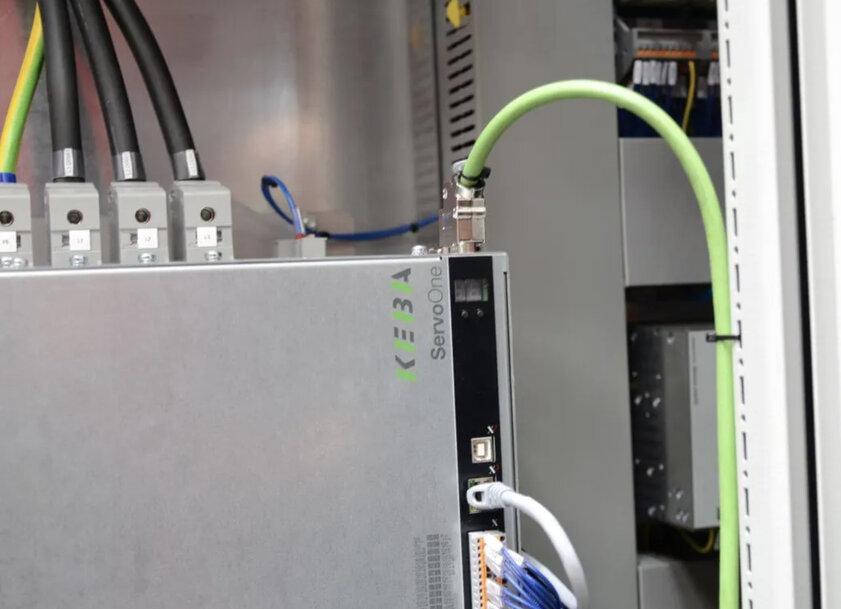
To address these technical specifications and manage the obsolescence of certain electronic components, the company selected automation systems developed by KEBA. The open architecture of these solutions ensures communication via standardized interfaces such as CANopen, EtherCAT, and PROFINET. For the specific welded wire mesh plant project, the D3 series drive system was implemented. Using the PROFINET IRT protocol allows the drives to interface directly and stably with third-party automation applications, ensuring precise synchronization of high-speed operations.
Energy optimization via shared bus
Technological integration continues in the development of a rotor straightening and bending machine equipped with an EtherCAT interface. In this configuration, the shared DC-bus solution of the drive platform is utilized. This architectural approach makes it possible to compensate for the high and constant electrical consumption of the traction system, consisting of rotors and rollers, by directly recovering the return energy generated by the cutting unit during its sudden deceleration phases.
"Changes in material diameters and new productivity specifications forced us to redesign the kinematics, requiring more powerful servo axes capable of handling currents up to 150 amps, a significant increase from the 100 amps required in previous models," explains Giles Haysom, Procurement Director at MEP.
Consumption reduction and operational stability
Integrating the shared direct current bus reduces the overall energy consumption of the plant and minimizes the energy thermally dissipated through traditional external braking resistors. In addition to the advantages related to energy efficiency and increased processing power, standardizing components on an open platform simplifies maintenance operations. The availability of a global support infrastructure also guarantees continuous technical assistance for machinery installed in remote geographic areas, ensuring the production continuity of the plants.
Edited by Maria Brueva, Induportals editor – adapted by AI.
www.keba.com
