
www.ptreview.co.uk
13
'26
Written on Modified on
Decentralized automation architecture for packaging systems
Nordfels uses Beckhoff’s MX-System to implement a decentralized automation architecture for an automated packaging system, reducing control cabinet size and improving flexibility and energy efficiency.
www.beckhoff.com
Application Area: Packaging Automation / Machine Control
Industry Sector: Chemical / Powder Coating / Specialist Machine Building
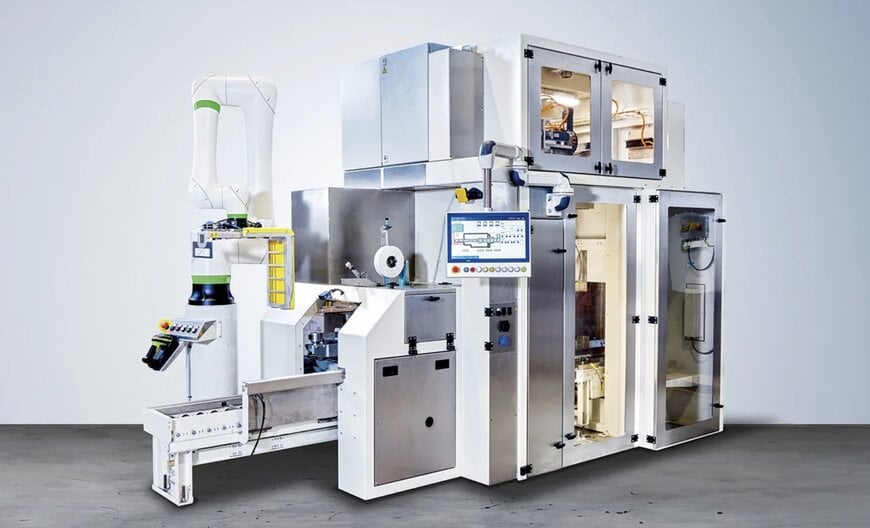
The automation of downstream processes in chemical production often faces physical constraints within existing facilities. Nordfels, an Austrian specialist in high-performance machine building, was tasked by the powder coating manufacturer TIGER Coatings to replace a manual box-sealing process with a fully automated solution. The project required the implementation of a system capable of closing inner bags, sealing boxes, weighing, labeling, and palletizing material.
A primary operational challenge was the "brownfield" nature of the site, where the new machinery had to be integrated into an existing production line with extremely limited floor space. Furthermore, TIGER Coatings demanded real-time data transmission, modularity, and high energy efficiency to align with modern industrial standards.
Decentralized drive technology and hybrid architecture
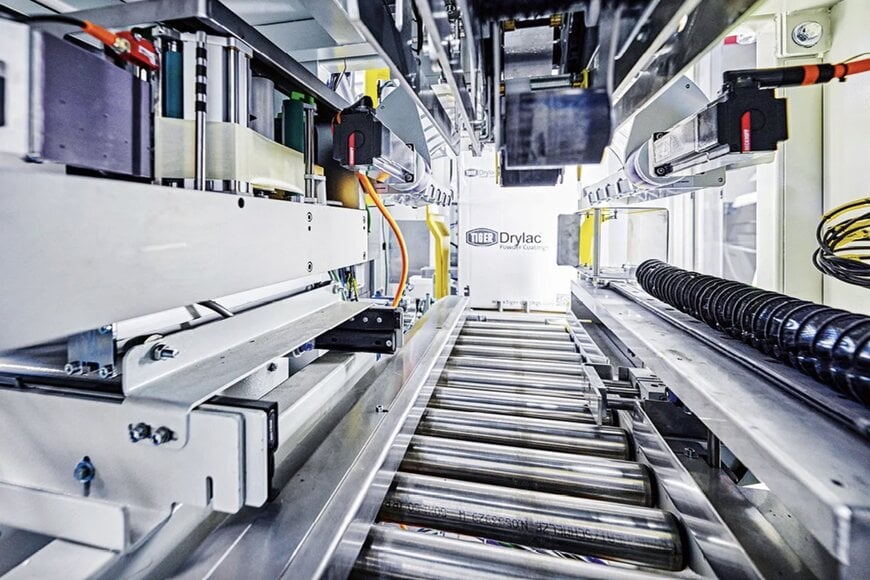
To resolve the conflict between high functional requirements and scarce installation space, Nordfels deployed a hybrid architecture utilizing the MX-System from Beckhoff. This modular system allows for cabinet-free automation by moving technical components directly to the process site.
The technical solution involved two separate decentralized units:
- Lower structure unit: Manages the transport of boxes and controls ten axes for conveyor and handling systems.
- Upper structure unit: Housed in a dust-protected enclosure, this unit manages mechatronics for closing bags and controls twelve servo axes for multi-axis gantries.
By decentralizing the drive control and the 48 V power supply, Nordfels reduced the volume of the central control cabinet by more than 50% compared to conventional designs. The use of One Cable Automation (OCA) further simplified the deployment, as power, communication, and feedback signals are transmitted via a single hybrid connector.
Integration and technical collaboration
The system's intelligence is centered on a CX5330 Embedded PC for machine control, supplemented by a C6030 ultra-compact Industrial PC acting as an edge server for AI-based quality assurance. This setup ensures horizontal and vertical integration via EtherCAT, PROFINET, and OPC UA, allowing seamless data flow to the higher-level ERP system.
During the design phase, the solution provider supported Nordfels through the MX-System Designer tool. This software facilitated the generation of parts lists and CAD data, while Beckhoff experts assisted in optimizing the decentralized configuration. The consistency of the TwinCAT programming environment allowed developers to transition from traditional cabinet layouts to decentralized modules without additional engineering effort.
Performance results and operational benefits
The shift to a decentralized architecture delivered several quantifiable and objective benefits for the end user:
Integration and technical collaboration
The system's intelligence is centered on a CX5330 Embedded PC for machine control, supplemented by a C6030 ultra-compact Industrial PC acting as an edge server for AI-based quality assurance. This setup ensures horizontal and vertical integration via EtherCAT, PROFINET, and OPC UA, allowing seamless data flow to the higher-level ERP system.
During the design phase, the solution provider supported Nordfels through the MX-System Designer tool. This software facilitated the generation of parts lists and CAD data, while Beckhoff experts assisted in optimizing the decentralized configuration. The consistency of the TwinCAT programming environment allowed developers to transition from traditional cabinet layouts to decentralized modules without additional engineering effort.
Performance results and operational benefits
The shift to a decentralized architecture delivered several quantifiable and objective benefits for the end user:
- Space Optimization: The footprint of the central control cabinet was reduced by over 50%.
- Energy Efficiency: Pneumatic axes were replaced with servo axes, significantly lowering energy consumption.
- Maintenance and Robustness: The decentralized units offer a robust design that eliminates the need for complex air conditioning systems often required for large control cabinets.
- Process Quality: The integration of "Powder Thief" sampling and AI-based monitoring ensures precise color verification for every batch.
This project serves as a technical blueprint for future cabinet-free machine designs, demonstrating that investment costs remain comparable to traditional solutions while providing superior modularity and real-time connectivity.
Additional Context
The MX-System utilized in this application represents a fundamental shift from traditional IP20 control cabinets to IP67-rated modular components. This transition allows for the elimination of internal wiring and the reduction of the overall machine footprint. In competitive benchmarking, this decentralized approach significantly reduces the time required for electrical installation and commissioning compared to standard centralized architectures.
Edited by Romila DSilva, Induportals Editor, with AI assistance.
Additional Context
The MX-System utilized in this application represents a fundamental shift from traditional IP20 control cabinets to IP67-rated modular components. This transition allows for the elimination of internal wiring and the reduction of the overall machine footprint. In competitive benchmarking, this decentralized approach significantly reduces the time required for electrical installation and commissioning compared to standard centralized architectures.
Edited by Romila DSilva, Induportals Editor, with AI assistance.
