
AI-Based Image Processing for Multi-Chamber Lamp Testing
IDS cameras and adaptive AI enable reliable, traceable end-of-line inspection under real production conditions.
en.ids-imaging.com
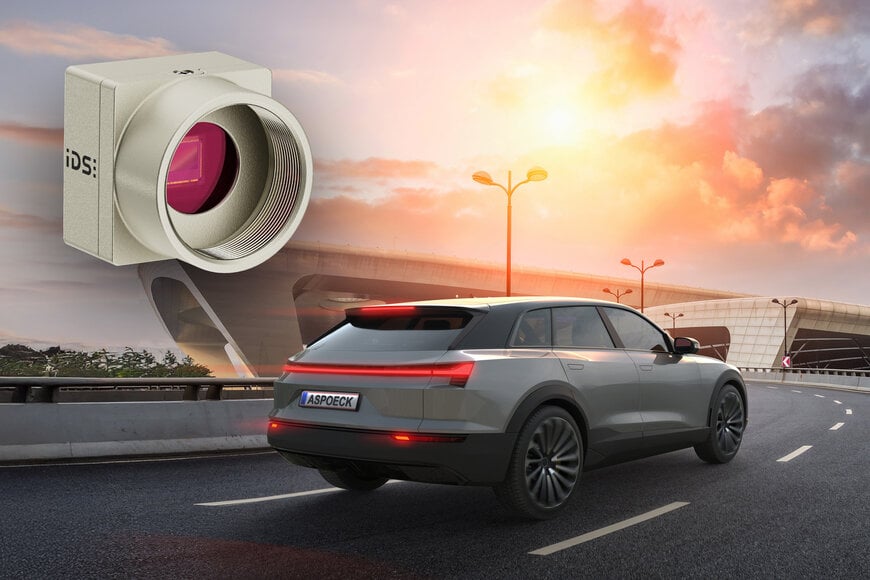
Production companies are under enormous pressure today: Customers are demanding more and more variants, delivery times are shrinking, error rates must not increase, and traditional visual inspections quickly reach their limits. Visual quality control is becoming one of the biggest challenges for the manufacturing industry. Every production error costs time, money and reputation. AI-supported image processing is therefore becoming an indispensable tool for automating inspection processes, efficiently managing variant diversity and ensuring the highest level of quality. The Austrian company Danube Dynamics, together with Aspöck Systems, demonstrates how end-of-line testing of multi-chamber lamps can be efficiently automated. The combination of the AI solution "auros for quality" and IDS camera technology allows even complex inspection tasks in diverse production environments to be reliably mastered – a solution that offers immediate added value for companies of all sizes.
Background: More than just "light on, light off"
Aspöck Systems manufactures multi-chamber lamps for vehicles, which must be reliably tested at the end of the production line. It is not only important whether a lamp lights up, but also whether the correct chamber is enabled. A flashing signal must not accidentally activate the rear fog light – a mistake that could have serious consequences on the road. Added to this are typical production conditions: different orientations of components, extraneous light in the hall, dust and dirt, and a wide variety of variants. Traditional systems based on fixed test rules reach their limits here. Every product change involves a great deal of adjustment work, and unexpected error patterns are difficult to detect reliably.
Solution: AI and camera working together
To overcome these hurdles, Aspöck Systems relies on the "auros for quality" solution from Danube Dynamics. At its heart is an adaptive AI that processes image data in real time on a powerful industrial PC (IPC) directly on the line. Image capture is handled by two industrial cameras from the uEye XCP series by IDS. “Our solution does not work with rigid testing rules, but with adaptive algorithms. This enables us to reliably identify even complex or unexpected error patterns and adapt systems to new products very quickly," explains Nico Teringl, CEO of Danube Dynamics. The decision to go with IDS was a conscious one: "In addition to the interface, price and size, the advice provided by IDS was the decisive factor for us. Together, we found the camera that exactly meets our requirements and guarantees the required precision on a permanent basis," says Nico Teringl.
The role of IDS: Sensor quality meets consulting expertise
The IDS U3-3680XCP Rev.1.2 used features the 5.04 MP rolling shutter CMOS sensor onsemi AR0521 and consistently delivers detailed, low-noise images, even in challenging lighting conditions. Back Side Illumination technology ensures high sensitivity and low noise levels, offering a clear advantage in low ambient light or dirty conditions. "The combination of compact size, robust design and superior low-light performance makes this model the ideal component for demanding end-of-line inspections," emphasises Jürgen Hejna, Product Owner 2D Cameras at IDS. In addition, the IDS peak software environment facilitates the connection of cameras and significantly reduces the integration effort. "Thanks to IDS peak, we were able to get the solution up and running very quickly and integrate it swiftly into the existing production environment at Aspöck," adds Nico Teringl.
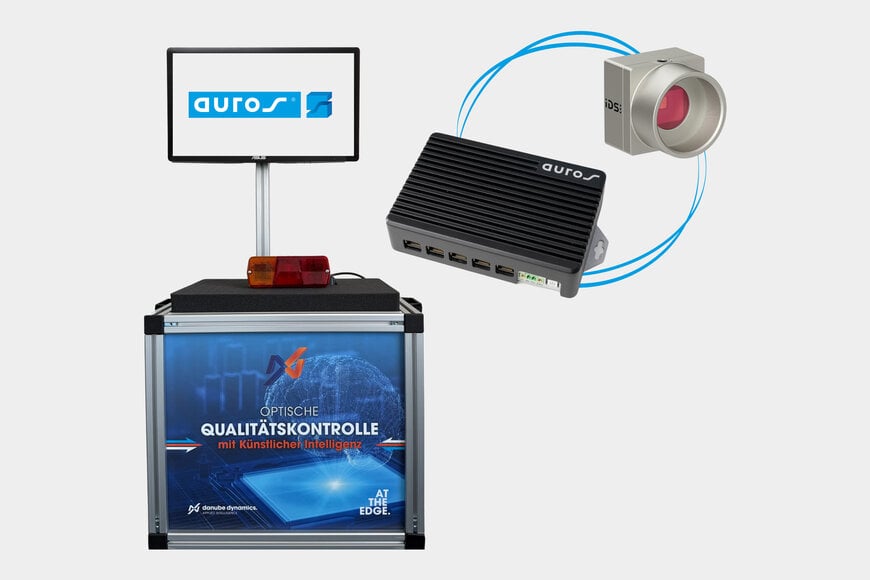
"auros for quality" test bench with integrated industrial camera from IDS
From camera to test decision in real time
During operation, the multi-chamber lamps are enabled individually by a control system. Two identical IDS cameras capture the images, which are then evaluated on the IPC using AI. The two cameras operate in parallel: While one product is being tested, the next product can already be placed on the test bench. This parallel approach increases cycle time and boosts efficiency. A key advantage of the solution is local processing without the cloud: This guarantees full data sovereignty, high reliability and minimal latency which is a crucial factor for Aspöck Systems, where production downtime must be avoided at all costs. The solution is independent of the exact alignment of the lamps and robust against environmental variables such as extraneous light or contamination.
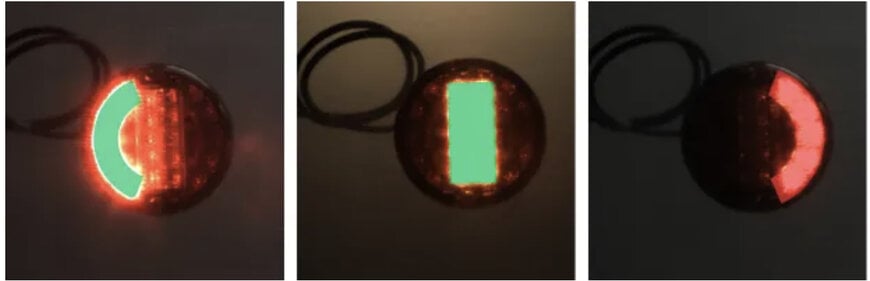
Activated multi-chamber lamps on the test bench:Left light OK, centre light OK, right light NOK
The results are displayed in real time on an HMI touchscreen, automatically logged and can be transmitted to the higher-level production system via an API. This creates a closed inspection process that replaces or effectively supplements manual visual inspections while also ensuring complete traceability.
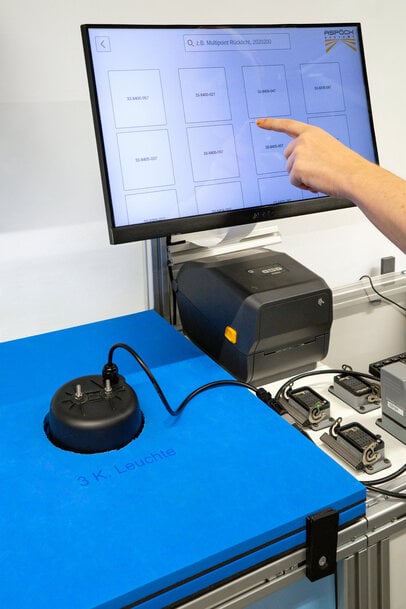
Intuitive HMI touchscreen
Result: Efficient, flexible, reliable
By combining "auros for quality" with IDS camera technology, Aspöck Systems has taken its end-of-line inspection to a whole new level. Errors are reliably detected under even the most adverse production conditions. The system can be adapted to new product variants in just a few minutes via the touchscreen, without the need for time-consuming programming. At the same time, those responsible benefit from clear visualisation and digital documentation of the results.
“The support provided by IDS was a decisive factor in our success. Not only did they provide us with the right camera, they also advised us on how to tailor the solution to our requirements”, summarises Nico Teringl.
Outlook: Quality assurance in transition
Quality control requirements in the automotive sector continue to increase. Inspection tasks are becoming more complex, the required accuracy is increasing, and powerful cameras with AI-supported evaluation are becoming indispensable. “We are seeing a clear trend towards intelligent, AI-supported image processing that is flexible enough to respond to new products and processes without requiring a great deal of effort. That is exactly why we developed 'auros for quality' in combination with IDS camera technology," says Teringl.
Product
uEye XCP - The industry's smallest housing camera with C-mount
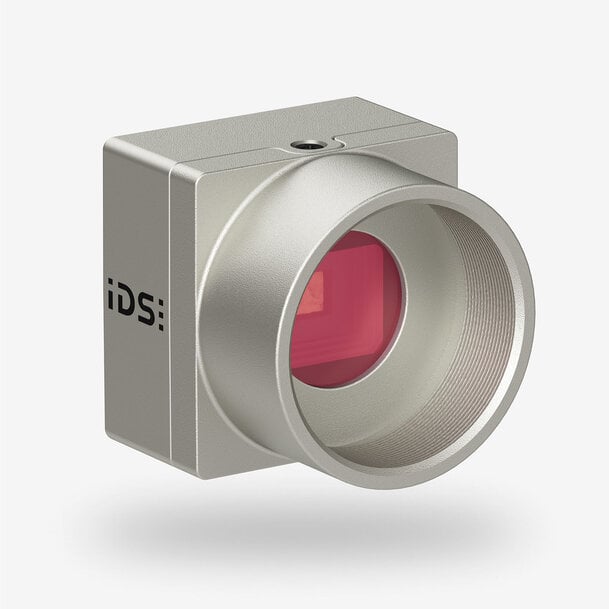
Model used: U3-3680XCP Rev.1.2
Camera family: uEye XCP
www.ids.com
